David B Zandvliet – författare
Visar alla böcker från författaren David B Zandvliet. Handla med fri frakt och snabb leverans.
8 produkter
8 produkter
Del 27 - Critical Pedagogies
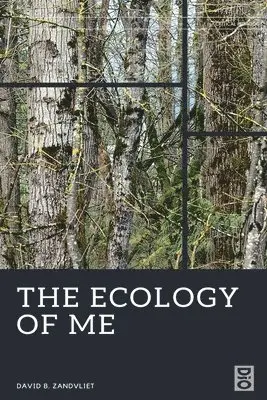
Ecology of Me
Häftad, Engelska, 2021
322 kr
Skickas
Häftad, Engelska, 2022
487 kr
Skickas inom 3-6 vardagar
Del 11 - Advances in Learning Environments Research
Thirty Years of Learning Environments
Looking Back and Looking Forward
Häftad, Engelska, 2018
442 kr
Skickas inom 5-8 vardagar
This volume is a commemorative book celebrating the 30th Anniversary of the Special Interest Group (SIG) on Learning Environments of the American Educational Researchers’ Association. It includes a historical perspective starting with the formation of the SIG in 1984 and the first program space at the AERA annual meeting in 1985 in Chicago. This retrospective notes other landmarks in the development of the SIG such as the creation of the international journal Learning Environments Research.The study of learning environments was first conceptualized around the need to develop perceptual and psychosocial measures for describing students’ individual or shared educational experiences (e.g. ‘feel of the class’ or ‘classroom climate’). Over the ensuing decades, the field expanded considerably from its early roots in science education to describe other phenomenon such as teacher-student interpersonal relationships, or applications in pre-service teacher education and action research. The book also describes several new areas of promise for the expanding field of learning environments research that in the future will include more diverse contexts and applications. These will include new contexts but established research programs in areas such as information and communications technology and environmental education, but also in emerging research contexts such as the physical classroom environment and links among learning environment contexts and students’ emotional health and well-being.Contributors are: Perry den Brok, Rosie Dhaliwhal, Barry J. Fraser, Catherine Martin-Dunlop, David Henderson, Melissa Loh, Tim Mainhardt, George Sirrakos, Alisa Stanton, Theo Wubbels, and David B. Zandvliet.
Del 11 - Advances in Learning Environments Research
Thirty Years of Learning Environments
Looking Back and Looking Forward
Inbunden, Engelska, 2018
1 608 kr
Skickas inom 5-8 vardagar
This volume is a commemorative book celebrating the 30th Anniversary of the Special Interest Group (SIG) on Learning Environments of the American Educational Researchers’ Association. It includes a historical perspective starting with the formation of the SIG in 1984 and the first program space at the AERA annual meeting in 1985 in Chicago. This retrospective notes other landmarks in the development of the SIG such as the creation of the international journal Learning Environments Research.The study of learning environments was first conceptualized around the need to develop perceptual and psychosocial measures for describing students’ individual or shared educational experiences (e.g. ‘feel of the class’ or ‘classroom climate’). Over the ensuing decades, the field expanded considerably from its early roots in science education to describe other phenomenon such as teacher-student interpersonal relationships, or applications in pre-service teacher education and action research. The book also describes several new areas of promise for the expanding field of learning environments research that in the future will include more diverse contexts and applications. These will include new contexts but established research programs in areas such as information and communications technology and environmental education, but also in emerging research contexts such as the physical classroom environment and links among learning environment contexts and students’ emotional health and well-being.Contributors are: Perry den Brok, Rosie Dhaliwhal, Barry J. Fraser, Catherine Martin-Dunlop, David Henderson, Melissa Loh, Tim Mainhardt, George Sirrakos, Alisa Stanton, Theo Wubbels, and David B. Zandvliet.
Del 4 - Researching Environmental Learning
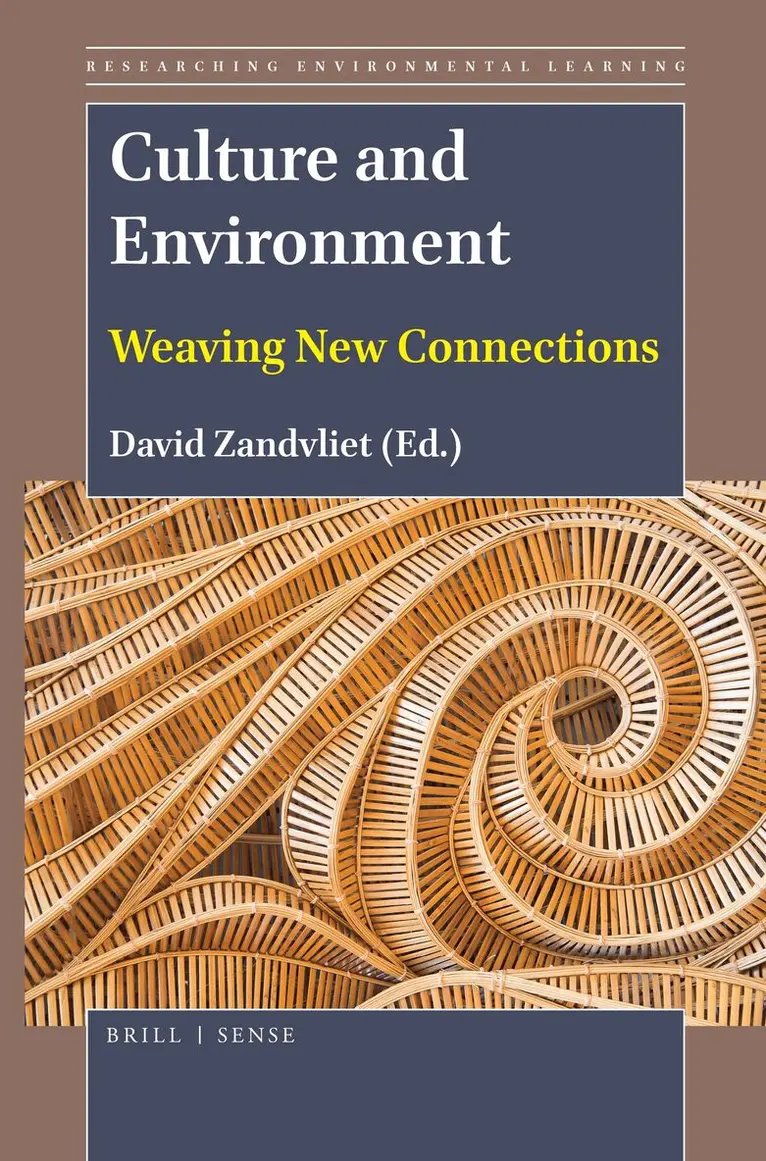
Culture and Environment
Weaving New Connections
Inbunden, Engelska, 2019
2 225 kr
Skickas inom 5-8 vardagar
The inspiration for this book arose out of a large international conference: the ninth World Environmental Education Congress (WEEC) organized under the theme of Culture/Environment. Similarly, the theme for this book focuses on the Culture/Environment nexus. The book is divided into two parts: Part 1 consists of a series of research studies from an eclectic selection of researchers from all corners of the globe. Part 2 consists of a series of case studies of practice selected from a wide diversity of K-Postsecondary educators. The intent behind these selections is to augment and highlight the diversity of both cultural method and cultural voice in our descriptions of environmental education practice. The chapters focus on a multi-disciplinary view of Environmental Education with a developing view that Culture and Environment may be inseparable and arise from and within each other. Cultural change is also a necessary condition, and a requirement, to rebuild and reinvent our relationship with nature and to live more sustainably. The chapters address the spirit of supporting our praxis, and are therefore directed towards both an educator and researcher audience. Each chapter describes original research or curriculum development work.
Del 4 - Researching Environmental Learning
Culture and Environment
Weaving New Connections
Häftad, Engelska, 2019
971 kr
Skickas inom 5-8 vardagar
The inspiration for this book arose out of a large international conference: the ninth World Environmental Education Congress (WEEC) organized under the theme of Culture/Environment. Similarly, the theme for this book focuses on the Culture/Environment nexus. The book is divided into two parts: Part 1 consists of a series of research studies from an eclectic selection of researchers from all corners of the globe. Part 2 consists of a series of case studies of practice selected from a wide diversity of K-Postsecondary educators. The intent behind these selections is to augment and highlight the diversity of both cultural method and cultural voice in our descriptions of environmental education practice. The chapters focus on a multi-disciplinary view of Environmental Education with a developing view that Culture and Environment may be inseparable and arise from and within each other. Cultural change is also a necessary condition, and a requirement, to rebuild and reinvent our relationship with nature and to live more sustainably. The chapters address the spirit of supporting our praxis, and are therefore directed towards both an educator and researcher audience. Each chapter describes original research or curriculum development work.
E-bok
PDF, Engelska, 20062 181 kr
Läs direkt efter köp
The dominance of computer labs in our schools is the result of a long struggle among teachers and technicians for control of precious computer resources. As technicians gain power and influence, this is expressed in the 'row on row of machines' installed in literally thousands of computer labs in schools around the world. While labs are in some ways, ideal for learning about technology or computer programming, they somehow seem ill equipped to assist teachers with a lesson on language arts, geography or for helping students conduct a scientific experiment. As a result, the huge investment in computers seems like so much wasted potential: labs are not influencing teaching in the ways we had hoped for, and in fact, their use may even be harmful to students. These observations are based on five years of experience as the director of a centre for educational technology at a leading Canadian university and, on the results of three international studies I conducted in Australia, Canada and Malaysia. A reversal of the current 'techno- trend' would mean teachers would reclaim computers for 'their own' classrooms, and relegate the idea of the computer lab to the scrap heap of history. As educators, we need to discard the 'once size fits all'strategy which computer labs imply about teachers' instructional needs. This is reinforced by the apparent failure of computers to transform teachers' practice despite significant investments in computer technologies. Some critics describe this as a 'management problem' as computer labs reinforce 'top down' ways of thinking about knowledge. Unfortunately, once such models are adopted, undesirable uses of technology-such as the computer lab-become entrenched in a bureaucratic mindset, limiting the effectiveness of these expensive tools to support teaching and learning.
E-bok
PDF, Engelska, 2016403 kr
Läs direkt efter köp
Education researchers worldwide face a basic question: Is their purpose to use people to develop knowledge, or use knowledge to develop people This book offers an exploration to this fundamental question by examining what three core disciplines – ecology, economics, and ecumenism – have in common. These disciplines have roots in the ancient Greek notion of the household (oikos). By examining some complementary and competing principles among the disciplines, the book uncovers some commonalities between science, economics and religion, that support a holistic view of ecology or ecological education. The format for the discussion comprises a number of selected academic chapters on each of the topics above as well as a number of other creative media which include drawings figures, prose, poetry and photography which creatively draws connections among the diverse and interdisciplinary concepts and theories presented. In addition, the content of this book has attempted minimize academic jargon to make the ideas more accessible to an audience of academics, teachers and a wider general audience.