David Brock Katz – författare
Visar alla böcker från författaren . Handla med fri frakt och snabb leverans.
4 produkter
4 produkter
E-bok
Engelska, 2022163 kr
Läs direkt efter köp
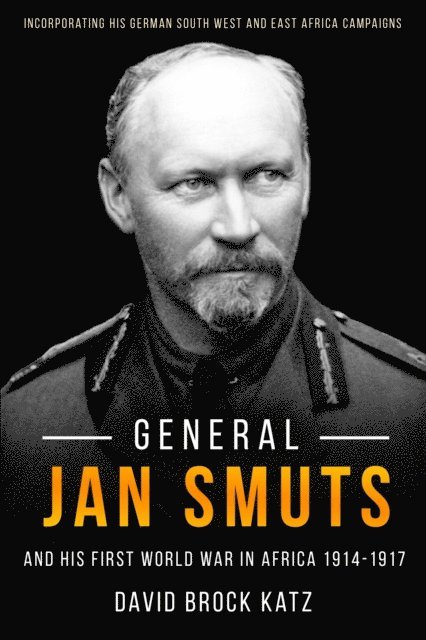
A new assessment of Jan Smuts''s military leadership through examination of his World War I campaigning, demonstrating that he was a gifted general, conversant with the craft of maneuver warfare, and a command style steeped in the experiences of his time as a Boer general.World War I ushered in a renewed scramble for Africa. At its helm, Jan Smuts grabbed the opportunity to realize his ambition of a Greater South Africa. He set his sights upon the vast German colonies of South-West Africa and East Africa – the demise of which would end the Kaiser''s grandiose schemes for Mittelafrika. As part of his strategy to shift South Africa''s borders inexorably northward, Smuts even cast an eye toward Portuguese and Belgian African possessions. Smuts, his abilities as a general much denigrated by both his contemporary and then later modern historians, was no armchair soldier. This cabinet minister and statesman donned a uniform and led his men into battle. He learned his soldiery craft under General Koos De la Rey''s tutelage, and another soldier-statesman, General Louis Botha during the South African War 1899–1902. He emerged from that war, immersed in the Boer maneuver doctrine he devastatingly waged in the guerrilla phase of that conflict. His daring and epic invasion of the Cape at the head of his commando remains legendary. The first phase of the German South West African campaign and the Afrikaner Rebellion in 1914 placed his abilities as a sound strategic thinker and a bold operational planner on display. Champing at the bit, he finally had the opportunity to command the Southern Forces in the second phase of the German South West African campaign. Placed in command of the Allied forces in East Africa in 1916, he led a mixed bag of South Africans and Imperial troops against the legendary Paul von Lettow-Vorbeck and his Shutztruppe. Using his penchant for Boer maneuver warfare together with mounted infantry led and manned by Boer Republican veterans, he proceeded to free the vast German territory from Lettow-Vorbeck''s grip. Often leading from the front, his operational concepts were an enigma to the British under his command, remaining so to modern-day historians. Although unable to bring the elusive and wily Lettow-Vorbeck to a final decisive battle, Smuts conquered most of the territory by the end of his tenure in February 1917. General Jan Smuts and His First World War in Africa makes use of multiple archival sources and the official accounts of all the participants to provide a long-overdue reassessment of Smuts''s generalship and his role in furthering the strategic aims of South Africa and the British Empire in Africa during World War I.
Häftad, Engelska, 2023
222 kr
Skickas inom 5-8 vardagar
Favouring manoeuvre over attrition, and often punching above their weight, South African soldiers have become known for their tenacity, dash and ability to defy the odds. Their unique directive command style has also helped them to excel in defining battles and operations, from the campaign in German South West Africa in 1915 to the cross-border operations in Angola during the Border War. In 20 Battles, military historians Evert Kleynhans and David Brock Katz investigate the evolution of South Africa’s armed forces over a century. They track the evolution of the doctrine and structure of the defence force, rediscovering historical continuity and the lessons learned in past battles and operations. What is clear is that when South African soldiers have the freedom to operate according to their manoeuvre doctrine, such as in East Africa in 1916 and southern Ethiopia in 1941, they can achieve stunning results. But when hemmed in by rigid doctrine and top-down command style, as at Delville Wood in 1916 and Tobruk in 1942, the results can be tragic. 20 Battles combines both battlefield drama and crisp analysis and will provide much-needed perspective on the South Africa way of war.
E-bok
Engelska, 2023129 kr
Läs direkt efter köp
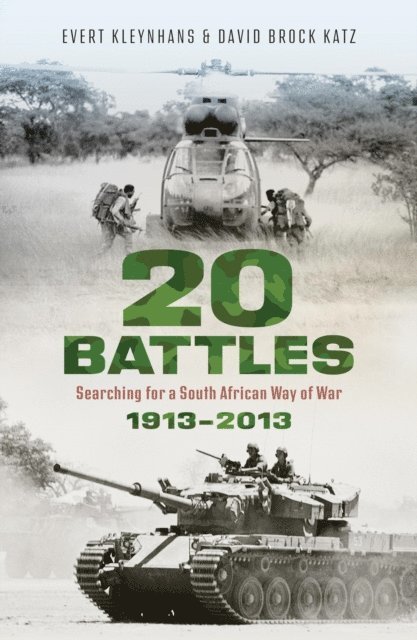
Favouring manoeuvre over attrition and often punching above their weight, South African soldiers have become known for their tenacity, dash and ability to defy the odds. Their unique directive command style has also helped them to excel in defining battles and operations, from the campaign in German South West Africa in 1915 to the cross-border operations in Angola during the Border War.In 20 Battles, military historians Evert Kleynhans and David Brock Katz investigate the evolution of South Africa''s armed forces over a century from 1913 to 2013. They track the evolution of the doctrine and structure of the defence force, uncovering historical continuity and the lessons learned from past battles and operations.What is clear is that when South African soldiers have the freedom to operate according to their manoeuvre doctrine, as they had in East Africa in 1916 and southern Ethiopia in 1941, they can achieve stunning results. But when hemmed in by rigid doctrine and a top-down command style, as at Delville Wood in 1916 and Tobruk in 1942, the results can be tragic.20 Battles combines both battlefield drama and crisp analysis and in the process provides a much-needed perspective on the South African way of war.
Inbunden, Engelska, 2017
437 kr
Tillfälligt slut
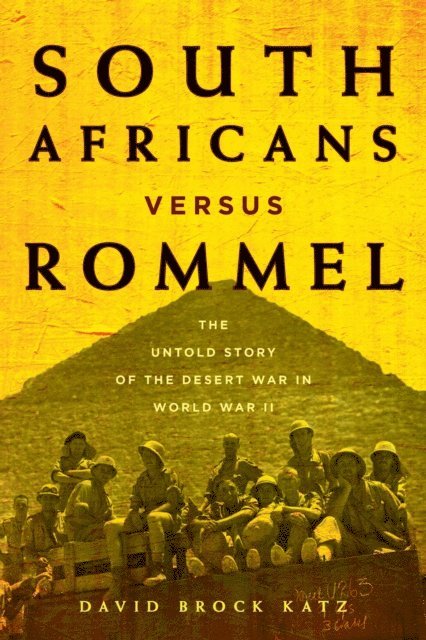
After bitter debate, South Africa, a dominion of the British Empire at the time, declared war on Germany five days after the invasion of Poland in September 1939. Thrust by the British into the campaign against Erwin Rommel’s German Afrika Korps in North Africa, the South Africans fought a see-saw war of defeats followed by successes, culminating in the Battle of El Alamein, where South African soldiers made a significant contribution to halting the Desert Fox’s advance into Egypt. This is the story of an army committed somewhat reluctantly to a war it didn’t fully support, ill-prepared for the battles it was tasked with fighting, and sent into action on the orders of its senior alliance partner. At its heart, however, this is the story of men at war.