David Brotherton - Böcker
Visar alla böcker från författaren David Brotherton. Handla med fri frakt och snabb leverans.
6 produkter
6 produkter
1 342 kr
Tillfälligt slut
Gangs have been heavily pathologized in the last several decades. In comparison to the pioneering Chicago School's work on gangs in the 1920s we have moved away from a humanistic appraisal of and sensitivity toward the phenomenon and have allowed the gang to become a highly plastic folk devil outside of history. This pathologization of the gang has particularly negative consequences for democracy in an age of punishment, cruelty and coercive social control.This is the central thesis of David Brotherton’s new and highly contentious book on street gangs. Drawing on a wealth of highly acclaimed original research, Brotherton explores the socially layered practices of street gangs, including community movements, cultural projects and sites of social resistance. The book also critically reviews gang theory and the geographical trajectories of streets gangs from New York and Puerto Rico to Europe, the Caribbean and South America, as well as state-sponsored reactions and the enabling role of orthodox criminology. In opposition to the dominant gang discourses, Brotherton proposes the development of a critical studies approach to gangs and concludes by making a plea for researchers to engage the gang reflexively, paying attention to the contradictory agency of the gang and what gang members actually tell us. The book is essential reading for academics and students involved in the study of juvenile delinquency, youth studies, deviance, gang studies and cultural criminology.
370 kr
Tillfälligt slut
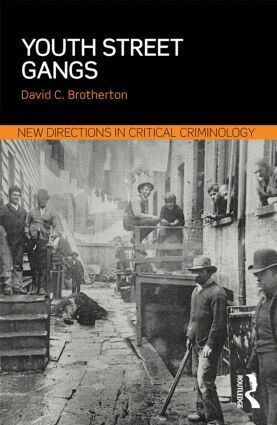
Gangs have been heavily pathologized in the last several decades. In comparison to the pioneering Chicago School's work on gangs in the 1920s we have moved away from a humanistic appraisal of and sensitivity toward the phenomenon and have allowed the gang to become a highly plastic folk devil outside of history. This pathologization of the gang has particularly negative consequences for democracy in an age of punishment, cruelty and coercive social control.This is the central thesis of David Brotherton’s new and highly contentious book on street gangs. Drawing on a wealth of highly acclaimed original research, Brotherton explores the socially layered practices of street gangs, including community movements, cultural projects and sites of social resistance. The book also critically reviews gang theory and the geographical trajectories of streets gangs from New York and Puerto Rico to Europe, the Caribbean and South America, as well as state-sponsored reactions and the enabling role of orthodox criminology. In opposition to the dominant gang discourses, Brotherton proposes the development of a critical studies approach to gangs and concludes by making a plea for researchers to engage the gang reflexively, paying attention to the contradictory agency of the gang and what gang members actually tell us. The book is essential reading for academics and students involved in the study of juvenile delinquency, youth studies, deviance, gang studies and cultural criminology.
710 kr
Skickas inom 10-15 vardagar
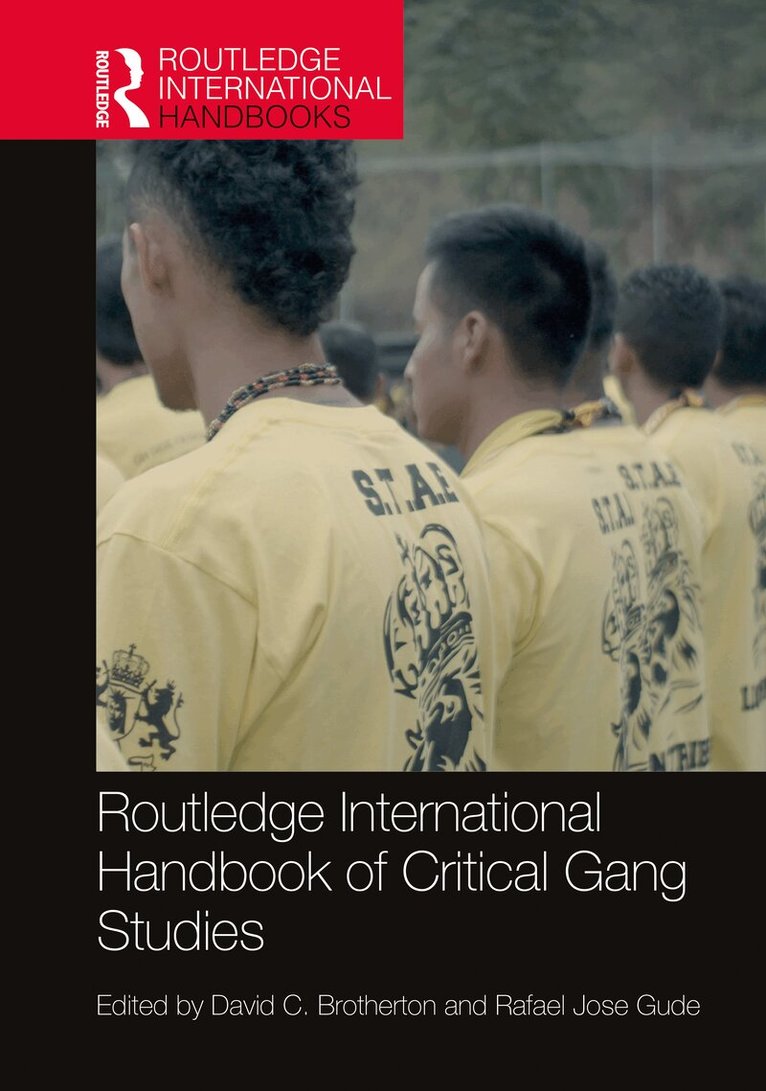
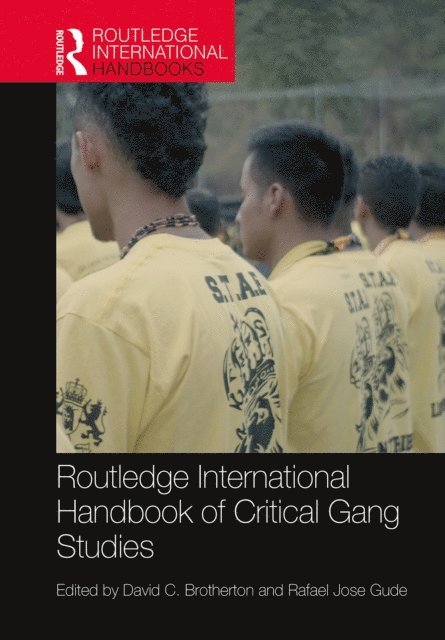
Routledge International Handbook of Critical Gang Studies is rooted in the instability, inequality and liquidity of the post-industrial era. It understands the gang as a complex and contradictory phenomenon; a socio-historical agent that reflects, responds to and creates a certain structured environment in spaces which are always in flux. International in scope and drawing on a range of sociological, criminological and anthropological traditions, it looks beyond pathological, ahistorical and non-transformative approaches, and considers other important factors that produce the phenomenon, whether the historically entrenched racialized power structure and segregation in Chicago; the unconstrained state-abandoned development of favelas in Brazil; or the colonization, displacement and dependency of people in Central America. This handbook reflects and defines the new theoretical and empirical traditions of critical gang studies. It offers a variety of perspectives, including: A view of gangs that takes into consideration the global context and appearance of the "gang" in its various forms and stages of development; An appreciation of the gang as a socio-cultural formation; A race-ethnic and class analysis of the gang that problematizes domain assumptions such as the "underclass"; Gender variations of the gang phenomenon with a particular emphasis on their intersectional properties; Relations between gangs and the political economy that address the dominant mode of production and exchange; Treatments that demonstrate the historically contingent nature of gangs and their changes across time; The contradictory impact of gang repressive policies, institutions and practices as part of a broader discussion on the nature of the state in specific societies; and Critical methodologies on gangs that involve discussions of visual and textual representations and the problematics of data collection and analysis. Authoritative, multi-disciplinary and international, this book will be of interest to criminologists, sociologists and anthropologists alike, particularly those engaged with critical criminology/sociology, youth crime, delinquency and global social inequality. The Handbook will also be of interest to policy makers and those in the peacebuilding field.
2 925 kr
Skickas inom 10-15 vardagar
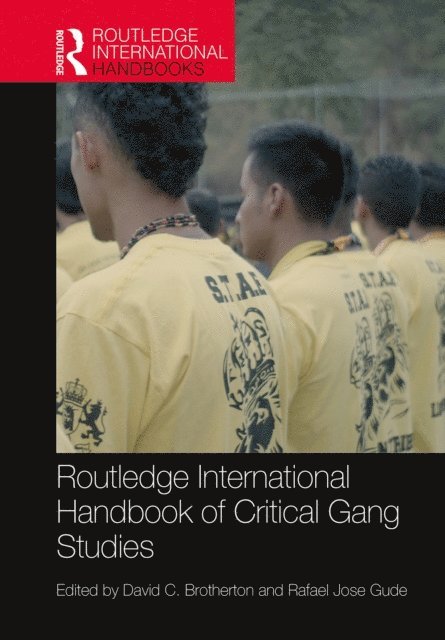
Routledge International Handbook of Critical Gang Studies is rooted in the instability, inequality and liquidity of the post-industrial era. It understands the gang as a complex and contradictory phenomenon; a socio-historical agent that reflects, responds to and creates a certain structured environment in spaces which are always in flux. International in scope and drawing on a range of sociological, criminological and anthropological traditions, it looks beyond pathological, ahistorical and non-transformative approaches, and considers other important factors that produce the phenomenon, whether the historically entrenched racialized power structure and segregation in Chicago; the unconstrained state-abandoned development of favelas in Brazil; or the colonization, displacement and dependency of people in Central America. This handbook reflects and defines the new theoretical and empirical traditions of critical gang studies. It offers a variety of perspectives, including: A view of gangs that takes into consideration the global context and appearance of the "gang" in its various forms and stages of development; An appreciation of the gang as a socio-cultural formation; A race-ethnic and class analysis of the gang that problematizes domain assumptions such as the "underclass"; Gender variations of the gang phenomenon with a particular emphasis on their intersectional properties; Relations between gangs and the political economy that address the dominant mode of production and exchange; Treatments that demonstrate the historically contingent nature of gangs and their changes across time; The contradictory impact of gang repressive policies, institutions and practices as part of a broader discussion on the nature of the state in specific societies; and Critical methodologies on gangs that involve discussions of visual and textual representations and the problematics of data collection and analysis. Authoritative, multi-disciplinary and international, this book will be of interest to criminologists, sociologists and anthropologists alike, particularly those engaged with critical criminology/sociology, youth crime, delinquency and global social inequality. The Handbook will also be of interest to policy makers and those in the peacebuilding field.
1 280 kr
Kommande
Forthcoming Fall 2026
507 kr
Kommande
Forthcoming Fall 2026