David Bushnell – författare
Visar alla böcker från författaren David Bushnell. Handla med fri frakt och snabb leverans.
11 produkter
11 produkter
Häftad, Engelska, 2003
326 kr
Skickas inom 5-8 vardagar
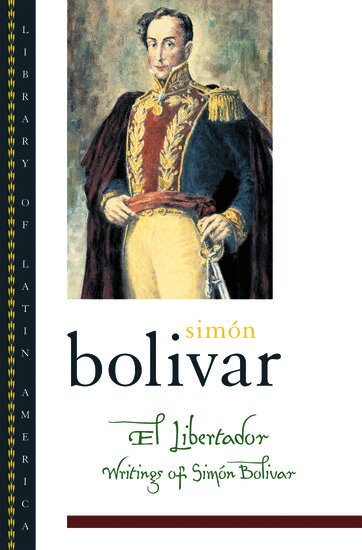
General Simón Bolívar (1783-1830), called El Liberator, and sometimes the 'George Washington' of Latin America, was the leading hero of the Latin American independence movement. His victories over Spain won independence for Bolivia, Panama, Columbia, Ecuador, Peru, and Venezuela. Bolívar became Columbia's first president in 1819. In 1822, he became dictator of Peru. Upper Peru became a separate state, which was named Bolivia in Bolívar's honor, in 1825. The constitution, which he drew up for Bolivia, is one of his most important political pronouncements. Today he is remembered throughout South America, and in Venezuela and Bolivia his birthday is a national holiday.Although Bolívar never prepared a systematic treatise, his essays, proclamations, and letters constitute some of the most eloquent writing not of the independence period alone, but of any period in Latin American history. His analysis of the region's fundamental problems, ideas on political organization and proposals for Latin American integration are relevant and widely read today, even among Latin Americans of all countries and of all political persuasions. The "Cartagena Letter," the "Jamaica Letter," and the "Angostura Address," are widely cited and reprinted.
E-bok
PDF, Engelska, 2003256 kr
Läs direkt efter köp
General Sim?n Bol?var (1783-1830), called El Liberator, and sometimes the "George Washington" of Latin America, was the leading hero of the Latin American independence movement. His victories over Spain won independence for Bolivia, Panama, Columbia, Ecuador, Peru, and Venezuela. Bol?var became Columbia''s first president in 1819. In 1822, he became dictator of Peru. Upper Peru became a separate state, which was named Bolivia in Bol?var''s honor, in 1825. The constitution, which he drew up for Bolivia, is one of his most important political pronouncements. Today he is remembered throughout South America, and in Venezuela and Bolivia his birthday is a national holiday. Although Bol?var never prepared a systematic treatise, his essays, proclamations, and letters constitute some of the most eloquent writing not of the independence period alone, but of any period in Latin American history. His analysis of the region''s fundamental problems, ideas on political organization and proposals for Latin American integration are relevant and widely read today, even among Latin Americans of all countries and of all political persuasions. The "Cartagena Letter," the "Jamaica Letter," and the "Angostura Address," are widely cited and reprinted.
E-bok
Engelska, 2003246 kr
Läs direkt efter köp
General Sim?n Bol?var (1783-1830), called El Liberator, and sometimes the "George Washington" of Latin America, was the leading hero of the Latin American independence movement. His victories over Spain won independence for Bolivia, Panama, Columbia, Ecuador, Peru, and Venezuela. Bol?var became Columbia''s first president in 1819. In 1822, he became dictator of Peru. Upper Peru became a separate state, which was named Bolivia in Bol?var''s honor, in 1825. The constitution, which he drew up for Bolivia, is one of his most important political pronouncements. Today he is remembered throughout South America, and in Venezuela and Bolivia his birthday is a national holiday. Although Bol?var never prepared a systematic treatise, his essays, proclamations, and letters constitute some of the most eloquent writing not of the independence period alone, but of any period in Latin American history. His analysis of the region''s fundamental problems, ideas on political organization and proposals for Latin American integration are relevant and widely read today, even among Latin Americans of all countries and of all political persuasions. The "Cartagena Letter," the "Jamaica Letter," and the "Angostura Address," are widely cited and reprinted.
Häftad, Engelska, 1993
400 kr
Skickas
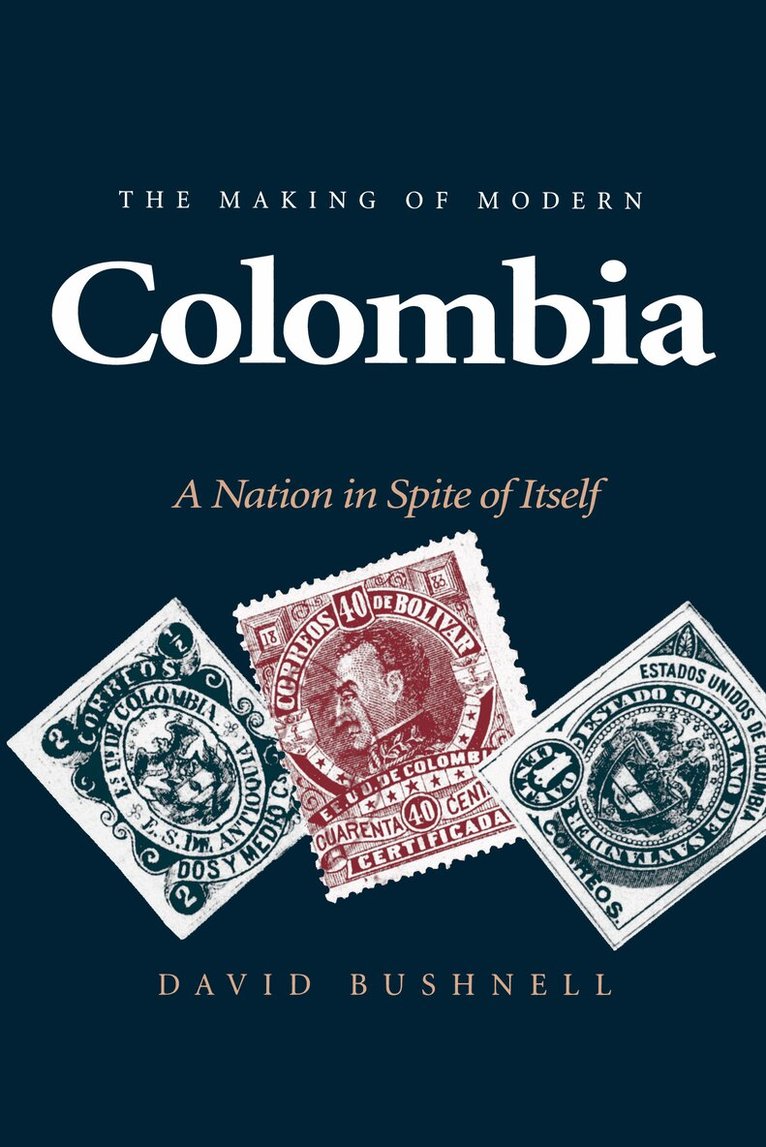
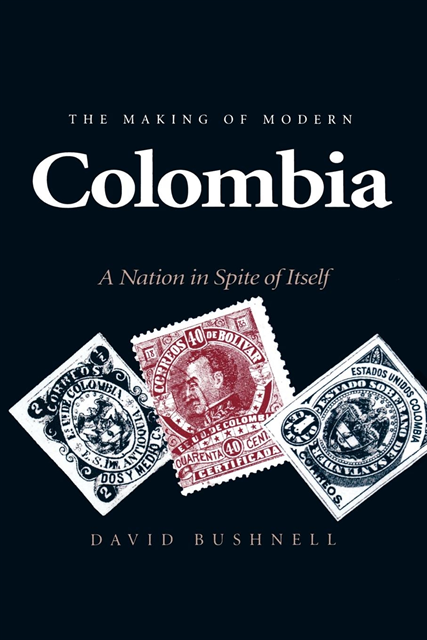
Colombia's status as the fourth largest nation in Latin America and third most populous--as well as its largest exporter of such disparate commodities as emeralds, books, processed cocaine, and cut flowers--makes this, the first history of Colombia written in English, a much-needed book. It tells the remarkable story of a country that has consistently defied modern Latin American stereotypes--a country where military dictators are virtually unknown, where the political left is congenitally weak, and where urbanization and industrialization have spawned no lasting populist movement. There is more to Colombia than the drug trafficking and violence that have recently gripped the world's attention. In the face of both cocaine wars and guerrilla conflict, the country has maintained steady economic growth as well as a relatively open and democratic government based on a two-party system. It has also produced an impressive body of art and literature.David Bushnell traces the process of state-building in Colombia from the struggle for independence, territorial consolidation, and reform in the nineteenth century to economic development and social and political democratization in the twentieth. He also sheds light on the modern history of Latin America as a whole.
E-bok
Engelska, 1993347 kr
Läs direkt efter köp
Colombia''s status as the fourth largest nation in Latin America and third most populous—as well as its largest exporter of such disparate commodities as emeralds, books, processed cocaine, and cut flowers—makes this, the first history of Colombia written in English, a much-needed book. It tells the remarkable story of a country that has consistently defied modern Latin American stereotypes—a country where military dictators are virtually unknown, where the political left is congenitally weak, and where urbanization and industrialization have spawned no lasting populist movement.There is more to Colombia than the drug trafficking and violence that have recently gripped the world''s attention. In the face of both cocaine wars and guerrilla conflict, the country has maintained steady economic growth as well as a relatively open and democratic government based on a two-party system. It has also produced an impressive body of art and literature.David Bushnell traces the process of state-building in Colombia from the struggle for independence, territorial consolidation, and reform in the nineteenth century to economic development and social and political democratization in the twentieth. He also sheds light on the modern history of Latin America as a whole.
Inbunden, Engelska, 2022
427 kr
Skickas inom 5-8 vardagar
Häftad, Engelska, 2022
309 kr
Skickas inom 5-8 vardagar
Häftad, Engelska, 2025
406 kr
Skickas inom 5-8 vardagar
Häftad, Engelska, 2025
259 kr
Skickas inom 5-8 vardagar
E-bok
PDF, Spanska, 2020102 kr
Läs direkt efter köp
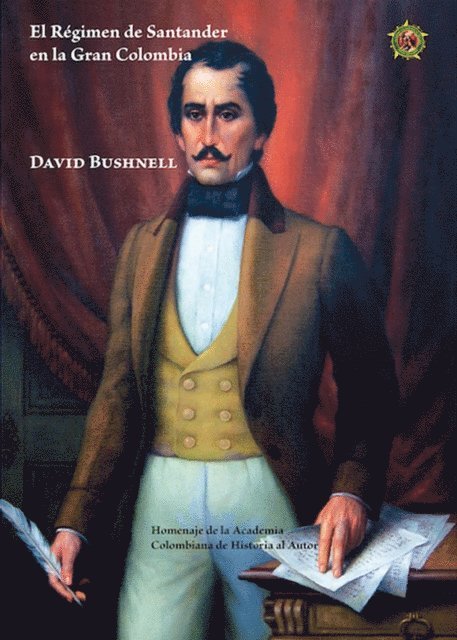
Venezuela, Nueva Granada y Quito, La creación de la Gran Colombia, El Régimen de Santander: Reforma política y problemas administrativos, Los poderes legislativo y judicial, Los conflictos personales y partidistas entre 1821 y 1826, La crisis fiscal (i): el sistema de rentas, La crisis fiscal (ii): Deudas, déficit y recriminaciones, La deuda externa como expediente fiscal y como controversia política, Reconstrucción y desarrollo económicos, Política y practica del comercio exterior, Los liberales y las masas: la esclavitud y el problema indígena, La educación en el Régimen de Santander, El problema religioso (i): clericales y anticlericales, El problema religioso (ii): las reformas anticlericales 1821-1826, El problema religioso (iii): La Iglesia y el Estado en la Gran Colombia, El ejército colombiano en la guerra y en la política, Demandas militares y descontento de los veteranos, El problema venezolano, La difícil situación del Ecuador, El año de la crisis: 1826, El regreso de Simón Bolívar y la caída de Santander,
E-bok
Spanska, 200779 kr
Läs direkt efter köp
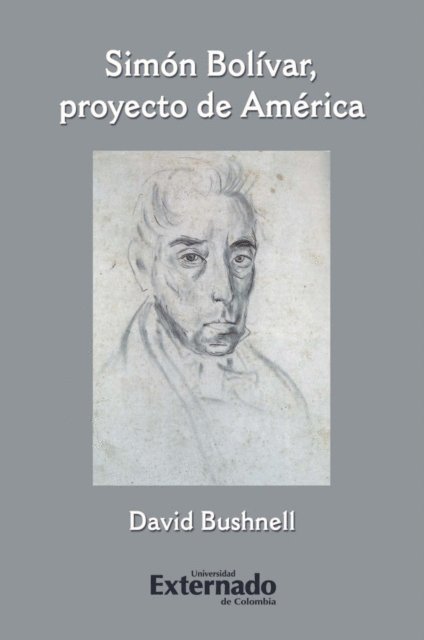
Cada vez que aparece una nueva biografía del Libertador Simón Bolívar surge inevitablemente la pregunta: ¿hacía falta una más? Quizá la pregunta no es tan pertinente en Argentina, donde se publicó la primera edición de esta obra, pero sí lo es en cualquiera de los países de la antigua Gran Colombia, región donde abundan los libros sobre Bolívar. Podría inclusive resultar sospechoso el hecho de que el autor del presente libro, más conocido por sus escritos sobre Santander y admirador confeso aunque no incondicional de sus logros, centre ahora su mirada sobre el enemigo político del Hombre de las Leyes . Sin embargo, quisiera hacer constar desde un principio que, a mi modo de ver, ha habido cierta exageración en lo escrito acerca de las discrepancias entre estos dos próceres. Hace unos años había redactado inclusive un artículo con el título Bolívar y Santander, dos vertientes de una sola política . La sola política era, por supuesto, el liberalismo en sentido amplio, ya que Bolívar compartía la mayor parte de la filosofía liberal de la Ilustración europea, aun cuando no viera aplicables a Hispanoamérica todas las innovaciones liberales.