David C. Earnest - Böcker
Visar alla böcker från författaren David C. Earnest. Handla med fri frakt och snabb leverans.
4 produkter
4 produkter
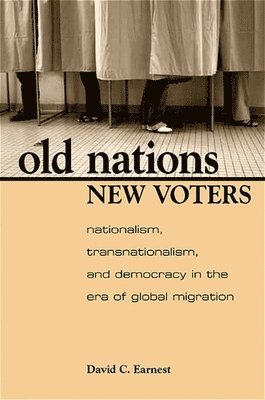
Old Nations, New Voters
Nationalism, Transnationalism, and Democracy in the Era of Global Migration
Inbunden, Engelska, 2008
1 057 kr
Tillfälligt slut
Groundbreaking empirical study of voting by resident aliens in established democracies.In this groundbreaking study, David C. Earnest analyzes why democracies give noncitizens the right to vote. Bringing together theoretical debates in international relations and comparative politics about globalization, sovereignty, nationalism, citizenship, and state building, he examines how twenty-five democracies are coping with growing populations of immigrants who increasingly demand political rights. Earnest employs statistical analyses, along with case studies, to uncover surprising facts-that national courts are not necessarily progressive and that the left-right differences of political parties disguise intriguing coalitions that may either welcome or marginalize immigrants. The author concludes that rather than undermining the rights of citizens, the enfranchisement of noncitizens reflects shared national myths. In this respect, when faced with growing migration, old nations welcome new voters in ways that reinforce the bond between the nation and state.
Old Nations, New Voters
Nationalism, Transnationalism, and Democracy in the Era of Global Migration
Häftad, Engelska, 2009
382 kr
Tillfälligt slut
Groundbreaking empirical study of voting by resident aliens in established democracies.In this groundbreaking study, David C. Earnest analyzes why democracies give noncitizens the right to vote. Bringing together theoretical debates in international relations and comparative politics about globalization, sovereignty, nationalism, citizenship, and state building, he examines how twenty-five democracies are coping with growing populations of immigrants who increasingly demand political rights. Earnest employs statistical analyses, along with case studies, to uncover surprising facts-that national courts are not necessarily progressive and that the left-right differences of political parties disguise intriguing coalitions that may either welcome or marginalize immigrants. The author concludes that rather than undermining the rights of citizens, the enfranchisement of noncitizens reflects shared national myths. In this respect, when faced with growing migration, old nations welcome new voters in ways that reinforce the bond between the nation and state.
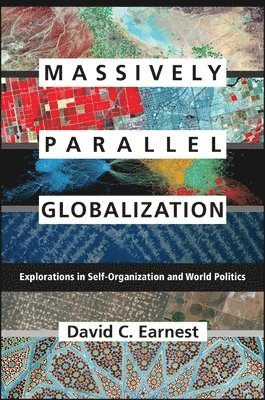
Massively Parallel Globalization
Explorations in Self-Organization and World Politics
Häftad, Engelska, 2016
353 kr
Skickas
Explores how individuals and groups adapt to the challenges of globalization.In this era of globalization, people organize into fluid, adaptive networks to solve complex problems and provide resources that nation-states cannot. Examples include the Grameen Bank, mHealth, and the Ushahidi open source software project. Why do these networks succeed where nation-states fail? Only recently have social scientists developed tools to understand exactly how these complex networks self-organize, emerge, adapt, and solve collective problems. Three of these tools-agent-based modeling, social network analysis, and evolutionary computing-are converging in a field known as computational social science. In this provocative book, David C. Earnest discusses how computational social science helps us understand "massively parallel globalization." Using "explorations" of global systems ranging from fisheries to banking, Earnest illustrates the promise of computer models for explaining the surprises, cascades, and complexity that characterize global politics today. These examples of massively parallel globalization contrast sharply with the hierarchical and inflexible governmental bureaucracies that are poorly suited to solve many of today's transnational and global challenges.
Massively Parallel Globalization
Explorations in Self-Organization and World Politics
Inbunden, Engelska, 2015
1 057 kr
Tillfälligt slut
Explores how individuals and groups adapt to the challenges of globalization.In this era of globalization, people organize into fluid, adaptive networks to solve complex problems and provide resources that nation-states cannot. Examples include the Grameen Bank, mHealth, and the Ushahidi open source software project. Why do these networks succeed where nation-states fail? Only recently have social scientists developed tools to understand exactly how these complex networks self-organize, emerge, adapt, and solve collective problems. Three of these tools-agent-based modeling, social network analysis, and evolutionary computing-are converging in a field known as computational social science. In this provocative book, David C. Earnest discusses how computational social science helps us understand "massively parallel globalization." Using "explorations" of global systems ranging from fisheries to banking, Earnest illustrates the promise of computer models for explaining the surprises, cascades, and complexity that characterize global politics today. These examples of massively parallel globalization contrast sharply with the hierarchical and inflexible governmental bureaucracies that are poorly suited to solve many of today's transnational and global challenges.