David Cahan - Böcker
Visar alla böcker från författaren David Cahan. Handla med fri frakt och snabb leverans.
7 produkter
7 produkter
From Natural Philosophy to the Sciences
Writing the History of Nineteenth-Century Science
Inbunden, Engelska, 2003
1 517 kr
Skickas inom 11-20 vardagar
During the 19th century, much of the modern scientific enterprise took shape: scientific disciplines were formed, institutions and communities were founded and unprecedented applications to and interactions with other aspects of society and culture occurred. In this book, 11 leading historians of science assess what their field has taught us about this exciting time and identify issues that remain unexamined or require reconsideration. They treat scientific disciplines - biology, physics, chemistry, the earth sciences, mathematics and the social sciences - in their specific intellectual and sociocultural contexts as well as the broader topics of science and medicine; science and religion; scientific institutions and communities; and science, technology and industry. Providing a much-needed overview and analysis of a rapidly expanding field, "From Natural Philosophy to the Sciences" should be valuable for historians of science, but also of great interest to scholars of all aspects of 19th-century life and culture.
From Natural Philosophy to the Sciences
Writing the History of Nineteenth-Century Science
Häftad, Engelska, 2003
353 kr
Skickas inom 7-10 vardagar
During the 19th century, much of the modern scientific enterprise took shape: scientific disciplines were formed, institutions and communities were founded and unprecedented applications to and interactions with other aspects of society and culture occurred. In this book, 11 leading historians of science assess what their field has taught us about this exciting time and identify issues that remain unexamined or require reconsideration. They treat scientific disciplines - biology, physics, chemistry, the earth sciences, mathematics and the social sciences - in their specific intellectual and sociocultural contexts as well as the broader topics of science and medicine; science and religion; scientific institutions and communities; and science, technology and industry. Providing a much-needed overview and analysis of a rapidly expanding field, "From Natural Philosophy to the Sciences" should be valuable for historians of science, but also of great interest to scholars of all aspects of 19th-century life and culture.
343 kr
Skickas inom 7-10 vardagar
Hermann von Helmholtz was a 19th-century pioneer of physiology and physics in Europe who was concerned with the implications of science for philosophy and culture. From the 1850s to the 1890s, he delivered over two dozen lectures, seeking to educate the public and to enlighten the leaders of European society and governments about the potential benefits of science and technology to a developing modern society. This text presents 15 of these lectures, which reflect the wide range of topics discussed by Helmholtz. Among the subjects covered are: the origins of the planetary system; the relation of natural science to science in general; the aims and progress of the physical sciences; the problems of perception; and academic freedom in German universities. This collection also includes Helmholtz's lectures on the relation of optics to painting and the physiological causes of harmony in music, which provide insight into the relations between science and aesthetics.
500 kr
Skickas inom 7-10 vardagar
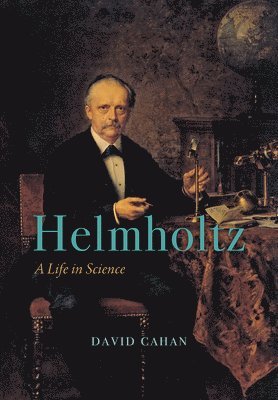
Hermann von Helmholtz was a towering figure of nineteenth-century scientific and intellectual life. Best known for his achievements in physiology and physics, he also contributed to other disciplines such as ophthalmology, psychology, mathematics, chemical thermodynamics, and meteorology. With Helmholtz: A Life in Science, David Cahan has written a definitive biography, one that brings to light the dynamic relationship between Helmholtz’s private life, his professional pursuits, and the larger world in which he lived.Utilizing all of Helmholtz’s scientific and philosophical writings, as well as previously unknown letters, this book reveals the forces that drove his life—a passion to unite the sciences, vigilant attention to the sources and methods of knowledge, and a deep appreciation of the ways in which the arts and sciences could benefit each other. By placing the overall structure and development of his scientific work and philosophy within the greater context of nineteenth-century Germany, Helmholtz also serves as cultural biography of the construction of the scientific community: its laboratories, institutes, journals, disciplinary organizations, and national and international meetings. Helmholtz’s life is a shining example of what can happen when the sciences and the humanities become interwoven in the life of one highly motivated, energetic, and gifted person.
Del 10 - California Studies in the History of Science
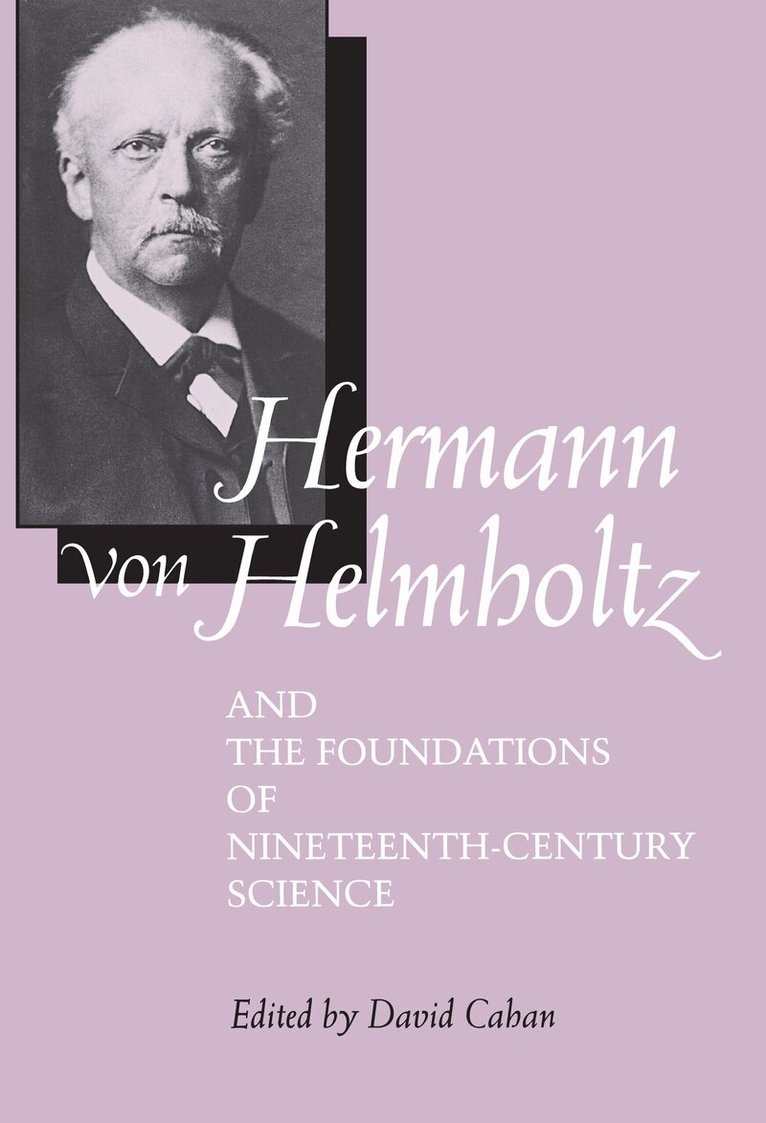
Hermann von Helmholtz and the Foundations of Nineteenth-Century Science
Inbunden, Engelska, 1994
801 kr
Skickas inom 7-10 vardagar
Hermann von Helmholtz (1821-1894) was a polymath of dazzling intellectual range and energy. Renowned for his co-discovery of the second law of thermodynamics and his invention of the ophthalmoscope, Helmholtz also made many other contributions to physiology, physical theory, philosophy of science and mathematics, and aesthetic thought. During the late nineteenth century, Helmholtz was revered as a scientist-sage - much like Albert Einstein in this century. David Cahan has assembled an outstanding group of European and North American historians of science and philosophy for this intellectual biography of Helmholtz, the first ever to critically assess both his published and unpublished writings. It represents a significant contribution not only to Helmholtz scholarship but also to the history of nineteenth-century science and philosophy in general.
An Institute for an Empire
The Psysikalisch-Technische Reichsanstalt, 1871-1918
Häftad, Engelska, 2004
534 kr
Skickas inom 7-10 vardagar
An Institute for an Empire is the first scholarly study of one of the world's foremost scientific institutions, the Physikalisch-Technische Reichsanstalt (PTR) in Imperial Germany. The Reichsanstalt stood at the forefront of institutional innovation in science and technology during the late nineteenth and early twentieth centuries, uniting diverse practitioners and representatives of physics, technology, industry, and the state. It demonstrated how physics and industrial technology could help build a modem society and a modem nation-state. Moreover, it encouraged and helped inaugurate the era of Big Science. Professor Cahan also discusses the Reichsanstalt's leaders and scientists, including Wemer von Siemens and Hermann von Helmholtz, as well as its scientific and technological work. Among the Reichsanstalt's many accomplishments were contributions to the new quantum physics, development of physical standards and measuring instruments for science, industry, and the state, and testing work for a variety of German industries.
744 kr
Skickas inom 10-15 vardagar
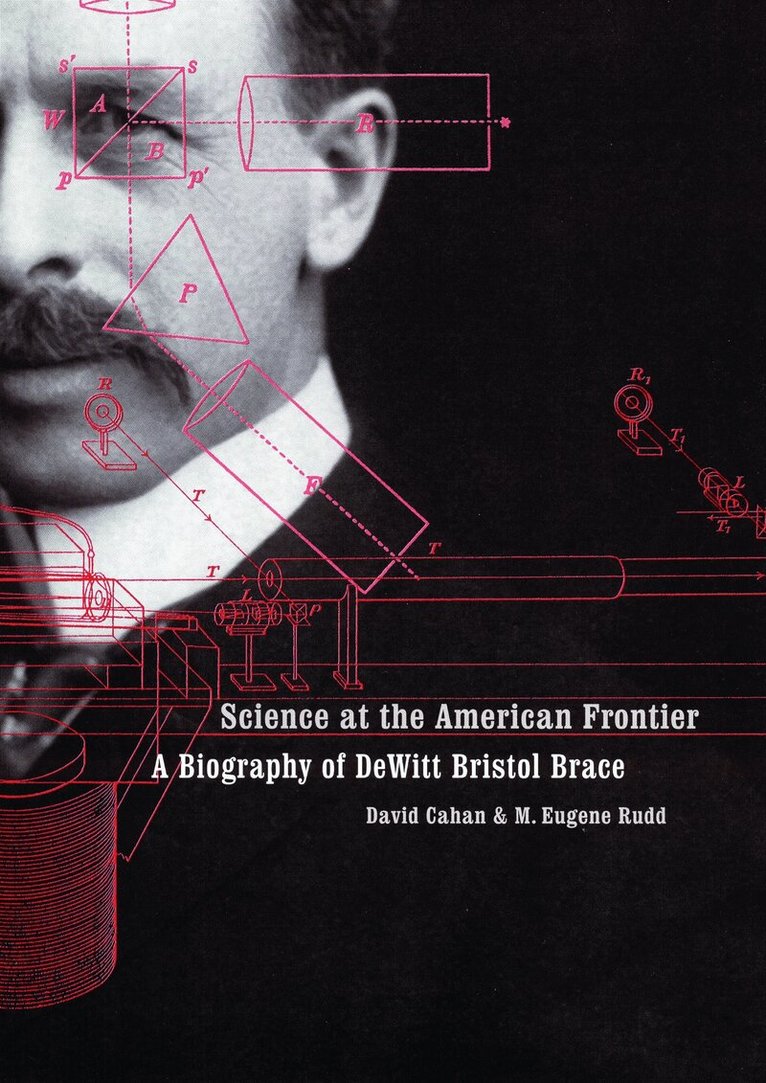
Science at the American Frontier is both a biography of American physicist DeWitt Bristol Brace (1859–1905) and a study of the processes by which scientific knowledge and associated instrumentation were transferred from Europe to the United States and from the east coast to the American frontier. The authors trace Brace’s first-class scientific education in Boston, Baltimore, and Berlin, and they follow his career as he founded and built a department of physics at the University of Nebraska and pursued a research program at that institution. In doing so, they show how Brace’s career brought him into the vanguard of the American scientific community, and they illuminate the developmental process of departments of science at the newly founded land-grant colleges.