David Cavalla - Böcker
Visar alla böcker från författaren David Cavalla. Handla med fri frakt och snabb leverans.
3 produkter
3 produkter
Modern Strategy for Preclinical Pharmaceutical R&D
Towards the Virtual Research Company
Inbunden, Engelska, 1997
3 022 kr
Skickas inom 7-10 vardagar
The twentieth century has been a great success for modern medicine, and has resulted in the generation of a plethora of drugs to treat most common illnesses. However, in the light of increasing regulatory demands, spiralling costs and diminishing commercial returns, the question of how, when, where and whether to conduct pharmaceutical R&D has profound implications, and not just for those within the pharmaceutical industry. In response to these and other dilemmas, the authors define the processes involved in drug research, and examine the advantages and disadvantages of collaborative methods of drug research, and examine the roles that academia, CROs, small "biotechnology" companies and "research boutiques," and possibly even the "virtual research company" might play as contractors and collaborators.
601 kr
Skickas inom 5-8 vardagar
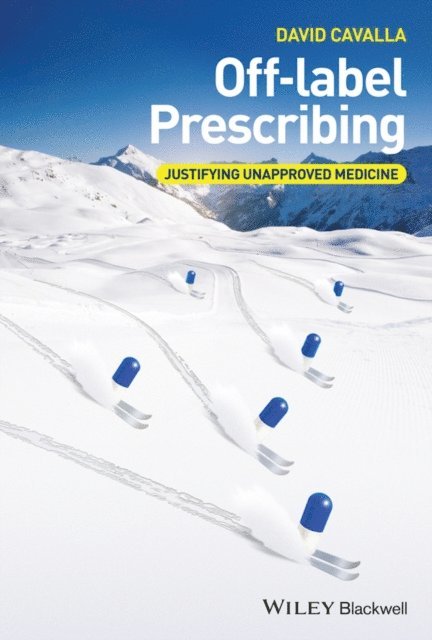
Today’s medicines are regulated for their efficacy and safety and, once approved, they can be marketed for certain uses as justified by the data. Regulatory bodies in developed countries are constituted by legal statute and operate as parts of government, ostensibly in the interests of the people as patients.But once approved, medicines can be used for any purpose the prescriber thinks fit and appropriate for the patient. One in five prescriptions is therefore written outside regulatory purview.Off-label Prescribing looks into the corners of our medicated lives, where drug regulation runs up against medical practice, and concerns the use of a drug that has been approved for one use (in medical parlance, ‘indication’) being used for a different indication; alternatively, being used on a different set of patients from the ones it is approved for, or at a different dose. Usually the patient is unaware of what is going on, having not been informed by their doctor of this aspect of his or her prescribing choice.The book examines how and why this occurs, what the various medical professions have to say about it, and how pharmaceutical companies benefit by moving into this poorly regulated area. Off-label Prescribing pulls these complex issues together in one volume, to highlight current practice, its advantages and weaknesses and how the author suggests practice should evolve in the future. It will therefore be of interest to all those who prescribe (and receive) medicines, combined with a greater objective to provide more transparency and discussion for professionals.
3 048 kr
Skickas inom 5-8 vardagar
Drug repurposing is the development of existing drugs for new uses: given that 9 in 10 drugs that enter drug development are never marketed and therefore represent wasted effort, it is an attractive as well as inherently more efficient process. Three repurposed drugs can be brought to market for the same cost as one new chemical entity; and they can also be identified more quickly, an important benefit for patients whose diseases are progressing faster than therapeutic innovation. But repurposing also requires a fresh look at configuring pharmaceutical R&D, considering clinical, regulatory and patent issues much earlier than would otherwise be the case; a holistic gedanken experiment almost needs to be undertaken at the very start of any repurposing development. In addition to new ways of thinking, the discovery of repurposing opportunities can take advantage of artificial intelligence techniques to match the perfect new use for an existing drug. And while repurposing of medicines has been in the mind of every doctor since Hypocrates, modern clinical practice will simply have to adapt to new repurposing techniques in an age where the number of known diseases is increasing much faster than the healthcare dollars available.