David Clay Large – författare
Visar alla böcker från författaren David Clay Large. Handla med fri frakt och snabb leverans.
15 produkter
Where Ghosts Walked
Munich's Road to the Third Reich
Inbunden, 1997
638 kr
Lägg i varukorg
Munich was the birthplace of Nazism and became the chief cultural shrine of the Third Reich. In exploring the question of why Nazism flourished in the 'Athens of the Isar', David Clay Large has written a compelling account of the cultural roots of the Nazi movement, allowing us to see that the …
Nazi Games
The Olympics of 1936
Inbunden, 2007
532 kr
Lägg i varukorg
The torch relay—that staple of Olympic pageantry—first opened the summer games in 1936 in Berlin. Proposed by the Nazi Propaganda Ministry, the relay was to carry the symbolism of a new Germany across its route through southeastern and central Europe. Soon after the Wehrmacht would march in …
Between Two Fires
Europe's Path in the 1930s
Häftad, 1991
346 kr
Lägg i varukorg
A collection of essays on various incidents of European history that occurred in the 1930s which build up an image of Europe on the brink. Episodes are linked to illustrate this, such as the Stavinsky affair in France, the murder of Ernst Roehm, and the civil war in the red quarters of Vienna.
Nazi Games
The Olympics of 1936
Häftad, 2007
346 kr
Lägg i varukorg
The torch relay—that staple of Olympic pageantry—first opened the summer games in 1936 in Berlin. Proposed by the Nazi Propaganda Ministry, the relay was to carry the symbolism of a new Germany across its route through southeastern and central Europe. Soon after the Wehrmacht would march in …
End of the European Era
1890 to the Present
Av Felix Gilbert, David Clay Large
Häftad, 2008
549 kr
Lägg i varukorg
Its coverage of southern and eastern Europe is expanded, as is its coverage of social history—especially women’s history. It charts the theme of globalization starting with the 1890s and moving through to post-9/11. This new edition also examines how twenty-first-century Europe has addressed issues …
And the World Closed Its Doors: The Story of One Family Abandoned to the Holocaust
Häftad, 2004
314 kr
Lägg i varukorg
Contending with Hitler
Varieties of German Resistance in the Third Reich
Häftad, 1994
482 kr
Lägg i varukorg
Contending with Hitler is a distillation of recent scholarship on Germany's domestic resistance to the Nazi dictatorship. Comprising twelve original essays by leading German and American scholars, it sets forth the issues that specialists and laymen alike must keep in mind as they try to understand …
Munich 1972
Tragedy, Terror, and Triumph at the Olympic Games
Inbunden, 2012
370 kr
Lägg i varukorg
Set against the backdrop of the turbulent late 1960s and early 1970s, this compelling book provides the first comprehensive history of the 1972 Munich Olympic Games, notorious for the abduction of Israeli Olympians by Palestinian terrorists and the hostages’ tragic deaths after a botched rescue …
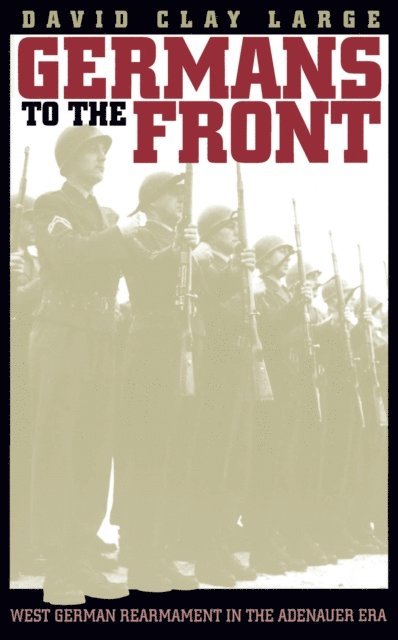
Germans to the Front
West German Rearmament in the Adenauer Era
Häftad, 1995
544 kr
Lägg i varukorg
In Germans to the Front , David Large charts the path from Germany's total demilitarization immediately after World War II to the appearance of the Bundeswehr, the West German army, in 1956. The book is the first comprehensive study in English of West German rearmament during this critical period. …
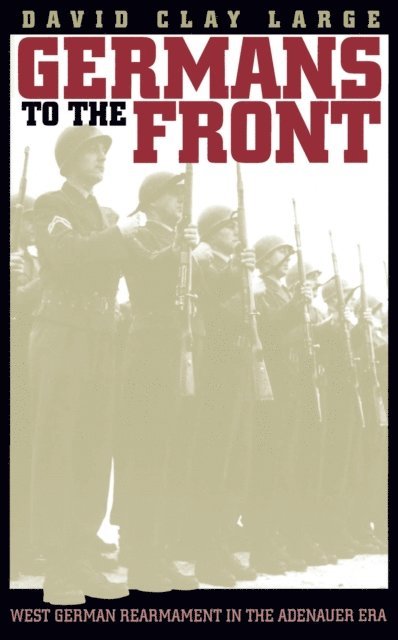
Germans to the Front
West German Rearmament in the Adenauer Era
E-bok, 2000
524 kr
Lägg i varukorg
In Germans to the Front , David Large charts the path from Germany’s total demilitarization immediately after World War II to the appearance of the Bundeswehr, the West German army, in 1956. The book is the first comprehensive study in English of West German rearmament during this critical period. …
Grand Spas of Central Europe
A History of Intrigue, Politics, Art, and Healing
Inbunden, 2015
529 kr
Lägg i varukorg
The Grand Spas of Central Europe leads readers on an irresistible tour through the grand spa towns of Central Europe—fabled places like Baden-Baden, Bad Ems, Bad Gastein, Karlsbad, and Marienbad. Noted historian David Clay Large follows the grand spa story from Greco-Roman antiquity to the present, …
Grand Spas of Central Europe
A History of Intrigue, Politics, Art, and Healing
E-bok, 2015
578 kr
Lägg i varukorg
The Grand Spas of Central Europe leads readers on an irresistible tour through the grand spa towns of Central Europe—fabled places like Baden-Baden, Bad Ems, Bad Gastein, Karlsbad, and Marienbad. Noted historian David Clay Large follows the grand spa story from Greco-Roman antiquity to the present, …
Germans to the Front
West German Rearmament in the Adenauer Era
E-bok, 2000
535 kr
Lägg i varukorg
In Germans to the Front , David Large charts the path from Germany’s total demilitarization immediately after World War II to the appearance of the Bundeswehr, the West German army, in 1956. The book is the first comprehensive study in English of West German rearmament during this critical period. …
Politics of Law and Order
A History of the Bavarian "Einwohnerwehr," 1918-1921 Transactions, American Philosophical Society (vol. 70, Part 2)
Häftad, 1980
440 kr
Tillfälligt slut