David Cobham – författare
206 kr
Skickas inom 5-8 vardagar
129 kr
Läs direkt efter köp
154 kr
Lyssna direkt efter köp
1 115 kr
Skickas inom 7-10 vardagar
This book aims to equip those in, or entering business to assess the opportunities, limitations and major issues surrounding modern business information systems and to appreciate the way that information systems can aid the realization of business objectives.
This book provides students with:
good technical coverage, accessible coverage for both business students and computing students, interesting case studies, including a running case throughout the systems development chapters, showing real world application of ideas and technologies, European context and examples PowerPoint slides and additional test questions for Lecturers online.New to this edition?
Chapters 10-15 on Systems Development, Analysis and Design have been replaced by new chapters taking an object oriented approach. The structured approach is still summarised in chapter 16 and the content from the previous edition is included in full online in the Companion Website. Case studies, questions and activities have been updated throughout. An introduction or increased focus on current topics such as globalisation, agile methods, E-Business, security and trust, off the shelf solutions, CRM, legacy systems integration, business intelligence, data warehousing and data mining.1 079 kr
Skickas inom 10-15 vardagar
3 741 kr
Skickas inom 10-15 vardagar
3 202 kr
Skickas inom 5-8 vardagar
711 kr
Skickas inom 10-15 vardagar
754 kr
Skickas inom 10-15 vardagar
840 kr
Skickas inom 10-15 vardagar
309 kr
Skickas inom 10-15 vardagar
1 662 kr
Läs direkt efter köp
1 822 kr
Skickas inom 7-10 vardagar
204 kr
Skickas inom 5-8 vardagar
1 599 kr
Kommande
589 kr
Kommande
1 614 kr
Skickas inom 7-10 vardagar
686 kr
Skickas inom 7-10 vardagar
589 kr
Skickas inom 7-10 vardagar
740 kr
Läs direkt efter köp
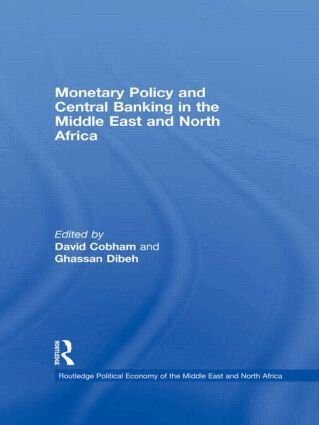
This book examines monetary policy, central banking and exchange rate regimes in the Middle East and North Africa. Part I covers central banking and monetary policy, while Part II covers monetary policy and exchange rate regimes. Some chapters focus on the monetary frameworks of particular countries, including Lebanon, Algeria, Syria, Tunisia, Morocco, and Turkey, outlining the different systems operated in each case, considering their successes and failures, and discussing important issues such as government policy, macroeconomic performance, inflation and inflation targeting, central bank independence and the impact of broader political economic developments on the conduct of monetary policy. Other chapters cover thematic issues across the whole region, including: central bank independence, operations of debtor central banks, the effect of exchange rates on inflation, and the effect on countries’ trade of alternative exchange rate regimes. Drawing on the insights of scholars and policy-makers, this book is a vital resource for anyone wanting to understand the economies of the Middle East and North Africa.
714 kr
Läs direkt efter köp
This book examines monetary policy, central banking and exchange rate regimes in the Middle East and North Africa. Part I covers central banking and monetary policy, while Part II covers monetary policy and exchange rate regimes. Some chapters focus on the monetary frameworks of particular countries, including Lebanon, Algeria, Syria, Tunisia, Morocco, and Turkey, outlining the different systems operated in each case, considering their successes and failures, and discussing important issues such as government policy, macroeconomic performance, inflation and inflation targeting, central bank independence and the impact of broader political economic developments on the conduct of monetary policy. Other chapters cover thematic issues across the whole region, including: central bank independence, operations of debtor central banks, the effect of exchange rates on inflation, and the effect on countries’ trade of alternative exchange rate regimes. Drawing on the insights of scholars and policy-makers, this book is a vital resource for anyone wanting to understand the economies of the Middle East and North Africa.
1 004 kr
Läs direkt efter köp
1 004 kr
Läs direkt efter köp
347 kr
Läs direkt efter köp
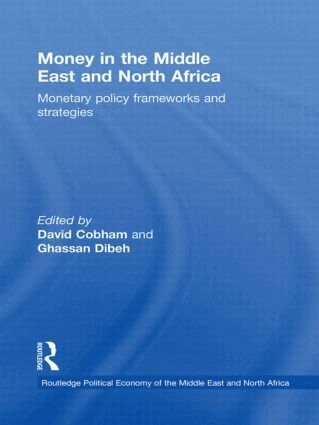
Monetary policy in the Middle East and North African (MENA) countries remains an understudied area; this book fills an important gap by examining monetary policy frameworks and monetary policy strategies in the region. Building on the editors’ earlier book, Monetary Policy and Central Banking in the Middle East and North Africa, which focused on central bank independence issues and on exchange rate regimes, this book emphasises monetary policy strategies. Part I contains an overview of the financial markets and institutions which condition the choice of monetary policy strategy in the countries of the region, followed by single-country studies on aspects of the monetary policy frameworks of Lebanon, Egypt, Jordan, the Palestinian Territory and Turkey. Part II includes analyses of the prospects for inflation targeting in Egypt, Morocco and Tunisia, of the monetary transmission mechanism in the Gulf Cooperation Council countries, of the relative advantages of inflation targeting and exchange rate fixity with reference to Egypt, of the problem of fiscal dominance in Egypt, and of the inflationary implications of exchange rate fixity for Saudi Arabia and Kuwait. The contributors are experts from universities inside and outside the MENA region, from central banks in the region and from outside institutions such as the European Central Bank and the International Monetary Fund.
347 kr
Läs direkt efter köp
Monetary policy in the Middle East and North African (MENA) countries remains an understudied area; this book fills an important gap by examining monetary policy frameworks and monetary policy strategies in the region. Building on the editors’ earlier book, Monetary Policy and Central Banking in the Middle East and North Africa, which focused on central bank independence issues and on exchange rate regimes, this book emphasises monetary policy strategies. Part I contains an overview of the financial markets and institutions which condition the choice of monetary policy strategy in the countries of the region, followed by single-country studies on aspects of the monetary policy frameworks of Lebanon, Egypt, Jordan, the Palestinian Territory and Turkey. Part II includes analyses of the prospects for inflation targeting in Egypt, Morocco and Tunisia, of the monetary transmission mechanism in the Gulf Cooperation Council countries, of the relative advantages of inflation targeting and exchange rate fixity with reference to Egypt, of the problem of fiscal dominance in Egypt, and of the inflationary implications of exchange rate fixity for Saudi Arabia and Kuwait. The contributors are experts from universities inside and outside the MENA region, from central banks in the region and from outside institutions such as the European Central Bank and the International Monetary Fund.
559 kr
Skickas inom 10-15 vardagar
708 kr
Läs direkt efter köp
1 416 kr
Läs direkt efter köp
1 079 kr
Skickas inom 10-15 vardagar
543 kr
Skickas inom 10-15 vardagar