David G. Gilbert - Böcker
Visar alla böcker från författaren David G. Gilbert. Handla med fri frakt och snabb leverans.
4 produkter
4 produkter
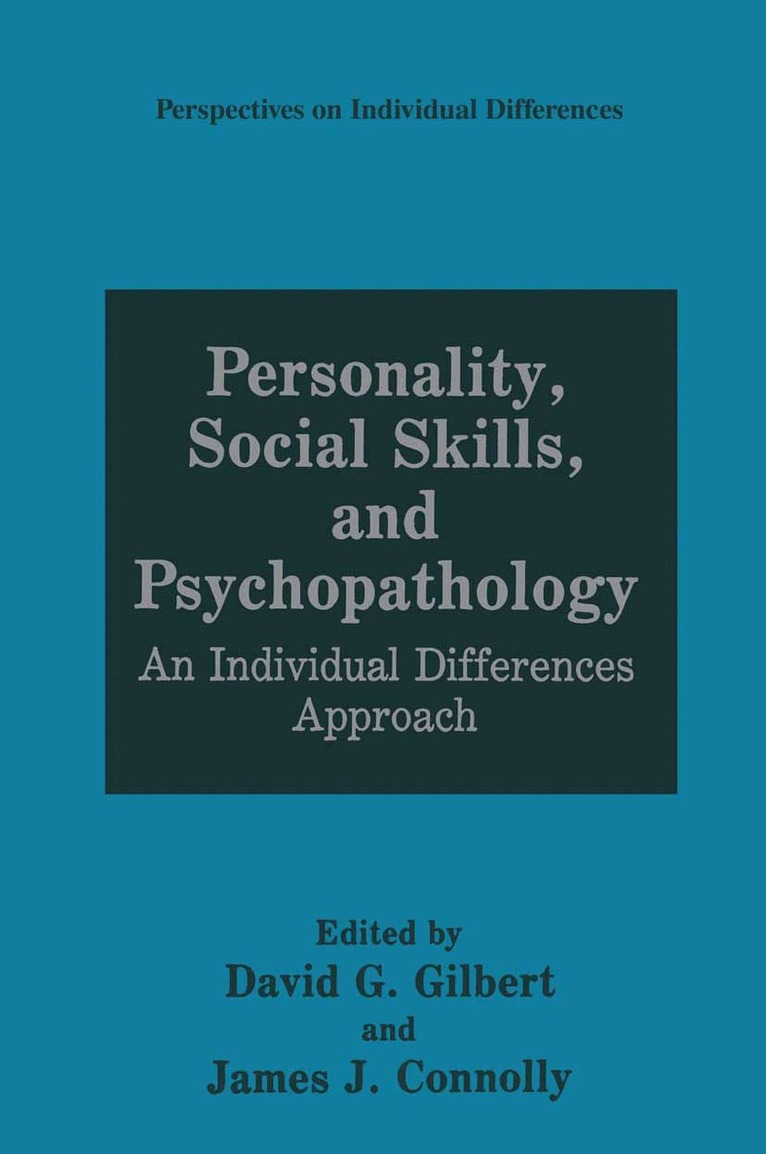
Personality, Social Skills, and Psychopathology
An Individual Differences Approach
Inbunden, Engelska, 1991
1 540 kr
Skickas inom 10-15 vardagar
This book presents an introduction to the study of relationships among per sonality, social skills, and psychopathology. Although research findings dur ing the last decade have made it clear that the relationships among these variables are almost always complex and mUltiply determined, many clini cians and theoreticians have not incorporated such complexities into their models of human behavior and therapeutic intervention. This discrepancy between clinical theory and research-based findings has been of special con cern to us because we have been both empirically oriented academic re searchers and practicing clinicians. It is our belief that clinical theory relat ed to personality, social skills, and psychopathology can be enriched by re search findings from a wide range of fields-from human genetics, tempera ment, and personality to family systems, affect, psychophysiology, and learning. This book is divided into an introductory chapter and three sections. The introductory chapter provides an overview of the issues in the field, compares models, and provides suggestions for further integration and ar ticulation of concepts related to personality, social skills, and psycho pathology. The book's first section presents state-of-the-art general models of interactions among personality, social skills, and psychopathology. Con nolly opens this section with a chapter that reviews longitudinal findings in dicating that personality traits predict the onset of psychopathology and marital distress. The etiology of these and related findings is the subject of other chapters in this section.
498 kr
Skickas inom 10-15 vardagar
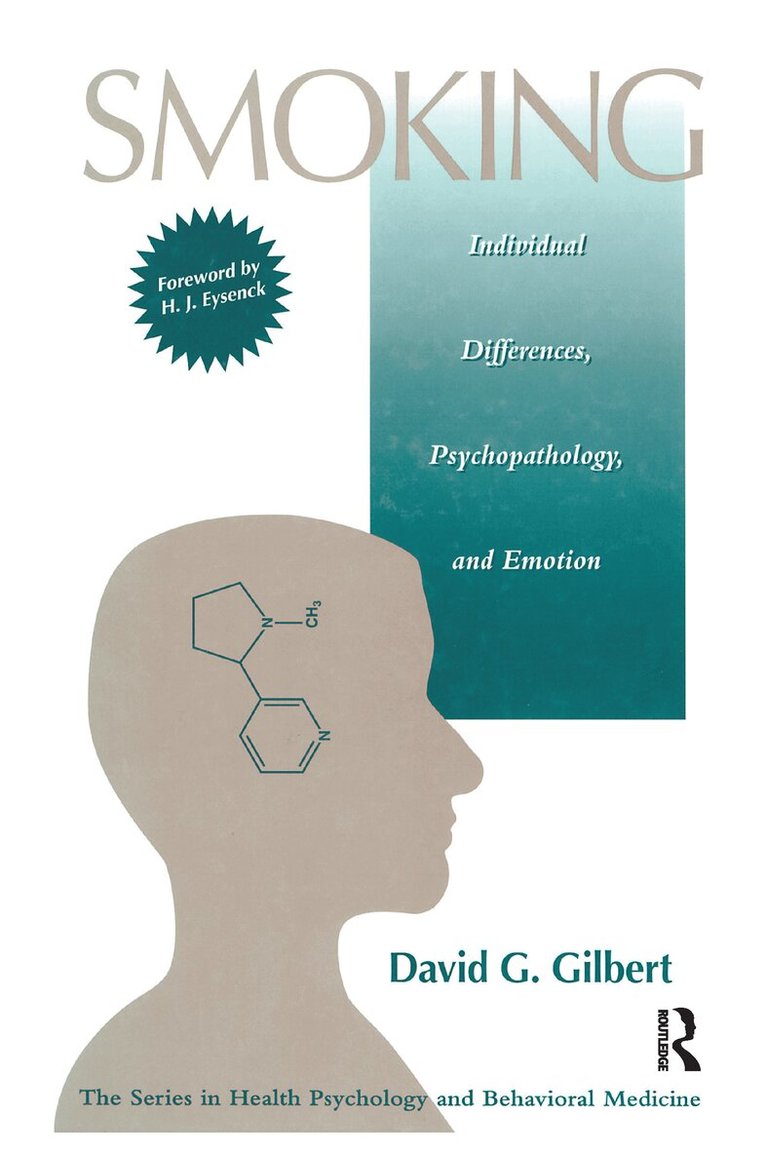
Personality, psychopathology and emotional factors are intimately related to smoking, yet there are few efforts to integrate relevant findings in these areas. Taking a comprehensive, current and detailed view, this text develops an empirically-based model that reflects the multi-dimensional, individual-difference-related causal paths associated with smoking and its reinforcing and affect-modulating effects.; Starting with a review of models of smoking motivation, this volume then goes on to discuss effect and emotion, and the nature, biological bias and relationships among personality, temperament and psychopathology. Other chapters focus attention on questions of when, in whom and what mechanisms promote and reinforce smoking and tobacco use such as gender differences. Utilising the findings of these chapters, the integrative biopsychosocial STAR Model Of Smoking Effects And Motivation Is Presented And Its Implications are examined.; As the percentage of smokers in the general population decreases, a growing number of those continuing to smoke will be even more difficult to reach. Such individuals will benefit from the individualised and intensive interventions suggested here. This text is intended to be of use to psychologists, psychiatrists, physicians, epidemiologists, sociologists and other health professionals.
Personality, Social Skills, and Psychopathology
An Individual Differences Approach
Häftad, Engelska, 2013
1 540 kr
Skickas inom 10-15 vardagar
This book presents an introduction to the study of relationships among per sonality, social skills, and psychopathology. Although research findings dur ing the last decade have made it clear that the relationships among these variables are almost always complex and mUltiply determined, many clini cians and theoreticians have not incorporated such complexities into their models of human behavior and therapeutic intervention. This discrepancy between clinical theory and research-based findings has been of special con cern to us because we have been both empirically oriented academic re searchers and practicing clinicians. It is our belief that clinical theory relat ed to personality, social skills, and psychopathology can be enriched by re search findings from a wide range of fields-from human genetics, tempera ment, and personality to family systems, affect, psychophysiology, and learning. This book is divided into an introductory chapter and three sections. The introductory chapter provides an overview of the issues in the field, compares models, and provides suggestions for further integration and ar ticulation of concepts related to personality, social skills, and psycho pathology. The book's first section presents state-of-the-art general models of interactions among personality, social skills, and psychopathology. Con nolly opens this section with a chapter that reviews longitudinal findings in dicating that personality traits predict the onset of psychopathology and marital distress. The etiology of these and related findings is the subject of other chapters in this section.
1 171 kr
Skickas inom 10-15 vardagar
Personality, psychopathology and emotional factors are intimately related to smoking, yet there are few efforts to integrate relevant findings in these areas. Taking a comprehensive, current and detailed view, this text develops an empirically-based model that reflects the multi-dimensional, individual-difference-related causal paths associated with smoking and its reinforcing and affect-modulating effects.; Starting with a review of models of smoking motivation, this volume then goes on to discuss effect and emotion, and the nature, biological bias and relationships among personality, temperament and psychopathology. Other chapters focus attention on questions of when, in whom and what mechanisms promote and reinforce smoking and tobacco use such as gender differences. Utilising the findings of these chapters, the integrative biopsychosocial STAR Model Of Smoking Effects And Motivation Is Presented And Its Implications are examined.; As the percentage of smokers in the general population decreases, a growing number of those continuing to smoke will be even more difficult to reach. Such individuals will benefit from the individualised and intensive interventions suggested here. This text is intended to be of use to psychologists, psychiatrists, physicians, epidemiologists, sociologists and other health professionals.