David G. Hewitt - Böcker
Visar alla böcker från författaren David G. Hewitt. Handla med fri frakt och snabb leverans.
4 produkter
4 produkter
923 kr
Skickas inom 10-15 vardagar
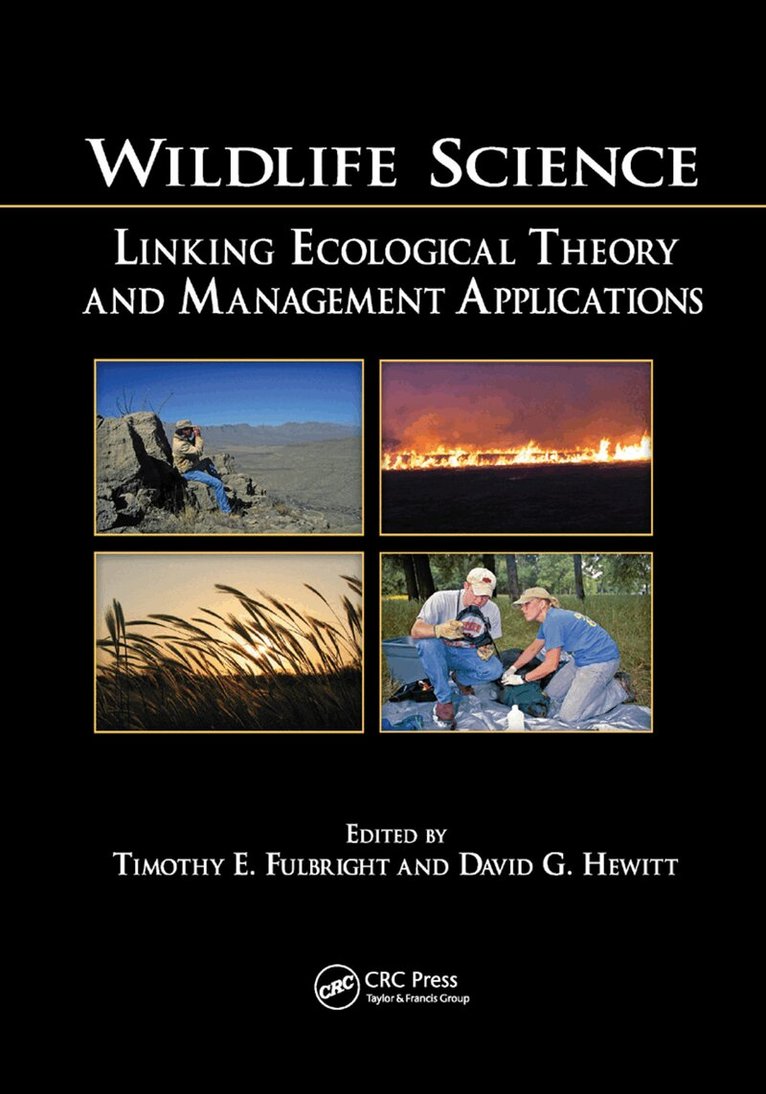
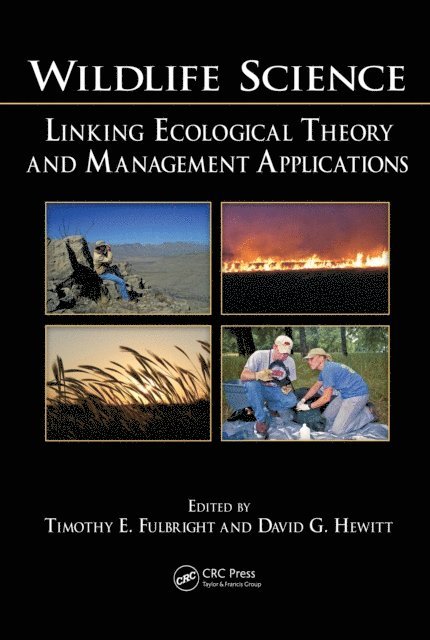
Consciously or not, wildlife managers generally act from a theoretical basis, although they may not be fully versed in the details or ramifications of that theory. In practice, the predictions of the practitioners sometimes prove more accurate than those of the theoreticians. Practitioners and theoreticians need to work together, but this proves difficult when new management ideas and cutting-edge ecological theory are often published in separate scientific outlets with distinctly different readerships.A compilation of the scientific papers presented at the Caesar Kleberg Wildlife Research Institute's 25th Anniversary Conference of April 2006, Wildlife Science: Linking Ecological Theory and Management Applications brings together these two often separate approaches to elucidate the theoretical underpinnings of wildlife management and to apply evolving ecological concepts to changes and adaptations in management practices. Gathering many of the best and greatest minds in wildlife science, this volume addresses the critically important theme of linking ecological theory and management applications. Divided into five parts, the first two parts deal with the landscape ecology of birds and mammals respectively, demonstrating the need for applied theory in gamebird management and the preservation of the cougar. Part three highlights the role of climate when applying ecological theory to habitat management and discusses the emergence of ecosystem management in managing wildlife at the ecosystem scale. Part four considers the management of wildlife disease and reveals the increasing importance of genetics in conservation and ecology. Finally, the economic and social issues affecting wildlife science round out the coverage in part five.Applying emerging ecological theory for the advancement of wildlife management, Wildlife Science: Linking Ecological Theory and Management Applications provides a long awaited cooperative look at the future of ecosystem manage
2 568 kr
Skickas inom 10-15 vardagar
Consciously or not, wildlife managers generally act from a theoretical basis, although they may not be fully versed in the details or ramifications of that theory. In practice, the predictions of the practitioners sometimes prove more accurate than those of the theoreticians. Practitioners and theoreticians need to work together, but this proves difficult when new management ideas and cutting-edge ecological theory are often published in separate scientific outlets with distinctly different readerships.A compilation of the scientific papers presented at the Caesar Kleberg Wildlife Research Institute's 25th Anniversary Conference of April 2006, Wildlife Science: Linking Ecological Theory and Management Applications brings together these two often separate approaches to elucidate the theoretical underpinnings of wildlife management and to apply evolving ecological concepts to changes and adaptations in management practices. Gathering many of the best and greatest minds in wildlife science, this volume addresses the critically important theme of linking ecological theory and management applications. Divided into five parts, the first two parts deal with the landscape ecology of birds and mammals respectively, demonstrating the need for applied theory in gamebird management and the preservation of the cougar. Part three highlights the role of climate when applying ecological theory to habitat management and discusses the emergence of ecosystem management in managing wildlife at the ecosystem scale. Part four considers the management of wildlife disease and reveals the increasing importance of genetics in conservation and ecology. Finally, the economic and social issues affecting wildlife science round out the coverage in part five.Applying emerging ecological theory for the advancement of wildlife management, Wildlife Science: Linking Ecological Theory and Management Applications provides a long awaited cooperative look at the future of ecosystem manage
2 703 kr
Skickas inom 10-15 vardagar
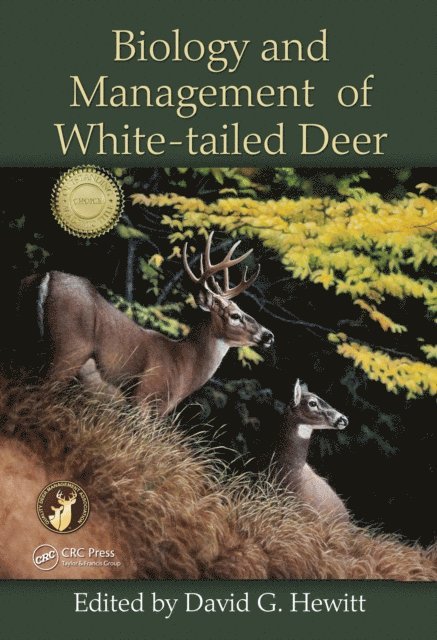
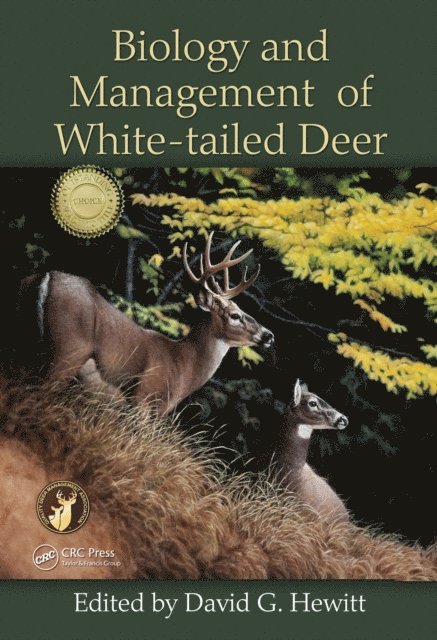
Winner of the Wildlife Society Outstanding Edited Book Award for 2013!Winner of the Texas Chapter of The Wildlife Society Outstanding Book Award for 2011!Winner of a CHOICE Outstanding Academic Title Award for 2011!Biology and Management of White-tailed Deer organizes and presents information on the most studied large mammal species in the world. The book covers the evolutionary history of the species, its anatomy, physiology, and nutrition, population dynamics, and ecology across its vast range (from central Canada through northern South America). The book then discusses the history of management of white-tailed deer, beginning with early Native Americans and progressing through management by Europeans and examining population lows in the early 1900s, restocking efforts through the mid 1900s, and recent, overabundant populations that are becoming difficult to manage in many areas. Features:Co-published with the Quality Deer Management AssociationCompiles valuable information for white-tailed deer enthusiasts, managers, and biologistsWritten by an authoritative author team from diverse backgroundsIntegrates white-tailed deer biology and management into a single volumeProvides a thorough treatment of white-tailed deer antler biology Includes downloadable resources with color imagesThe backbone of many state wildlife management agencies' policies and a featured hunting species through much of their range, white-tailed deer are an important species ecologically, socially, and scientifically in most areas of North America. Highly adaptable and now living in close proximity to humans in many areas, white-tailed deer are both the face of nature and the source of conflict with motorists, home-owners, and agricultural producers. Capturing the diverse aspects of white-tailed deer research, Biology and Management of White-tailed Deer is a reflection of the resources invested in the study of the species’ effects on ecosystems, predator-prey dynamics, population regulation, foraging behavior, and browser physiology.
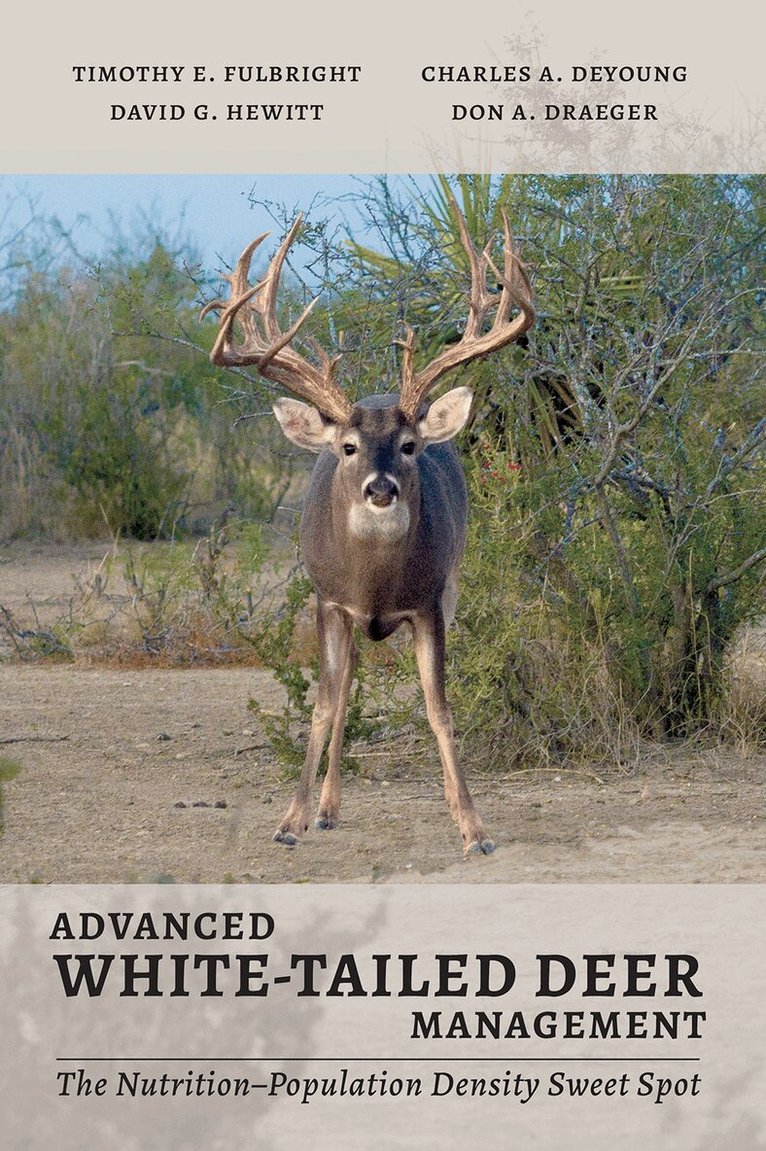
Advanced White-Tailed Deer Management
The Nutrition–Population Density Sweet Spot
Häftad, Engelska, 2023
360 kr
Skickas inom 7-10 vardagar
In 2003, a cadre of researchers set out to determine what combination of supplemental or natural nutrition and white-tailed deer population density would produce the largest antlers on bucks without harming vegetation. They would come to call this combination “the sweet spot.” Over the course of their 15-year experiment, conducted through the Caesar Kleberg Wildlife Research Institute at Texas A&M University–Kingsville, Timothy E. Fulbright, Charles A. DeYoung, David G. Hewitt, Don A. Draeger, and 25 graduate students tracked the effects of deer density and enhanced versus natural nutrition on vegetation conditions. Through wet years and dry, in a semiarid environment with frequent droughts, they observed deer nutrition and food habits and analyzed population dynamics. Containing the results of this landmark, longitudinal study, in keeping with the Kleberg Institute’s mission, this volume provides science-based information for enhancing the conservation and management of Texas wildlife. Advanced White-Tailed Deer Management: The Nutrition–Population Density Sweet Spot presents this critical research for the first time as a reference for hunters, landowners, wildlife managers, and all those who work closely with white-tailed deer populations. It explains the findings of the Comanche-Faith Project and the implications of these findings for white-tailed deer ecology and management throughout the range of the species with the goal of improving management.