David G. Sansing – författare
Visar alla böcker från författaren . Handla med fri frakt och snabb leverans.
4 produkter
4 produkter
Häftad, Engelska, 2008
275 kr
Skickas inom 10-15 vardagar
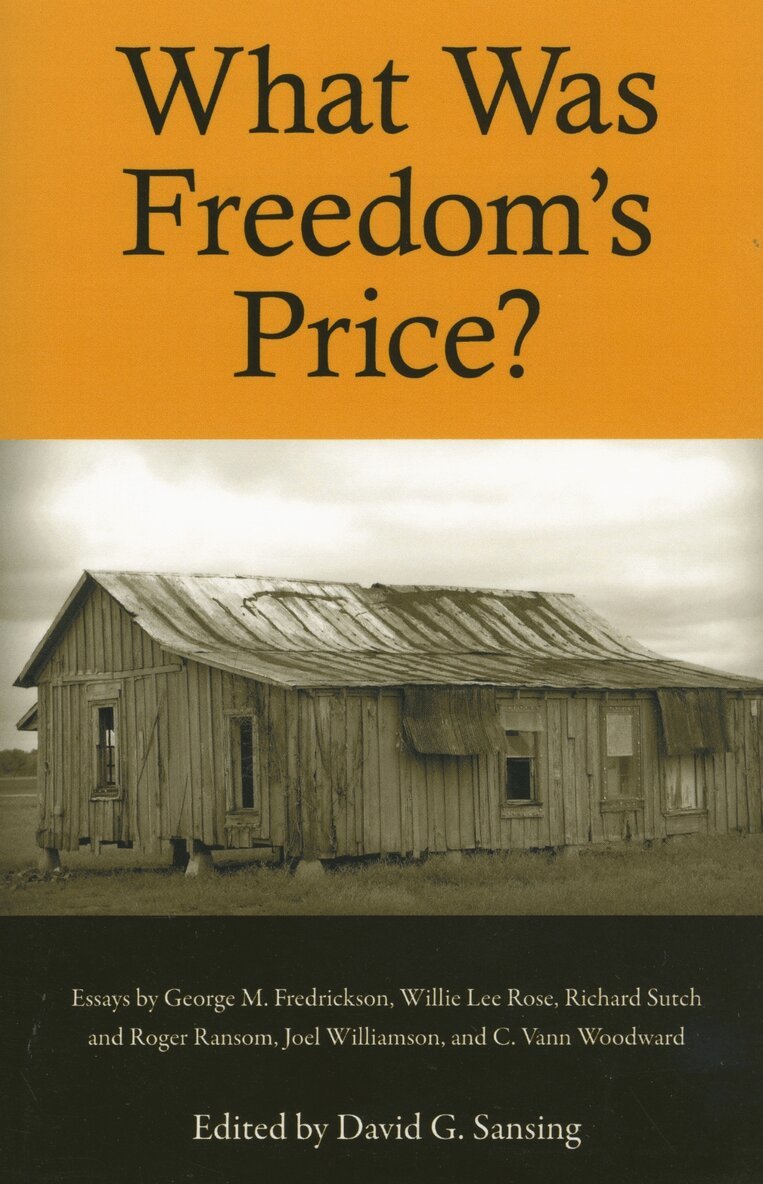
What Was Freedom's Price? Edited by David G. Sansing Essays by Willie Lee Rose, Joel Williamson, Richard Sutch & Roger Ransom, George M. Fredrickson, and C. Vann Woodward The political and economic instability of the post-Civil War South prompted Congress to enact legislation that brought sweeping changes to the region. However, the complexities of the new order in combination with the recalcitrance of the southern character produced a postwar society in which emancipated African Americans occupied a status somewhere between slavery and full citizenship. What was freedom like to these Blacks whose dream of equality and civil rights remained in deferral for more than a century? The essays in What Was Freedom's Price?, authored by now-well-known scholars and delivered during the backdrop of America's bicentennial, examine this question and probe the results of economic, social, and racial readjustment in the postbellum South. This book is the opening to a three-part investigation which includes The Age of Segregation: Race Relations in the South, 1890-1945 and concludes with Have We Overcome? Race Relations Since Brown, 1954-1979.All three are available again in paperback from University Press of Mississippi. David G. Sansing is Professor Emeritus, Department of History, University of Mississippi.
Häftad, Engelska, 2008
388 kr
Skickas inom 10-15 vardagar
Making Haste Slowly: The Troubled History of Higher Education in Mississippi by David G. Sansing The troubled history of higher education in Mississippi is a mirror image of the cultural and political dynamics that have shaped the state's history over the last two centuries. The interaction between race and place, the juxtaposition of wealth and poverty, illiteracy and literary genius, the conflict and change and continuity that mark the contours of its history, have influenced the development of higher education in Mississippi. In this study of the origin and evolution of the state's collegiate system, David Sansing examines higher education in its broad cultural context and its elaborate involvement with the rest of society. Although he focuses on one southern state he links the growth of higher education in Mississippi to both regional and national developments. Sansing also contrasts the strong popular support for higher education with the general neglect of public schools, a longstanding tradition in Mississippi that dates from the pre-Civil War period.From the antebellum artisans and the sharecroppers of the Gilded Age, to the redneck farmers of the debt-ridden twenties and post-World War II blacks with their rising expectations, Mississippians have struggled and sacrificed to send their children to college as a way up and out of poverty. Sansing's history of higher education in Mississippi is the first such study since 1899 and is the most recent of the five modern state histories of higher education. This pathbreaking study traces the gradual and often controversial expansion of Mississippi's institutions of higher learning from the founding of Jefferson College in 1802, through the sectional crisis and Civil War, the Gilded Age, the Great Depression, the Bilbo Purge, World War II, the Meredith Crisis, and Civil Rights Revolution. Sansing also details the problems caused by the tradition of institutional autonomy and documents the periodic disruption caused by political intervention. Throughout most of their history each of the state's eight public universities has been autonomous, bound together only by a single board of trustees and a common funding source.But they have recently been restructured into a "system of universities." That new relationship, which will permit more coordination among the eight institutions, plus the recent creation of the post of commissioner of higher education, will bring both changes and new opportunities to the state's system of higher education. David G. Sansing is Professor Emeritus of History at the University of Mississippi.
Häftad, Engelska, 2009
388 kr
Skickas inom 10-15 vardagar
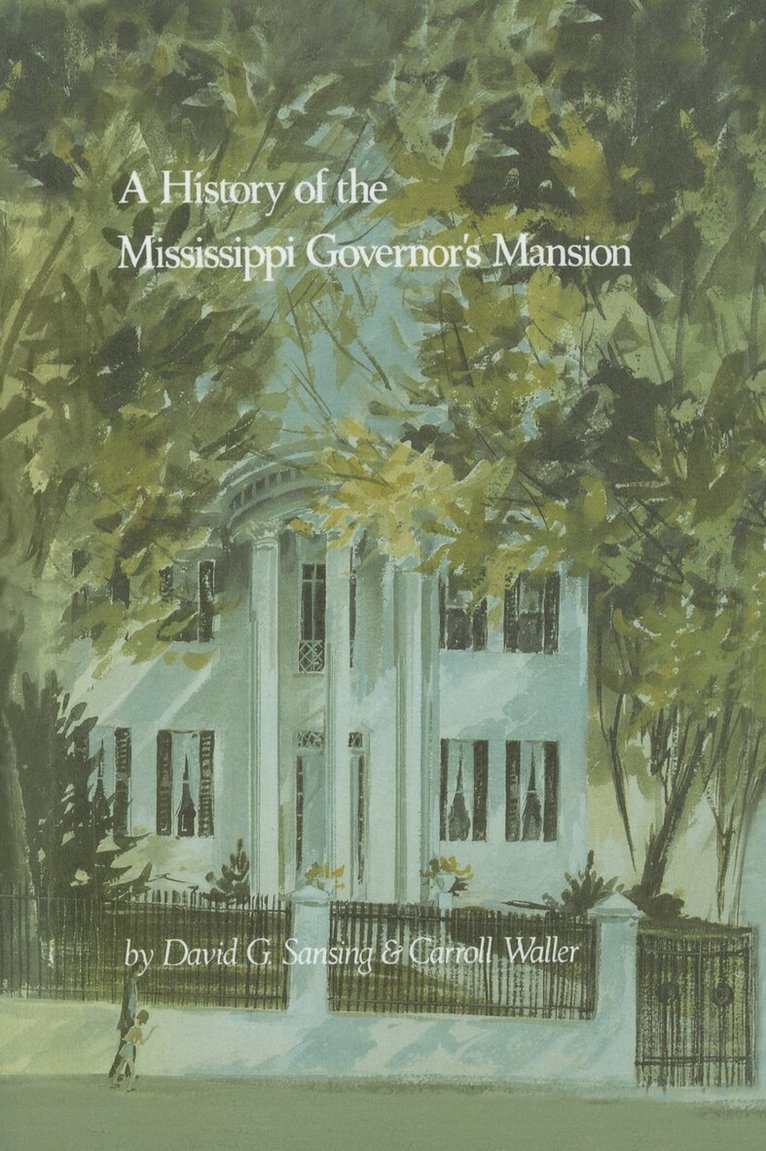
Since 1842, when Governor Tilghman M. Tucker and his family occupied the mansion shortly after his inauguration on January 10, the Mississippi Governor's Mansion has served as the state's official executive residence. Designed by William Nichols in the popular classical style, the mansion soon became a Jackson landmark, and a legendary hospitality surrounded its early years. Mississippi's first families ""threw open the doors"" of the mansion and shared its hospitality with plain citizens as graciously and generously as they did with celebrities. This tradition was interrupted only during the Civil War when the state capital was moved to eastern Mississippi to escape the advance of Union troops. Although much of Jackson was burned during the Vicksburg campaign in the summer of 1863, the mansion was spared. General William T. Sherman used it briefly as a command post, and his troops bivouacked on its spacious grounds.At the beginning of the twentieth century, advancing real estate prices in Jackson caused the legislature to consider the disposal of the mansion to make its downtown location available for commercial development. This proposal promoted various civic and patriotic organizations throughout the state to wage a ""Save the Mansion"" campaign. The legislature was implored not to destroy ""what Sherman would not burn."" Sentiment prevailed over commerce, and the mansion was saved.However, structural deterioration over the next seventy years was left uncorrected, and by 1971 was so advanced that the first family was advised to vacate the building. During the following election campaign, Carroll Waller, wife of gubernatorial candidate Bill Waller, called upon the women of Mississippi to join her in an effort to preserve the ""home of our heritage"" and to restore it to its past splendor. Following his election, Governor Waller and the First Lady initiated a three-year project that restored the mansion to the historical period of its construction and guaranteed its continued use for many years to come. The mansion was designated a National Historic Landmark in 1975.
Häftad, Engelska, 2015
252 kr
Skickas inom 3-6 vardagar