David G. Troyansky – författare
Visar alla böcker från författaren David G. Troyansky. Handla med fri frakt och snabb leverans.
10 produkter
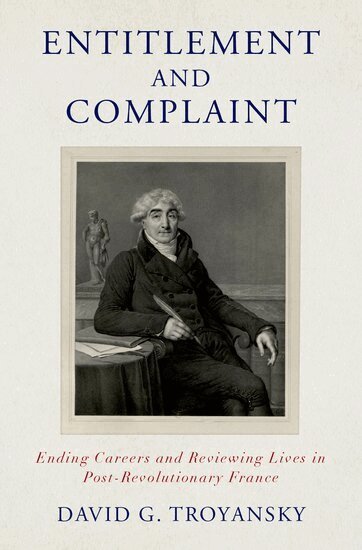
Entitlement and Complaint
Ending Careers and Reviewing Lives in Post-Revolutionary France
Inbunden, 2024
888 kr
Lägg i varukorg
Entitlement and Complaint explores the early history of the right to retirement and the shaping of the modern life course, applying cutting-edge insights from social, cultural, and political history as well as gerontology to an extraordinarily rich collection of retirement dossiers from the …
Entitlement and Complaint
Ending Careers and Reviewing Lives in Post-Revolutionary France
E-bok, 2023
793 kr
Lägg i varukorg
Entitlement and Complaint explores the early history of the right to retirement and the shaping of the modern life course, applying cutting-edge insights from social, cultural, and political history as well as gerontology to an extraordinarily rich collection of retirement dossiers from the …
Entitlement and Complaint
Ending Careers and Reviewing Lives in Post-Revolutionary France
E-bok, 2023
793 kr
Lägg i varukorg
Entitlement and Complaint explores the early history of the right to retirement and the shaping of the modern life course, applying cutting-edge insights from social, cultural, and political history as well as gerontology to an extraordinarily rich collection of retirement dossiers from the …
French Revolution in Culture and Society
Av Norwood Andrews, Alfred Cismaru m. fl.
Inbunden, 1991
1095 kr
Lägg i varukorg
This volume examines the issue of the timing of cultural change, problems of Revolutionary anticipations and reverberations, and the relationship between culture, politics, and society. Individual essays combine both old and new approaches, ranging from textual analysis to the study of local …
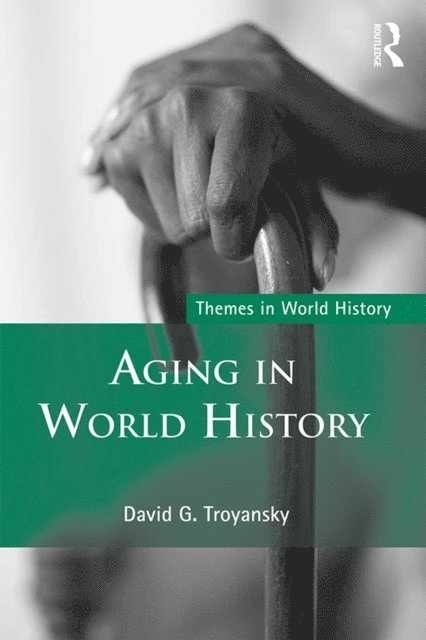
Aging in World History
Inbunden, 2015
2578 kr
Lägg i varukorg
In Aging in World History, David G. Troyansky presents the first global history of aging. At a time when demographic aging has become a source of worldwide concern, and more people are reaching an advanced age than ever before, the history of old age helps us understand how we arrived at the …
Aging in World History
Häftad, 2015
725 kr
Lägg i varukorg
In Aging in World History, David G. Troyansky presents the first global history of aging. At a time when demographic aging has become a source of worldwide concern, and more people are reaching an advanced age than ever before, the history of old age helps us understand how we arrived at the …
Transnational Spaces and Identities in the Francophone World
Av Hafid Gafaïti, Patricia M. E. Lorcin m. fl.
Häftad, 2009
446 kr
Lägg i varukorg
The dissolution of the French Empire and the ensuing rush of immigration have led to the formation of diasporas and immigrant cultures that have transformed French society and the immigrants themselves. Transnational Spaces and Identities in the Francophone World examines the impact of this …
Aging in World History
E-bok, 2015
838 kr
Lägg i varukorg
In Aging in World History , David G. Troyansky presents the first global history of aging. At a time when demographic aging has become a source of worldwide concern, and more people are reaching an advanced age than ever before, the history of old age helps us understand how we arrived at the …
Aging in World History
E-bok, 2015
856 kr
Lägg i varukorg
In Aging in World History , David G. Troyansky presents the first global history of aging. At a time when demographic aging has become a source of worldwide concern, and more people are reaching an advanced age than ever before, the history of old age helps us understand how we arrived at the …
Cultural History of Old Age
Av David G. Troyansky, Tim Parkin
2027
6700 kr
Kommande
The meanings given to old age reveal how a culture sees itself and what it values. The history of advanced age reflects our changing concepts of and attitudes to body and mind, authority and the past, community and the individual, economic and political power, work and leisure, and health and …