David Griffin – författare
Visar alla böcker från författaren . Handla med fri frakt och snabb leverans.
11 produkter
11 produkter
Häftad, Engelska, 2015
595 kr
Skickas inom 5-8 vardagar
Häftad, Engelska, 2016
1 273 kr
Skickas inom 5-8 vardagar
Inbunden, Engelska, 2025
1 205 kr
Skickas inom 5-8 vardagar
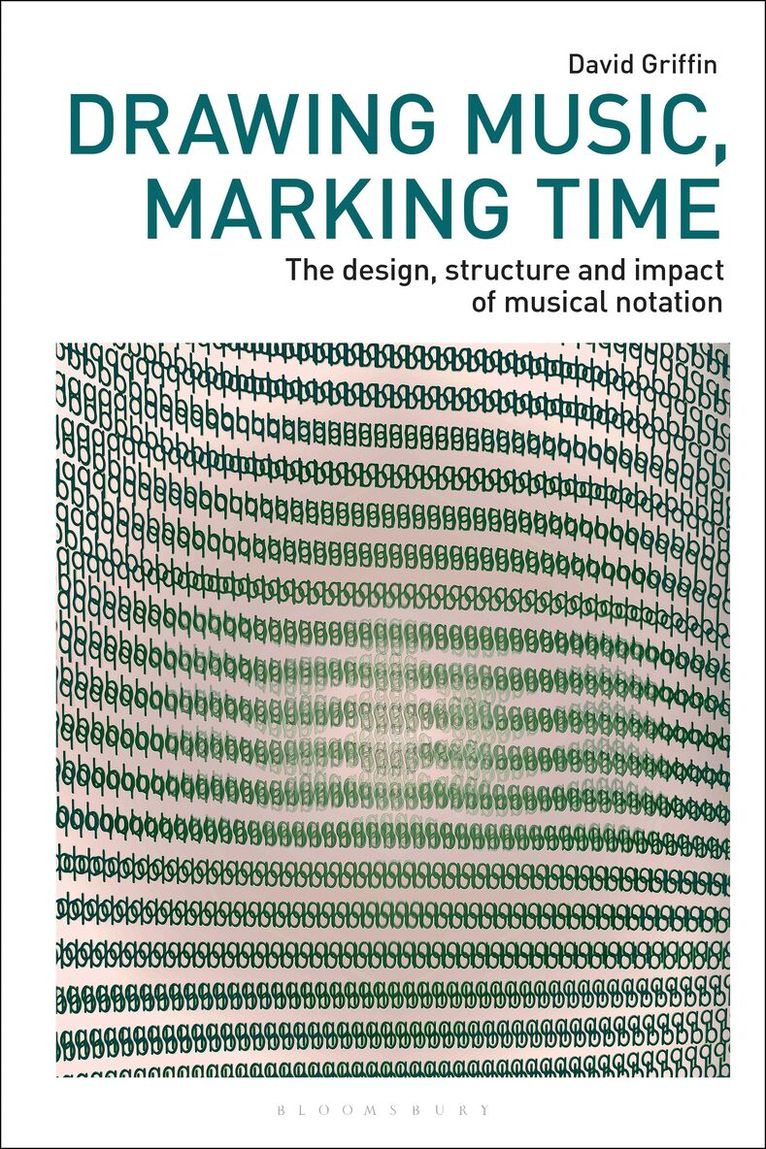
Marking down the complexities of musical pieces on paper allows them to become portable, shareable, and eminently teachable, but how are the simple geometries of a music notation unfolded into space and time?A music notation is an almost impossibly complicated bit of drawing. Calling it a map or a diagram does not quite do the trick. Its tracery supplies mechanisms for planning, composition, analysis, annotation, and performance of music. But how is it that we read that simple, strategic two-dimensional geometry and make such complex, four-dimensional performances? In this book David Griffin guides readers to a comprehensive understanding of the structural properties of music notations, with a particular focus on the standard Western staff notation system, looking at composers such as Bach, John Cage, Earle Brown and Stockhausen.Developed over a thousand years ago, the staff notation is a geometrical drawing method using dots and lines on a horizontal timeline for explaining the structure of a musical piece. The system behaves a bit like a picture, but it is also like a diagram, and a bit like writing in its structure. In the hands of an experienced user, the notation’s complex of marks and phatic elements allows us to leave behind the mere denotation of diagrams or pictures to become a connotative drawing system. This book will attempt to de-code music drawings, untangling their strange knots of graphic and linguistic elements. Using a series of visual examples, Griffin presents background information on how the staff notation developed as an inter-linguistic inscription, a drawing that slips through the mere denotation of pictorial or diagrammatic graphics to become a connotative system, with which we may craft subtle and powerful elements of musical poetry.
E-bok
PDF, Engelska, 20251 325 kr
Läs direkt efter köp
Marking down the complexities of musical pieces on paper allows them to become portable, shareable, and eminently teachable, but how are the simple geometries of a music notation unfolded into space and time? A music notation is an almost impossibly complicated bit of drawing. Calling it a map or a diagram does not quite do the trick. Its tracery supplies mechanisms for planning, composition, analysis, annotation, and performance of music. But how is it that we read that simple, strategic two-dimensional geometry and make such complex, four-dimensional performances? In this book David Griffin guides readers to a comprehensive understanding of the structural properties of music notations, with a particular focus on the standard Western staff notation system, looking at composers such as Bach, John Cage, Earle Brown and Stockhausen.Developed over a thousand years ago, the staff notation is a geometrical drawing method using dots and lines on a horizontal timeline for explaining the structure of a musical piece. The system behaves a bit like a picture, but it is also like a diagram, and a bit like writing in its structure. In the hands of an experienced user, the notation''s complex of marks and phatic elements allows us to leave behind the mere denotation of diagrams or pictures to become a connotative drawing system. This book will attempt to de-code music drawings, untangling their strange knots of graphic and linguistic elements. Using a series of visual examples, Griffin presents background information on how the staff notation developed as an inter-linguistic inscription, a drawing that slips through the mere denotation of pictorial or diagrammatic graphics to become a connotative system, with which we may craft subtle and powerful elements of musical poetry.
1 325 kr
Läs direkt efter köp
Marking down the complexities of musical pieces on paper allows them to become portable, shareable, and eminently teachable, but how are the simple geometries of a music notation unfolded into space and time? A music notation is an almost impossibly complicated bit of drawing. Calling it a map or a diagram does not quite do the trick. Its tracery supplies mechanisms for planning, composition, analysis, annotation, and performance of music. But how is it that we read that simple, strategic two-dimensional geometry and make such complex, four-dimensional performances? In this book David Griffin guides readers to a comprehensive understanding of the structural properties of music notations, with a particular focus on the standard Western staff notation system, looking at composers such as Bach, John Cage, Earle Brown and Stockhausen.Developed over a thousand years ago, the staff notation is a geometrical drawing method using dots and lines on a horizontal timeline for explaining the structure of a musical piece. The system behaves a bit like a picture, but it is also like a diagram, and a bit like writing in its structure. In the hands of an experienced user, the notation''s complex of marks and phatic elements allows us to leave behind the mere denotation of diagrams or pictures to become a connotative drawing system. This book will attempt to de-code music drawings, untangling their strange knots of graphic and linguistic elements. Using a series of visual examples, Griffin presents background information on how the staff notation developed as an inter-linguistic inscription, a drawing that slips through the mere denotation of pictorial or diagrammatic graphics to become a connotative system, with which we may craft subtle and powerful elements of musical poetry.
Häftad, Engelska, 2010
714 kr
Skickas inom 5-8 vardagar
Häftad, Engelska, 2011
714 kr
Skickas inom 5-8 vardagar
Häftad, Engelska, 2011
200 kr
Skickas inom 5-8 vardagar
Inbunden, Engelska, 2013
2 293 kr
Skickas inom 5-8 vardagar
2 690 kr
Läs direkt efter köp
Häftad, Engelska, 2026
253 kr
Kommande
That Race is a collection of biographical short stories and interviews, from a broad range of sports people. Some of the subjects are well known, others aren't, but what it examines is the spectrum of human characteristics, emotions, passion and resilience. In uncovering the stories, we learn about Australia's indigenous history and the quirkiness of human nature.Each non-fiction tale explores significant moments and, unlike most sports books, the on-field action takes a back seat to the focus on life and emotion. Most of the interviews highlight what happened outside the ground, oval, ring or track. Some stories take place around Cathy Freeman's win in the 1996 Stawell 400 metres, whilst others, are more metaphorical, but no less impactful.