David H. Fleming – författare
Visar alla böcker från författaren David H. Fleming. Handla med fri frakt och snabb leverans.
10 produkter
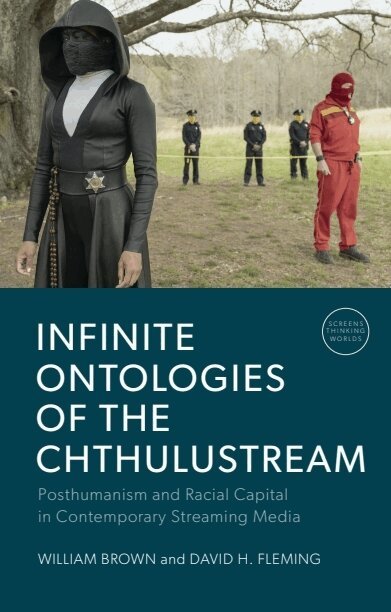
Infinite Ontologies of the Chthulustream
Posthumanism and Racial Capital in Contemporary Streaming Media
Av William Brown, David H. Fleming
Inbunden, 2025
1483 kr
Lägg i varukorg
Brown and Fleming employ the twin discourses of critical race theory and posthumanism in order to expose how multinational platforms like Netflix play a role in both problematising and perpetuating deeply entrenched violences lurking within the intersections of racism, capitalism, and technology. …
Infinite Ontologies of the Chthulustream
Posthumanism and Racial Capital in Contemporary Streaming Media
Av William Brown, David H. Fleming
Häftad, 2027
397 kr
Kommande
Brown and Fleming employ the twin discourses of critical race theory and posthumanism in order to expose how multinational platforms like Netflix play a role in both problematising and perpetuating deeply entrenched violences lurking within the intersections of racism, capitalism, and technology. …
Squid Cinema From Hell
Kinoteuthis Infernalis and the Emergence of Chthulumedia
Av William Brown, David H. Fleming
Inbunden, 2020
1351 kr
Lägg i varukorg
Here be Kraken! The Squid Cinema From Hell draws upon writers like Vilém Flusser, Donna J. Haraway, Graham Harman and Eugene Thacker to offer up a critical analysis of cephalopods and other tentacular creatures in contemporary media, while also speculating that digital media might themselves …
Squid Cinema From Hell
Kinoteuthis Infernalis and the Emergence of Chthulumedia
Av William Brown, David H. Fleming
Häftad, 2020
418 kr
Lägg i varukorg
Here be Kraken! The Squid Cinema From Hell draws upon writers like Vilém Flusser, Donna J. Haraway, Graham Harman and Eugene Thacker to offer up a critical analysis of cephalopods and other tentacular creatures in contemporary media, while also speculating that digital media might themselves …
Unbecoming Cinema
Unsettling Encounters with Ethical Event Films
Inbunden, 2017
1508 kr
Lägg i varukorg
Unbecoming Cinema explores the notion of cinema as a living, active agent, capable of unsettling and reconfiguring a person’s thoughts, senses, and ethics. Film, according to David H. Fleming, is a dynamic force, arming audiences with the ability to see and make a difference in the world. Drawing …
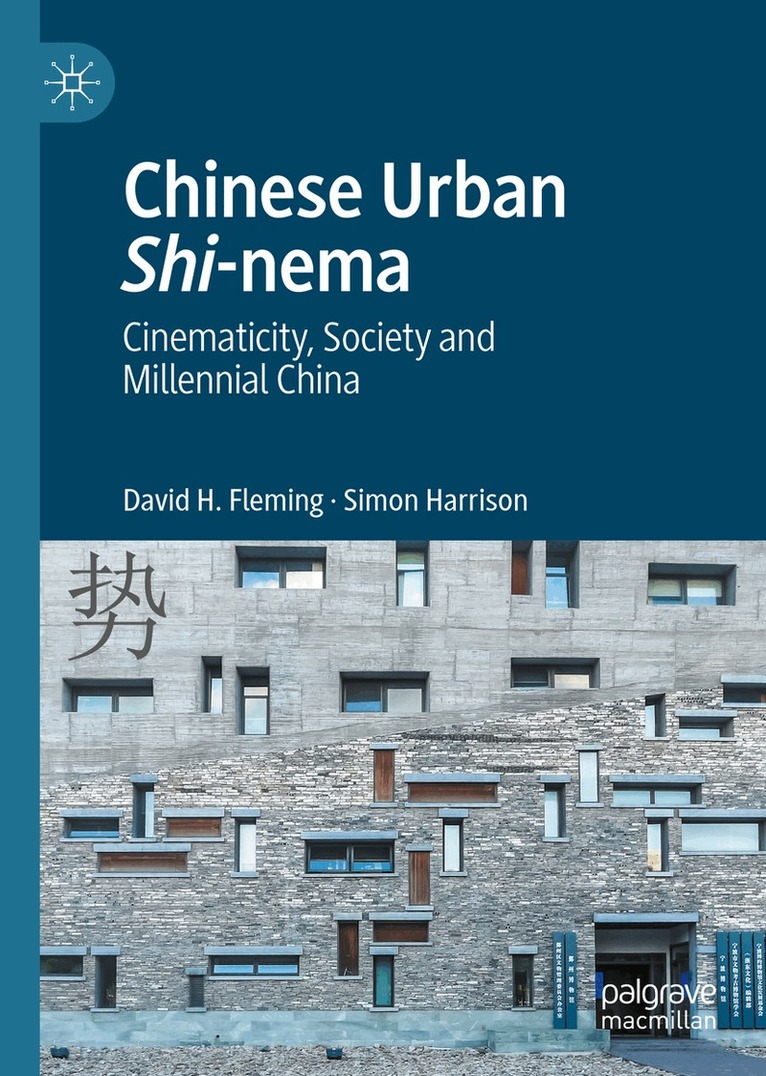
Chinese Urban Shi-nema
Cinematicity, Society and Millennial China
Av David H. Fleming, Simon Harrison
Inbunden, 2020
1243 kr
Lägg i varukorg
This book dives into the mise-en-scène of contemporary China to explore the “becoming cinema” of Chinese cities, societies, and subjectivities. Set in the wake of China’s radical and rapid period of urbanization and infrastructural transformation, and situating itself in the processual city of …
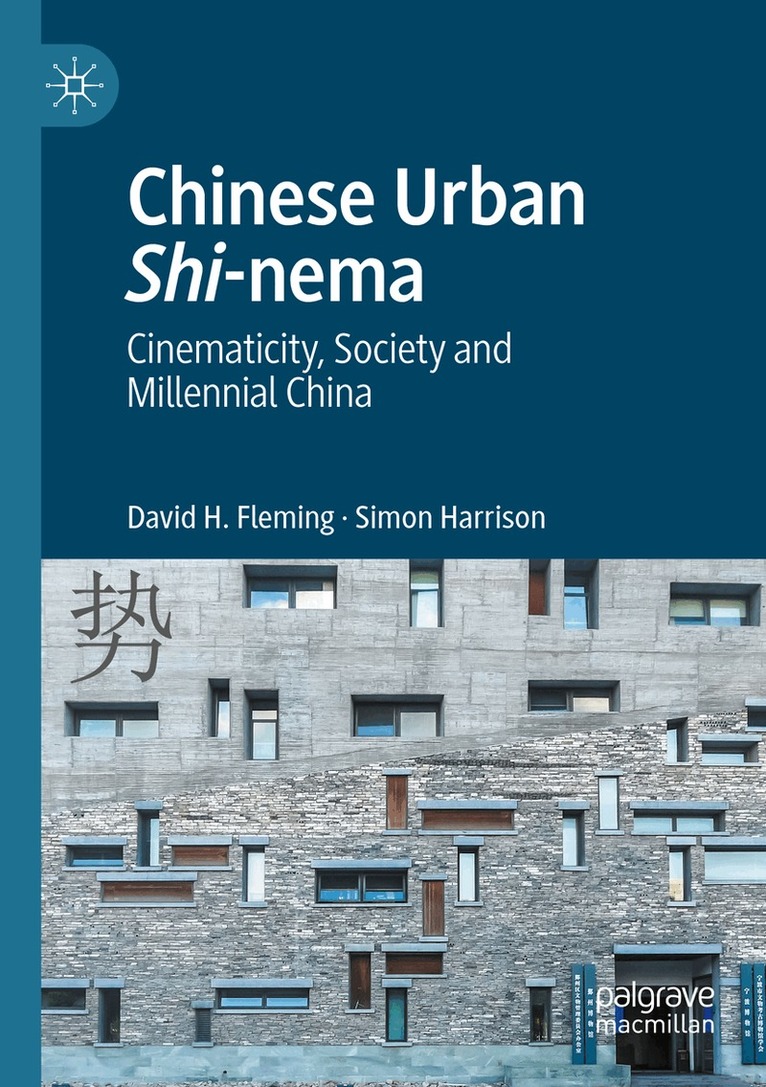
Chinese Urban Shi-nema
Cinematicity, Society and Millennial China
Av Simon Harrison, David H. Fleming
E-bok, 2020
1634 kr
Lägg i varukorg
This book dives into the mise-en-scène of contemporary China to explore the “becoming cinema” of Chinese cities, societies, and subjectivities. Set in the wake of China’s radical and rapid period of urbanization and infrastructural transformation, and situating itself in the processual city of …
Chinese Urban Shi-nema
Cinematicity, Society and Millennial China
Av David H. Fleming, Simon Harrison
Häftad, 2021
1243 kr
Lägg i varukorg
This book dives into the mise-en-scène of contemporary China to explore the “becoming cinema” of Chinese cities, societies, and subjectivities. Set in the wake of China’s radical and rapid period of urbanization and infrastructural transformation, and situating itself in the processual city of …
Cinematically Rendering Confucius
Chinese Film Philosophy and the Efficacious Screen-Play
Inbunden, 2025
529 kr
Lägg i varukorg
Cinematically Rendering Confucius marks the first book-length enquiry into China’s first two big screen treatments of arguably the best-known and most influential thinker in world history: Confucius. By interweaving methods drawn from Film Studies, Comparative Philosophy, and Media Archaeology in …
Cinematically Rendering Confucius
Chinese Film Philosophy and the Efficacious Screen-Play
E-bok, 2025
692 kr
Lägg i varukorg
Cinematically Rendering Confucius marks the first book-length enquiry into China’s first two big screen treatments of arguably the best-known and most influential thinker in world history: Confucius. By interweaving methods drawn from Film Studies, Comparative Philosophy, and Media Archaeology in …