David H. McIntyre – författare
Visar alla böcker från författaren David H. McIntyre. Handla med fri frakt och snabb leverans.
6 produkter
6 produkter
717 kr
Skickas inom 7-10 vardagar
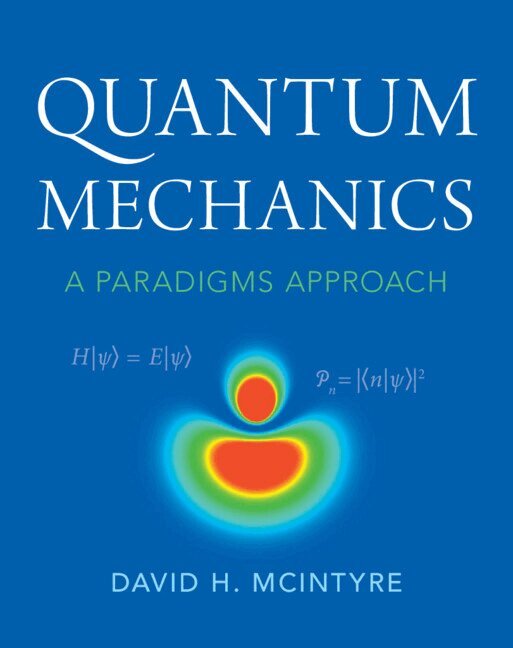
This popular undergraduate quantum mechanics textbook is now available in a more affordable printing from Cambridge University Press. Unlike many other books on quantum mechanics, this text begins by examining experimental quantum phenomena such as the Stern-Gerlach experiment and spin measurements, using them as the basis for developing the theoretical principles of quantum mechanics. Dirac notation is developed from the outset, offering an intuitive and powerful mathematical toolset for calculation, and familiarizing students with this important notational system. This non-traditional approach is designed to deepen students' conceptual understanding of the subject, and has been extensively class tested. Suitable for undergraduate physics students, worked examples are included throughout and end of chapter problems act to reinforce and extend important concepts. Additional activities for students are provided online, including interactive simulations of Stern-Gerlach experiments, and a fully worked solutions manual is available for instructors.
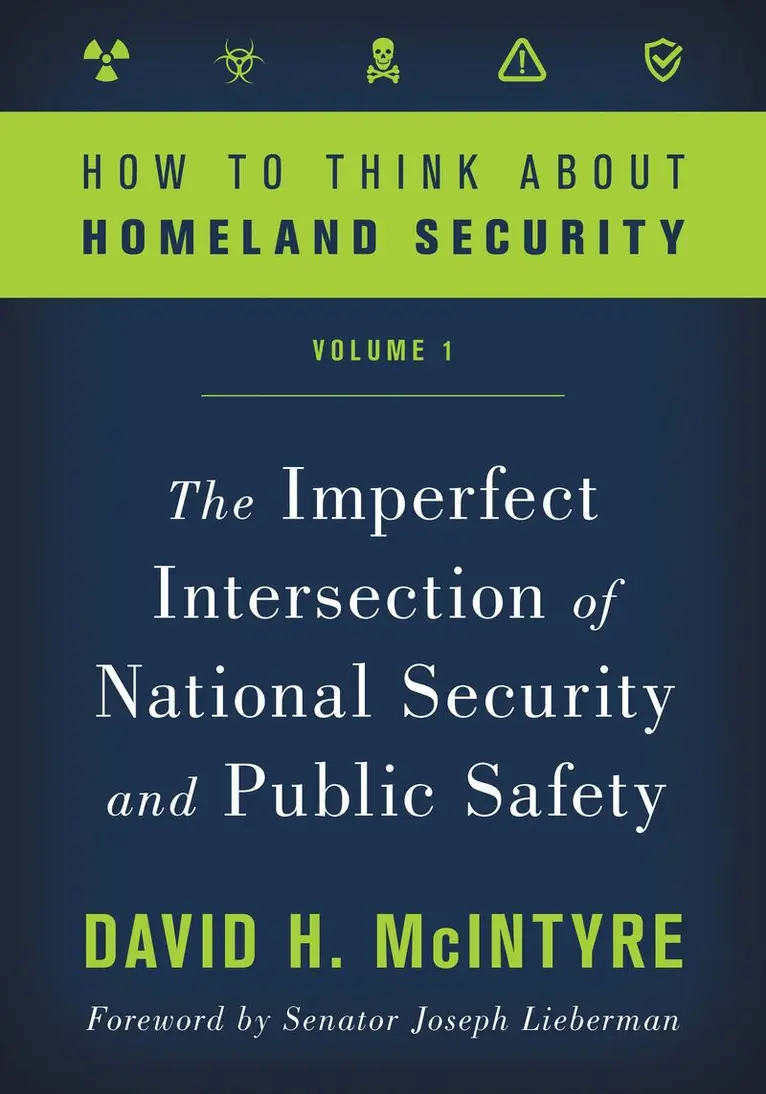
How to Think about Homeland Security
The Imperfect Intersection of National Security and Public Safety, Volume 1
Häftad, Engelska, 2019
358 kr
Skickas inom 10-15 vardagar
Volume 1:The Imperfect Intersection of National Security and Public Safetyexplains homeland security as a struggle to meet new national security threats with traditional public safety practitioners. It offers a new solution that reaches beyond training and equipment to change practitioner culture through education. This first volume represents a major new contribution to the literature by recognizing that homeland security is not based on theories of nuclear response or countering terrorism, but on making bureaucracy work. The next evolution in improving homeland security is to analyze and evaluate various theories of bureaucratic change against the national-level catastrophic threats we are most likely to face. This synthesis provides the bridge between volume 1 (understanding homeland security) and the next in the series (understanding the risk and threats to domestic security). All four volumes could be used in an introductory course at the graduate or undergraduate level. Volumes 2 and 3 are most likely to be adopted in a risk management (RM) course which generally focus on threats, vulnerabilities, and consequences, while volume 4 will get picked up in courses on emergency management (EM).
How to Think about Homeland Security: Risk, Threats, and the New Normal
Volume 2
Inbunden, Engelska, 2019
682 kr
Skickas inom 10-15 vardagar
Risk, Threats and the New Normal explains the new political and technological developments that created new domestic national security threats against the nation and the people of the United States. The book traces the development of and competition between national preparedness (focused on people and property), and civil defense / security (focused on the defense of systems and infrastructure) since the latter days of World War I. Extensive policy research demonstrates a shift in federal (and hence state and local) focus over the last decade from WMD based Threats at the National Security Level (TNSL) back to more traditional hazards and disasters. A framework is offered to analyze and evaluate TNSL dangers to national power; it is applied to a case study involving a nuclear attack. Recommendations are offered to mitigate or prevent the potentially catastrophic aftermath. In Vol 3 this analysis will be extended to other TNSL events (chemical, biological, radiological, etc.) and the actors who must prepare for them.
How to Think about Homeland Security: Risk, Threats, and the New Normal
Volume 2
Häftad, Engelska, 2019
358 kr
Skickas inom 10-15 vardagar
Risk, Threats and the New Normal explains the new political and technological developments that created new domestic national security threats against the nation and the people of the United States. The book traces the development of and competition between national preparedness (focused on people and property), and civil defense / security (focused on the defense of systems and infrastructure) since the latter days of World War I. Extensive policy research demonstrates a shift in federal (and hence state and local) focus over the last decade from WMD based Threats at the National Security Level (TNSL) back to more traditional hazards and disasters. A framework is offered to analyze and evaluate TNSL dangers to national power; it is applied to a case study involving a nuclear attack. Recommendations are offered to mitigate or prevent the potentially catastrophic aftermath. In Vol 3 this analysis will be extended to other TNSL events (chemical, biological, radiological, etc.) and the actors who must prepare for them.
Business Continuity and Homeland Security, Volume 1
The Challenge of the New Age
Häftad, Engelska, 2013
508 kr
Skickas inom 5-8 vardagar
What should businesses consider in preparing for terrorist attacks, natural disasters, pandemic illnesses and other emergencies? What steps can a business take to ensure continuity during and after a crisis? What can we learn from past success?This edited collection provides responses to these and other questions from prominent business executives and academics, drawn from their personal experiences with such crises as the terrorist attacks of 9/11, Hurricane Katrina, and the Asian tsunami. Their analyses prove a major step forward in the emerging academic and professional field of homeland security.In this first volume, The Challenge of the New Age, the contributors- noted authorities in security and risk management, technology, public health, political science and business - look at specific ways disasters can impact businesses, both in the short and long term. They recount their experiences with terrorist attacks and natural disasters, and explore the potential impact of other hazards, such as a biological event or pandemic.Intended for business practitioners, real world operators, students and faculty, government leaders, and their libraries, the book demonstrates with historical examples the connectivity between threats, hazards, policies, jurisdictions, information, technology, leadership, and considerations of profit and loss. Those who want to benefit from best practices while avoiding mistakes of the past will find this an excellent place to start.Contributors: D. Alexander, F. Burton, B. Eggers, E. Gursky, W.I. Hancock, J. Jackson, P.B. Kurtz, P. Leitner, K. Lindsey, D.H. McIntyre, G. McNeal, M. Minor, G. Pellegrino, N. Saiff, G. Selig, K. Senser, C. Shays, G. Williams, D. Wyss
Business Continuity and Homeland Security, Volume 1
The Challenge of the New Age
Inbunden, Engelska, 2011
1 661 kr
Skickas inom 5-8 vardagar
What should businesses consider in preparing for terrorist attacks, natural disasters, pandemic illnesses and other emergencies? What steps can a business take to ensure continuity during and after a crisis? What can we learn from past success?This edited collection provides responses to these and other questions from prominent business executives and academics, drawn from their personal experiences with such crises as the terrorist attacks of 9/11, Hurricane Katrina, and the Asian tsunami. Their analyses prove a major step forward in the emerging academic and professional field of homeland security.In this first volume, The Challenge of the New Age, the contributors- noted authorities in security and risk management, technology, public health, political science and business - look at specific ways disasters can impact businesses, both in the short and long term. They recount their experiences with terrorist attacks and natural disasters, and explore the potential impact of other hazards, such as a biological event or pandemic.Intended for business practitioners, real world operators, students and faculty, government leaders, and their libraries, the book demonstrates with historical examples the connectivity between threats, hazards, policies, jurisdictions, information, technology, leadership, and considerations of profit and loss. Those who want to benefit from best practices while avoiding mistakes of the past will find this an excellent place to start.Contributors: D. Alexander, F. Burton, B. Eggers, E. Gursky, W.I. Hancock, J. Jackson, P.B. Kurtz, P. Leitner, K. Lindsey, D.H. McIntyre, G. McNeal, M. Minor, G. Pellegrino, N. Saiff, G. Selig, K. Senser, C. Shays, G. Williams, D. Wyss