David Haney - Böcker
Visar alla böcker från författaren David Haney. Handla med fri frakt och snabb leverans.
5 produkter
5 produkter
657 kr
Skickas inom 5-8 vardagar
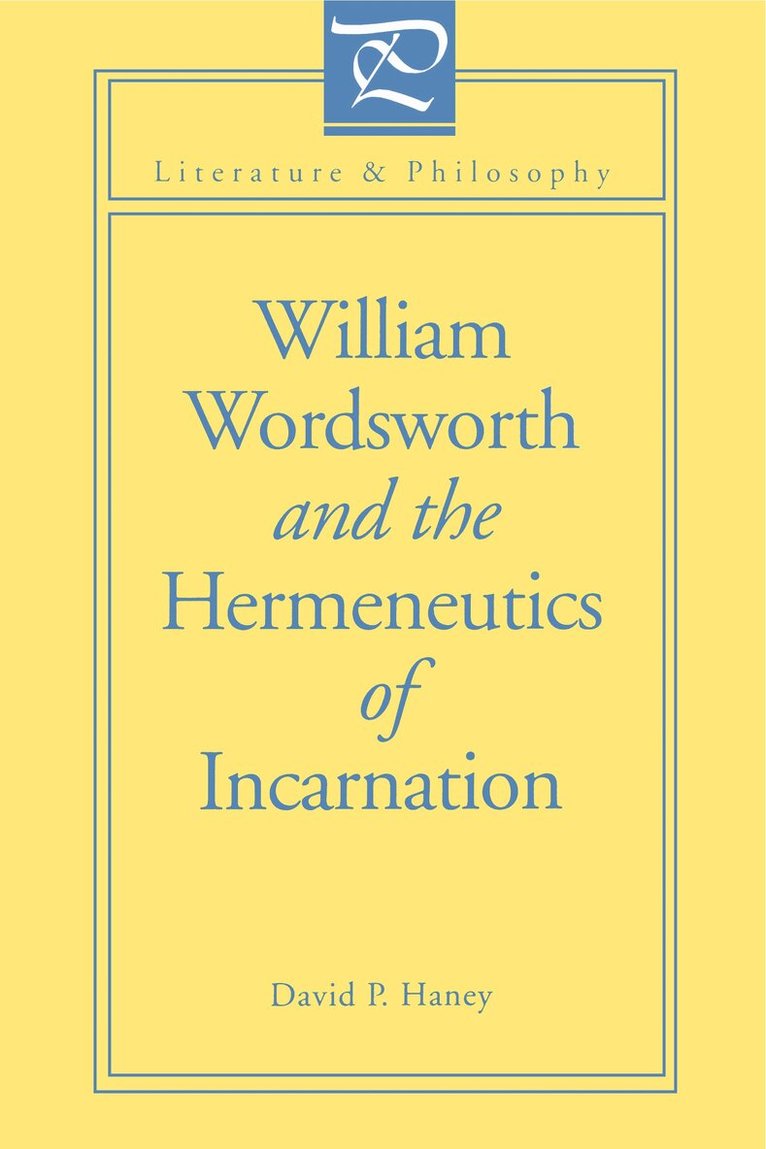
Recent critics view Wordsworth's incarnational rhetoric as the expression of an unfulfilled desire for representational adequacy. David Haney, however, argues that Wordsworth's interpretation of the Christian concept of incarnation engages historical contingency and mortality by emphasizing the translation of spirit into mortal, historical humanity. The incarnational analogy also provides an important locus for Romantic thought about the tension between the inherited Enlightenment epistemology based on instrumental reason in the service of representation and the desire for an alternative that would restore an ethical dimension to thought. Haney concentrates not only on familiar Wordsworthian texts such as The Prelude but also on less frequently read texts such as The Excursion. Beyond revising earlier interpretations of Wordsworth, Haney presents an alternative to the deconstructive and new-historicist interpretive models that have dominated recent criticism and explores the relationship between theoretical and literary meaning. Drawing on theoreticians such as Hans Gadamer, Charles Taylor, Emmanuel Levinas, and Stanley Cavell, Haney shows how Wordsworth's incarnational rhetoric cuts across the boundaries of poetry, philosophy, and theology, faces up to the violence and historical contingency that Romanticism is often accused of evading, and also develops out of that chaos a model for the production of meaning. William Wordsworth and the Hermeneutics of Incarnation thus contributes to the dialogue between literature and philosophy, demonstrating the possibility of fruitful interaction between the competing hermeneutic and deconstructive heirs of Heidegger and recovering the depth and complexity of Wordsworth's incarnational thought in its philosophical, theological, and literary context.
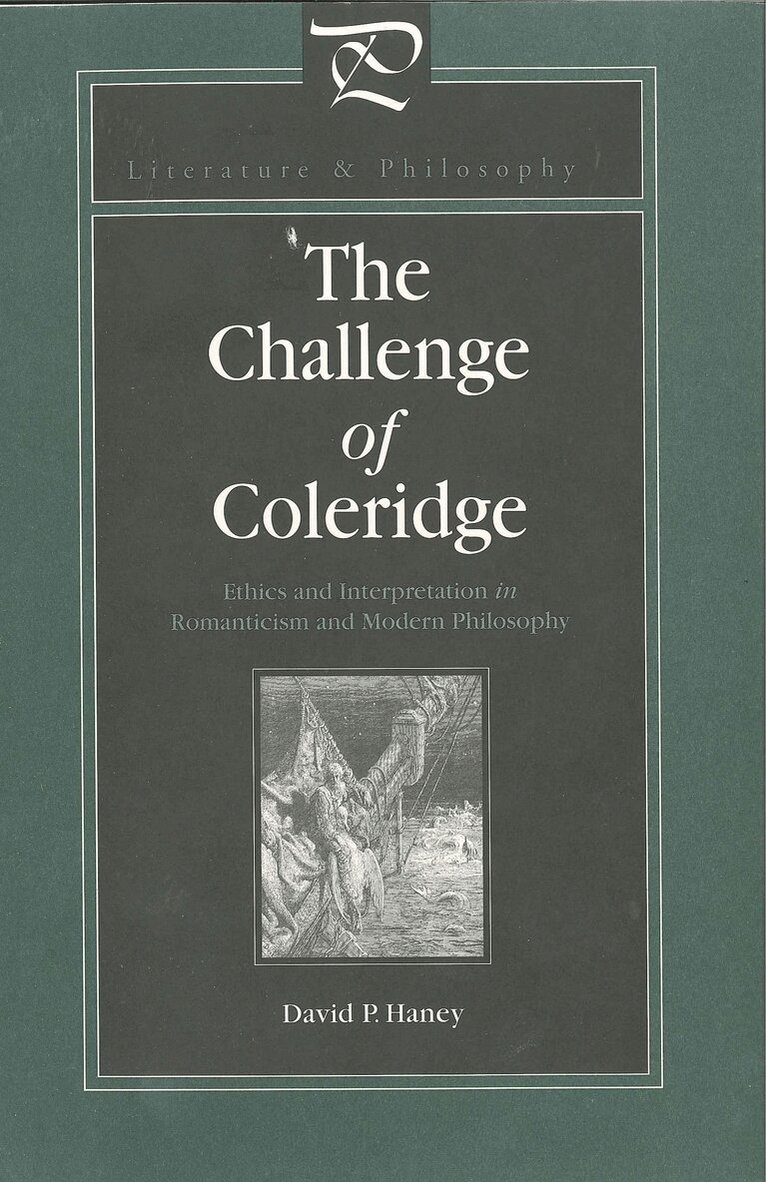
Challenge of Coleridge
Ethics and Interpretation in Romanticism and Modern Philosophy
Häftad, Engelska, 2001
577 kr
Skickas inom 5-8 vardagar
Interweaving past and present texts, The Challenge of Coleridge engages the British Romantic poet, critic, and philosopher Samuel Taylor Coleridge in a "conversation" (in Hans-Georg Gadamer’s sense) with philosophical thinkers today who share his interest in the relationship of interpretation to ethics and whose ideas can be both illuminated and challenged by Coleridge’s insights into and struggles with this relationship.In his philosophy, poetry, theology, and personal life, Coleridge revealed his concern with this issue, as it manifests itself in the relation between technical and ethical discourse, between fact and value, between self and other, and in the ethical function of aesthetic experience and the role of love in interpretation and ethical action.Relying on Gadamer’s hermeneutics to supply a framework for his approach, Haney connects Coleridge’s ideas with, among others, Emmanuel Levinas’s other-oriented notion of ethical subjectivity, Paul Ricoeur’s view about the other’s implication in the self, reinterpretations of Greek drama by Bernard Williams and Martha Nussbaum, and Gianni Vattimo's post-Nietzschean hermeneutics.Coleridge is treated not as a product of Romantic ideology to be deconstructed from a modern perspective, but as a writer who offers a "challenge" to our modern tendency to compartmentalize interpretive issues as a concern for literary theorists and ethical issues as a concern for philosophers. Looking at the two together, Haney shows through his reading of Coleridge, can enrich our understanding of both.
2 793 kr
Skickas inom 10-15 vardagar
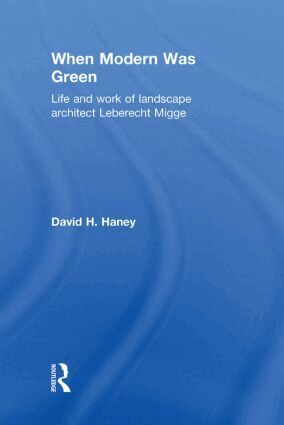
Winner of the Elisabeth Blair MacDougall Book Award 2013 presented by the Society of Architectural HistoriansToday, contemporary landscape design is increasingly drawing from ideas of sustainability and ecological stability. Not in fact new, the foundations of this approach stem from early twentieth century Germany, where architects and planners were already beginning to use the design concepts which are now referred to as "green".This ecological school of thought was driven by modernist landscape architect Leberecht Migge (1881-1935). Working with significant modernist architects of the age – including Martin Elsaesser, Ernst May, Bruno Taut, and Martin Wagner – Migge was responsible for some of the most important housing and planning projects of the age; the mass housing settlements, or Großsiedlungen, of Frankfurt Main and Berlin.Using "biotechnic" principles to integrally link dwelling and garden, Migge was able to recycle household waste to grow foodstuffs through the use of innovative infrastructure and open space planning. Also a skilled park and garden designer, he drew together green and architectural elements in his "garden-architectonic" approach.David H. Haney’s book is the first to fully document Leberecht Migge’s life and work. Using Migge as a starting point, Haney addresses conceptual and theoretical aspects of German ecological design, challenging conventional assumptions about modernism and ecological design history. With 200 illustrations and photographs, When Modern Was Green is ideal for students and academics interested in modernism, landscape history and higher level German studies.
926 kr
Skickas inom 10-15 vardagar
Winner of the Elisabeth Blair MacDougall Book Award 2013 presented by the Society of Architectural HistoriansToday, contemporary landscape design is increasingly drawing from ideas of sustainability and ecological stability. Not in fact new, the foundations of this approach stem from early twentieth century Germany, where architects and planners were already beginning to use the design concepts which are now referred to as "green".This ecological school of thought was driven by modernist landscape architect Leberecht Migge (1881-1935). Working with significant modernist architects of the age – including Martin Elsaesser, Ernst May, Bruno Taut, and Martin Wagner – Migge was responsible for some of the most important housing and planning projects of the age; the mass housing settlements, or Großsiedlungen, of Frankfurt Main and Berlin.Using "biotechnic" principles to integrally link dwelling and garden, Migge was able to recycle household waste to grow foodstuffs through the use of innovative infrastructure and open space planning. Also a skilled park and garden designer, he drew together green and architectural elements in his "garden-architectonic" approach.David H. Haney’s book is the first to fully document Leberecht Migge’s life and work. Using Migge as a starting point, Haney addresses conceptual and theoretical aspects of German ecological design, challenging conventional assumptions about modernism and ecological design history. With 200 illustrations and photographs, When Modern Was Green is ideal for students and academics interested in modernism, landscape history and higher level German studies.
Americanization of Social Science
Intellectuals and Public Responsibility in the Postwar United States
Häftad, Engelska, 2008
331 kr
Skickas inom 7-10 vardagar
In this, a unique history of the America's postwar intellectual, David Paul Haney outlines the developoment of sociology as a discipline and why, given its focus of study, it failed to develop into a force in the intellectual currents of the United States.Arguing that sociologists attempted to develop both a science and an instrument for the spread of humanistic concern about socity, Haney shows how both attempts failed to connect sociology with larger questions of policy and social progress.