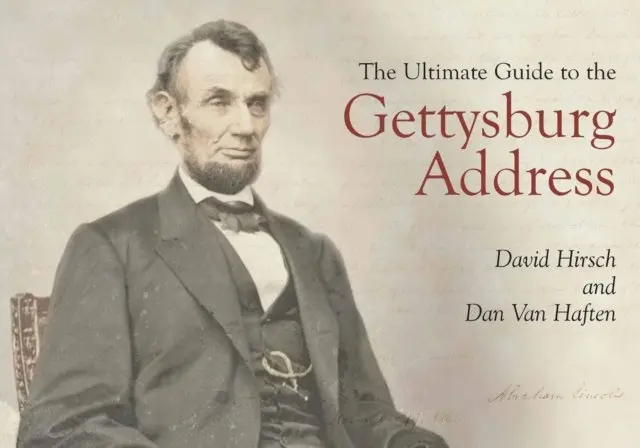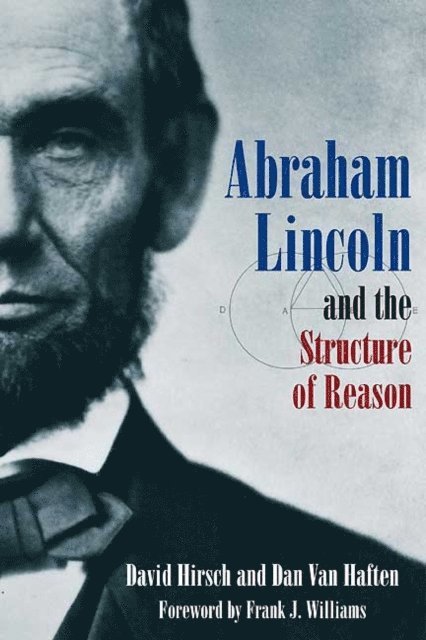
Abraham Lincoln''s November 19, 1863, Gettysburg Address is generally recognized as one of the greatest leadership speeches ever written. The Ultimate Guide to the Gettysburg Address explains the 272-word speech more thoroughly than any book previously published. With the aid of colorized step-by-step diagrams, the authors deconstruct the speech into its basic elements and demonstrate how the scientific method is basic to the structure of the Gettysburg Address. Lincoln''s fascination with geometry is well documented. Authors David Hirsch and Dan Van Haften, however, are the first to discover and then demonstrate Lincoln''s use of the six elements of a proposition and then diagram and explain how his in-depth study of geometry helped him compose the Gettysburg Address. The result is a deeper and richer understanding of the Gettysburg Address that was not previously possible. This concise color examination of one of our nation''s most treasured and important speeches is perfect for all ages and especially for those interested in history, the use of language, and logic.
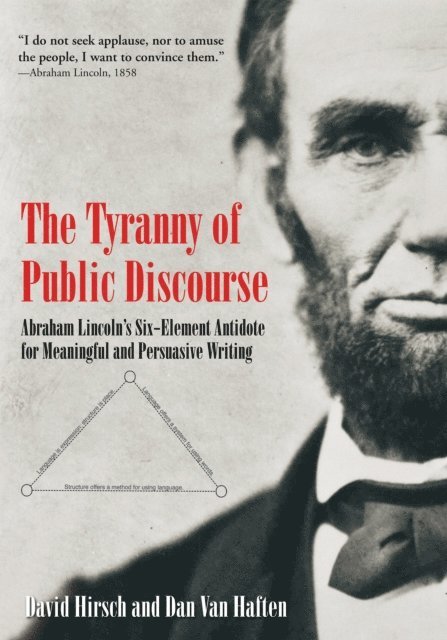
"The ultimate teacher of fact-based, reasoned rhetoric . . . A nice dose of American history makes learning the groundbreaking technique fun." —Nerida F. Ellerton and McKenzie A. Clements, authors on writings of Thomas Jefferson and Abraham Lincoln Are you satisfied with the current state of public discourse? The almost unanimous response from people across the nation is a loud and emphatic "No!" The reply is always the same regardless of politics. Today''s public discourse typically starts with a "conclusion" and goes downhill from there. If there are talking heads, argument begins instantly and typically runs in circles. This is a dangerous path for a society that depends upon civility and virtue to survive. The Tyranny of Public Discourse addresses what is one of the most important issues of our time. This book can teach anyone how to use logic and reason to create persuasive writing. A byproduct of this is the civility that will ensue with an elevated public discourse. The Tyranny of Public Discourse establishes the six elements of a proposition as a verbal form of the scientific method—something Abraham Lincoln knew and used routinely. His logic and reason are so well known that he is quoted today more than 150 years after his death. Learning the six elements and how to use them to discuss any topic at any time is not only fascinating, but fairly easy to understand and implement. This book sets it all out, step-by-step and color coded, from beginning to end. The Tyranny of Public Discourse, complete with 21 diagrams on how to structure your logic, is the book you have been waiting for. The time is short, and the hour is now.
Studienarbeit aus dem Jahr 2022 im Fachbereich Germanistik - Semiotik, Pragmatik, Semantik, Note: 1,3, Ruprecht-Karls-Universität Heidelberg, Sprache: Deutsch, Abstract: In dieser Arbeit soll in die theoretischen Grundlagen der Terminologielehre eingeführt werden. Dazu werden die wichtigsten Aspekte der Terminologielehre aufgezeigt und in konkrete Zusammenhänge gebracht. Es werden bevorzugt jene Bereiche genauer ausgeführt, die für die übersetzungsbezogene Terminologiearbeit einen höheren Stellenwert haben. Zudem werden vermehrt DIN-Normen hinzugezogen, die für die Auseinandersetzung mit der Thematik unerlässlich sind.Zu Beginn der Arbeit wird auf die Terminologielehre als solche eingegangen sowie der Terminus als Kernelement jeder Terminologie erläutert. Dabei wird anhand des semiotischen Dreiecks der Zusammenhang der wichtigsten zugrundeliegenden Begrifflichkeiten erörtert. Außerdem wird auf die Fachsprache als konkreter Anwendungsbereich von Terminologie eingegangen. Verschiedene Auffassungen von Fachsprache werden hierfür untersucht und im Gesamtsystem Sprache platziert. Es folgt eine Analyse des Begriffs. Dabei kommen Begriffsinhalt und Begriffsumfang, vor allem aber auch das Merkmal zur Sprache. Im Zuge des Begriffs wird auch die Definition angesprochen sowie ihre wichtigsten Formen unterschieden.Aufbauend auf der Untersuchung des Begriffs werden Begriffsbeziehungen beziehungsweise Begriffssysteme beleuchtet. Diese gliedern sich zunächst in hierarchische und nicht-hierarchische Systeme. In einem zweiten Schritt werden die hierarchischen in Abstraktions- und Bestandssysteme, die nicht-hierarchischen in sequenzielle und pragmatische Systeme unterteilt. Bei den hierarchischen Begriffsbeziehungen wird zudem die Dimensionalität eingebracht. Schließlich wird die Benennung behandelt. Es werden wichtige Gütekriterien geschildert, bevor genauer untersucht wird, wie Benennungen sich typischerweise bilden. In einem finalen Abschnitt wird auf Probleme in der Zuordnung von Begriff und Benennung eingegangen. Es werden hier Synonymie, Polysemie und Homonymie unterschieden.