David J. Rowe - Böcker
Visar alla böcker från författaren David J. Rowe. Handla med fri frakt och snabb leverans.
5 produkter
5 produkter
844 kr
Skickas inom 3-6 vardagar
1 511 kr
Skickas inom 5-8 vardagar
This book reviews the basic models and theories of nuclear structure and gives an in-depth analysis of their experimental and mathematical foundations. It shows the relationships between the models and exhibits the value of following the strategy of: looking for patterns in all the data available, developing phenomenological models to explain them, and finally giving the models a foundation in a fundamental microscopic theory of interacting neutrons and protons.This unique book takes a newcomer from an introduction to nuclear structure physics to the frontiers of the subject along a painless path. It provides both the experimental and mathematical foundations of the essential models in a way that is accessible to a broad range of experimental and theoretical physicists. Thus, the book provides a unique resource and an exposition of the essential principles, mathematical structures, assumptions, and observational data on which the models and theories are based. It avoids discussion of many non-essential variations and technical details of the models.
975 kr
Skickas inom 5-8 vardagar
This book reviews the basic models and theories of nuclear structure and gives an in-depth analysis of their experimental and mathematical foundations. It shows the relationships between the models and exhibits the value of following the strategy of: looking for patterns in all the data available, developing phenomenological models to explain them, and finally giving the models a foundation in a fundamental microscopic theory of interacting neutrons and protons.This unique book takes a newcomer from an introduction to nuclear structure physics to the frontiers of the subject along a painless path. It provides both the experimental and mathematical foundations of the essential models in a way that is accessible to a broad range of experimental and theoretical physicists. Thus, the book provides a unique resource and an exposition of the essential principles, mathematical structures, assumptions, and observational data on which the models and theories are based. It avoids discussion of many non-essential variations and technical details of the models.
1 146 kr
Tillfälligt slut
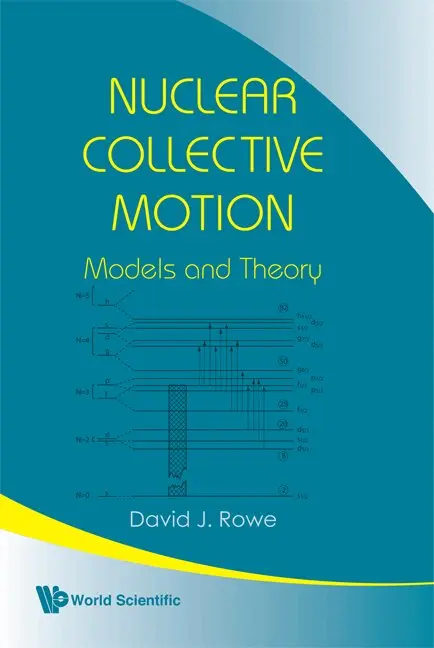
The two most important developments in nuclear physics were the shell model and the collective model. The former gives the formal framework for a description of nuclei in terms of interacting neutrons and protons. The latter provides a very physical but phenomenological framework for interpreting the observed properties of nuclei. A third approach, based on variational and mean-field methods, brings these two perspectives together in terms of the so-called unified models. Together, these three approaches provide the foundations on which nuclear physics is based. They need to be understood by everyone practicing or teaching nuclear physics, and all those who wish to gain an understanding of the foundations of the models and their relationships to microscopic theory as given by recent developments in terms of dynamical symmetries.This book provides a simple presentation of the models and theory of nuclear collective structure, with an emphasis on the physical content and the ways they are used to interpret data. Part 1 presents the basic phenomenological collective vibrational and rotational models as introduced by Bohr and Mottelson and their many colleagues. It also describes the extensions of these models to parallel unified models in which neutrons and protons move in a mean-field with collective degrees of freedom. Part 2 presents the predominant theories used to describe the collective properties of nuclei in terms of interacting nucleons. These theories, which are shared with other many-body systems, are shown to emerge naturally from the unified models of Part 1.
704 kr
Skickas inom 5-8 vardagar
The two most important developments in nuclear physics were the shell model and the collective model. The former gives the formal framework for a description of nuclei in terms of interacting neutrons and protons. The latter provides a very physical but phenomenological framework for interpreting the observed properties of nuclei. A third approach, based on variational and mean-field methods, brings these two perspectives together in terms of the so-called unified models. Together, these three approaches provide the foundations on which nuclear physics is based. They need to be understood by everyone practicing or teaching nuclear physics, and all those who wish to gain an understanding of the foundations of the models and their relationships to microscopic theory as given by recent developments in terms of dynamical symmetries.This book provides a simple presentation of the models and theory of nuclear collective structure, with an emphasis on the physical content and the ways they are used to interpret data. Part 1 presents the basic phenomenological collective vibrational and rotational models as introduced by Bohr and Mottelson and their many colleagues. It also describes the extensions of these models to parallel unified models in which neutrons and protons move in a mean-field with collective degrees of freedom. Part 2 presents the predominant theories used to describe the collective properties of nuclei in terms of interacting nucleons. These theories, which are shared with other many-body systems, are shown to emerge naturally from the unified models of Part 1.