David Julian - Böcker
Visar alla böcker från författaren David Julian. Handla med fri frakt och snabb leverans.
4 produkter
4 produkter
589 kr
Skickas inom 5-8 vardagar
1 148 kr
Skickas inom 5-8 vardagar
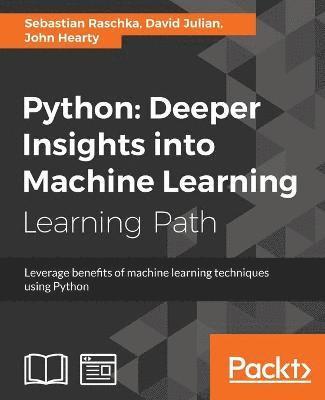
Leverage benefits of machine learning techniques using PythonAbout This Book* Improve and optimise machine learning systems using effective strategies.* Develop a strategy to deal with a large amount of data.* Use of Python code for implementing a range of machine learning algorithms and techniques.Who This Book Is ForThis title is for data scientist and researchers who are already into the field of data science and want to see machine learning in action and explore its real-world application. Prior knowledge of Python programming and mathematics is must with basic knowledge of machine learning concepts.What You Will Learn* Learn to write clean and elegant Python code that will optimize the strength of your algorithms* Uncover hidden patterns and structures in data with clustering* Improve accuracy and consistency of results using powerful feature engineering techniques* Gain practical and theoretical understanding of cutting-edge deep learning algorithms* Solve unique tasks by building models* Get grips on the machine learning design processIn DetailMachine learning and predictive analytics are becoming one of the key strategies for unlocking growth in a challenging contemporary marketplace. It is one of the fastest growing trends in modern computing, and everyone wants to get into the field of machine learning. In order to obtain sufficient recognition in this field, one must be able to understand and design a machine learning system that serves the needs of a project.The idea is to prepare a learning path that will help you to tackle the real-world complexities of modern machine learning with innovative and cutting-edge techniques. Also, it will give you a solid foundation in the machine learning design process, and enable you to build customized machine learning models to solve unique problems.The course begins with getting your Python fundamentals nailed down. It focuses on answering the right questions that cove a wide range of powerful Python libraries, including scikit-learn Theano and Keras.After getting familiar with Python core concepts, it's time to dive into the field of data science. You will further gain a solid foundation on the machine learning design and also learn to customize models for solving problems.At a later stage, you will get a grip on more advanced techniques and acquire a broad set of powerful skills in the area of feature selection and feature engineering.Style and approachThis course includes all the resources that will help you jump into the data science field with Python. The aim is to walk through the elements of Python covering powerful machine learning libraries. This course will explain important machine learning models in a step-by-step manner. Each topic is well explained with real-world applications with detailed guidance.Through this comprehensive guide, you will be able to explore machine learning techniques.
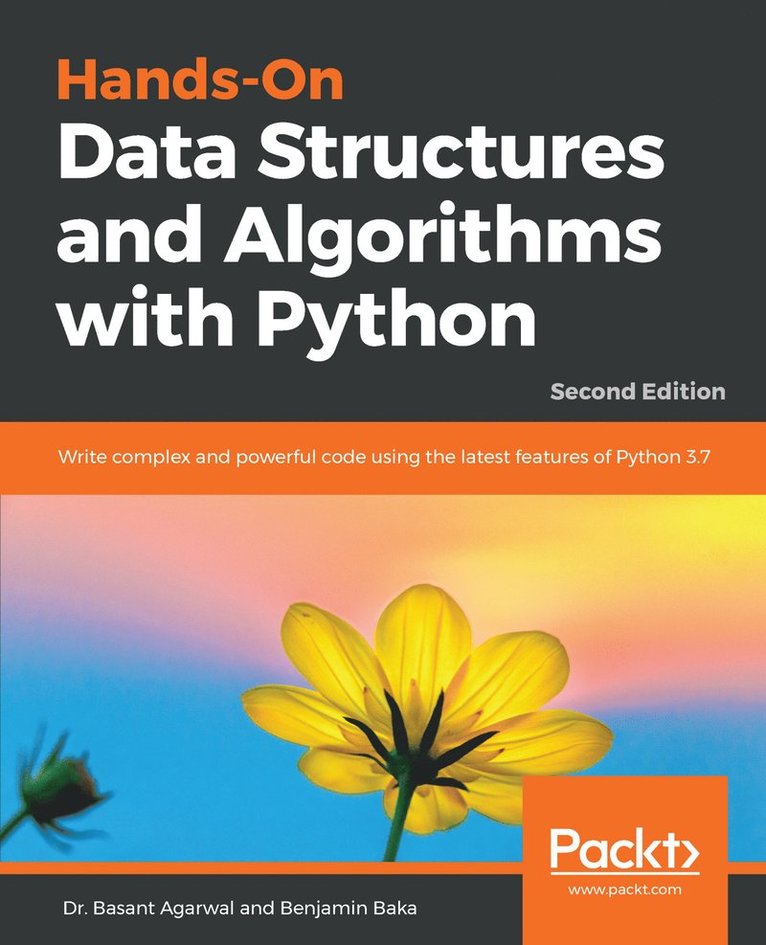
Hands-On Data Structures and Algorithms with Python
Write complex and powerful code using the latest features of Python 3.7
Häftad, Engelska, 2018
510 kr
Skickas inom 5-8 vardagar
Learn to implement complex data structures and algorithms using PythonKey FeaturesUnderstand the analysis and design of fundamental Python data structuresExplore advanced Python concepts such as Big O notation and dynamic programmingLearn functional and reactive implementations of traditional data structuresBook DescriptionData structures allow you to store and organize data efficiently. They are critical to any problem, provide a complete solution, and act like reusable code. Hands-On Data Structures and Algorithms with Python teaches you the essential Python data structures and the most common algorithms for building easy and maintainable applications.This book helps you to understand the power of linked lists, double linked lists, and circular linked lists. You will learn to create complex data structures, such as graphs, stacks, and queues. As you make your way through the chapters, you will explore the application of binary searches and binary search trees, along with learning common techniques and structures used in tasks such as preprocessing, modeling, and transforming data. In the concluding chapters, you will get to grips with organizing your code in a manageable, consistent, and extendable way. You will also study how to bubble sort, selection sort, insertion sort, and merge sort algorithms in detail.By the end of the book, you will have learned how to build components that are easy to understand, debug, and use in different applications. You will get insights into Python implementation of all the important and relevant algorithms.What you will learnUnderstand object representation, attribute binding, and data encapsulationGain a solid understanding of Python data structures using algorithmsStudy algorithms using examples with pictorial representationLearn complex algorithms through easy explanation, implementing PythonBuild sophisticated and efficient data applications in PythonUnderstand common programming algorithms used in Python data scienceWrite efficient and robust code in Python 3.7Who this book is forThis book is for developers who want to learn data structures and algorithms in Python to write complex and flexible programs. Basic Python programming knowledge is expected.
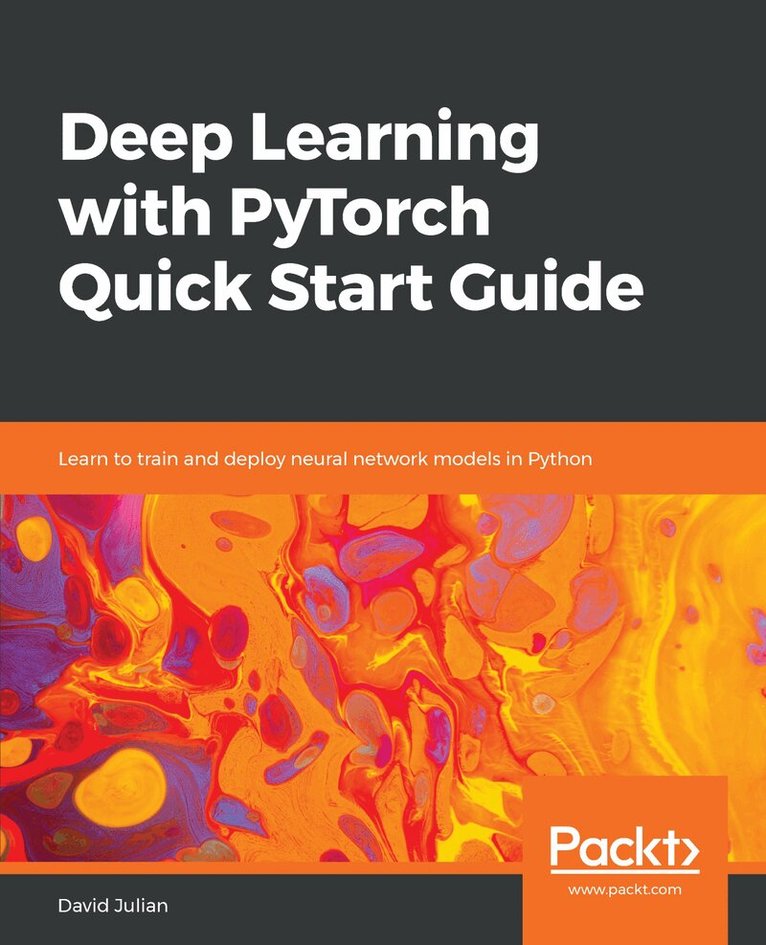
Deep Learning with PyTorch Quick Start Guide
Learn to train and deploy neural network models in Python
Häftad, Engelska, 2018
398 kr
Skickas inom 5-8 vardagar
Introduction to deep learning and PyTorch by building a convolutional neural network and recurrent neural network for real-world use cases such as image classification, transfer learning, and natural language processing.Key FeaturesClear and concise explanationsGives important insights into deep learning modelsPractical demonstration of key conceptsBook DescriptionPyTorch is extremely powerful and yet easy to learn. It provides advanced features, such as supporting multiprocessor, distributed, and parallel computation. This book is an excellent entry point for those wanting to explore deep learning with PyTorch to harness its power. This book will introduce you to the PyTorch deep learning library and teach you how to train deep learning models without any hassle. We will set up the deep learning environment using PyTorch, and then train and deploy different types of deep learning models, such as CNN, RNN, and autoencoders. You will learn how to optimize models by tuning hyperparameters and how to use PyTorch in multiprocessor and distributed environments. We will discuss long short-term memory network (LSTMs) and build a language model to predict text.By the end of this book, you will be familiar with PyTorch's capabilities and be able to utilize the library to train your neural networks with relative ease.What you will learnSet up the deep learning environment using the PyTorch libraryLearn to build a deep learning model for image classificationUse a convolutional neural network for transfer learningUnderstand to use PyTorch for natural language processingUse a recurrent neural network to classify textUnderstand how to optimize PyTorch in multiprocessor and distributed environmentsTrain, optimize, and deploy your neural networks for maximum accuracy and performanceLearn to deploy production-ready modelsWho this book is forDevelopers and Data Scientist familiar with Machine Learning but new to deep learning, or existing practitioners of deep learning who would like to use PyTorch to train their deep learning models will find this book to be useful. Having knowledge of Python programming will be an added advantage, while previous exposure to PyTorch is not needed.