David Kemmerer – författare
Visar alla böcker från författaren David Kemmerer. Handla med fri frakt och snabb leverans.
6 produkter
6 produkter
973 kr
Skickas inom 5-8 vardagar
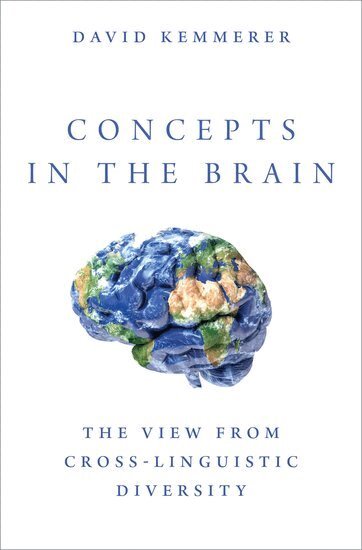
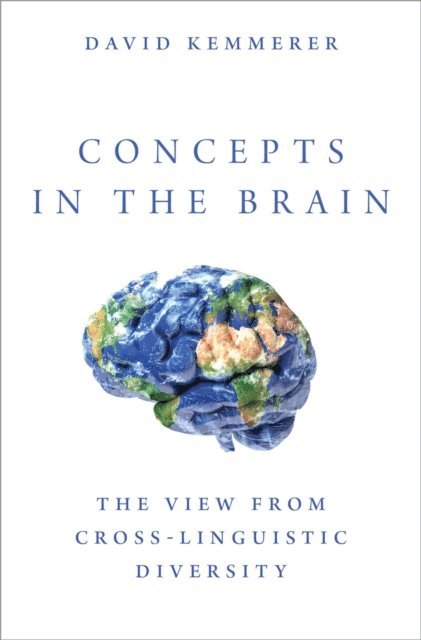
For most native speakers of English, the meanings of ordinary words like "blue," "cup," "stumble," and "carve" seem quite natural and self-evident. It turns out, however, that they are far from universal, as shown by recent research in the discipline known as semantic typology. To be sure, the roughly 6,500 languages around the world do have many similarities in the sorts of concepts they encode. But they also vary greatly in numerous ways, such as how they partition particular conceptual domains, how they map those domains onto syntactic categories, which distinctions they force speakers to habitually attend to, and how deeply they weave certain notions into the fabric of their grammar. Although these insights from semantic typology have had a major impact on the field of psycholinguistics, they have been mostly neglected by the branch of cognitive neuroscience that studies how concepts are represented, organized, and processed in our brains. In Concepts in the Brain, David Kemmerer exposes this oversight and demonstrates its significance. He argues that as research on the neural substrates of semantic knowledge moves forward, it should, to the extent possible, expand its purview to embrace the broad spectrum of cross-linguistic variation in the lexical and grammatical representation of meaning. Otherwise, it will never be able to achieve a truly comprehensive, pan-human account of the cortical underpinnings of concepts. Richly illustrated and written in an accessible interdisciplinary style, the book begins by elaborating the different perspectives on concepts that currently exist in the parallel fields of semantic typology and cognitive neuroscience. It then shows how a synthesis of these approaches can lead to a more unified and inclusive understanding of several domains of concrete meaning--specifically, objects, actions, and spatial relations. Finally, it explores a number of intriguing and controversial issues involving the interplay between language, cognition, and consciousness.
410 kr
Skickas inom 7-10 vardagar
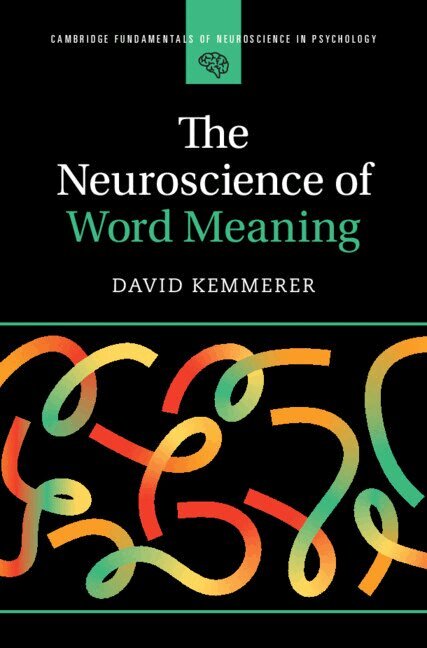
Words are among the basic building blocks of language, allowing us to share a tremendous range of ideas. This book summarizes research on how words are represented, organized, and processed in our brain, offering a fascinating window into the neural basis of language. It begins with a foundational overview of linguistics and neuroscience, including neurons, networks and functional areas. It then delves into key topics and theories. It explores such questions as How do the meanings of words for objects and events relate to the brain regions involved in perception and action? Are different semantic categories of words, like those for animals and tools, segregated in the brain? What are the neural substrates of abstract words? The book describes how different theories answer these questions, and how numerous experiments help adjudicate between them. It also includes learning objectives, chapter summaries, and over 60 figures.
1 324 kr
Skickas inom 7-10 vardagar
Words are among the basic building blocks of language, allowing us to share a tremendous range of ideas. This book summarizes research on how words are represented, organized, and processed in our brain, offering a fascinating window into the neural basis of language. It begins with a foundational overview of linguistics and neuroscience, including neurons, networks and functional areas. It then delves into key topics and theories. It explores such questions as How do the meanings of words for objects and events relate to the brain regions involved in perception and action? Are different semantic categories of words, like those for animals and tools, segregated in the brain? What are the neural substrates of abstract words? The book describes how different theories answer these questions, and how numerous experiments help adjudicate between them. It also includes learning objectives, chapter summaries, and over 60 figures.
4 415 kr
Skickas inom 10-15 vardagar
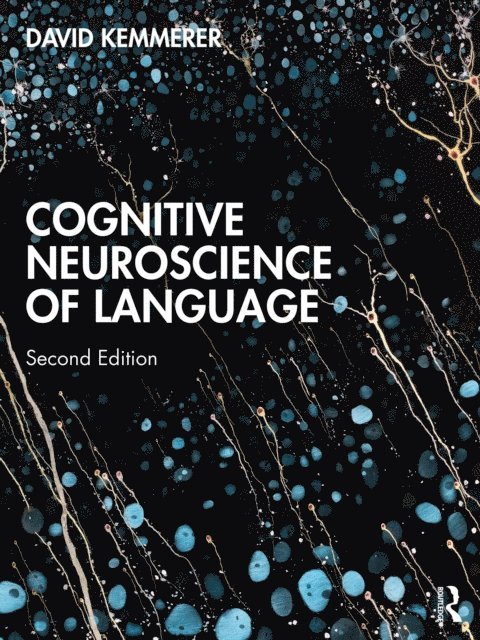
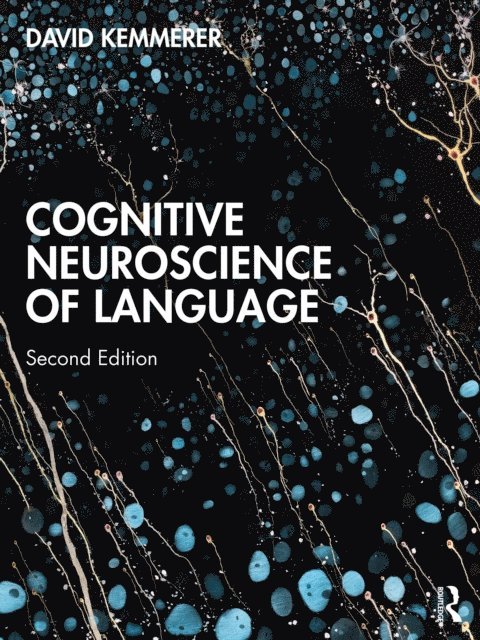
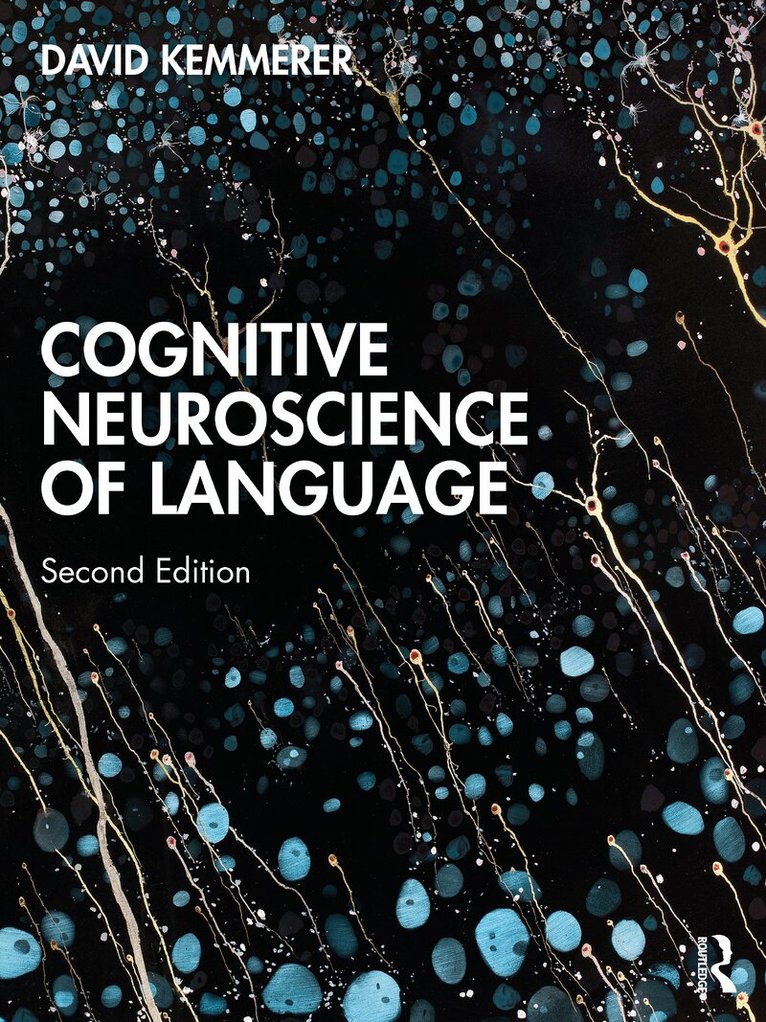
Cognitive Neuroscience of Language provides an up-to-date, wide-ranging, and pedagogically practical survey of the most important developments in this exciting field. It guides students through all of the major areas of investigation, beginning with the fundamental aspects of brain structure and function and then following with key topics such as classic and progressive aphasia syndromes; speech perception and production; the meanings of object nouns, action verbs, and abstract words; the formulation and comprehension of complex expressions, including grammatically inflected words, complete sentences, and entire stories; and several other domains of neurolinguistic research, including reading and writing, sign language, and the bilingual brain. Drawing heavily on prominent theoretical models, the core chapters illustrate how such frameworks are supported, and sometimes challenged, by experiments employing diverse brain mapping techniques. This edition has been thoroughly updated throughout, and now includes a dedicated chapter on the neural substrates of bilingualism. Chapters have been revised to reflect the most salient developments in the field, and the book has undergone a thoughtful restructure to mirror course teaching. While the study of language can be challenging, the text has been written accessibly and requires no previous knowledge of either neuroscience or linguistics and includes definitions of technical terms and explanations of important principles from both disciplines along the way. Accompanied by online resources for students and instructors, it is an essential companion for graduate or upper-level undergraduate students.
1 229 kr
Skickas inom 10-15 vardagar
Cognitive Neuroscience of Language provides an up-to-date, wide-ranging, and pedagogically practical survey of the most important developments in this exciting field. It guides students through all of the major areas of investigation, beginning with the fundamental aspects of brain structure and function and then following with key topics such as classic and progressive aphasia syndromes; speech perception and production; the meanings of object nouns, action verbs, and abstract words; the formulation and comprehension of complex expressions, including grammatically inflected words, complete sentences, and entire stories; and several other domains of neurolinguistic research, including reading and writing, sign language, and the bilingual brain. Drawing heavily on prominent theoretical models, the core chapters illustrate how such frameworks are supported, and sometimes challenged, by experiments employing diverse brain mapping techniques. This edition has been thoroughly updated throughout, and now includes a dedicated chapter on the neural substrates of bilingualism. Chapters have been revised to reflect the most salient developments in the field, and the book has undergone a thoughtful restructure to mirror course teaching. While the study of language can be challenging, the text has been written accessibly and requires no previous knowledge of either neuroscience or linguistics and includes definitions of technical terms and explanations of important principles from both disciplines along the way. Accompanied by online resources for students and instructors, it is an essential companion for graduate or upper-level undergraduate students.
891 kr
Tillfälligt slut