David Krieger - Böcker
Visar alla böcker från författaren David Krieger. Handla med fri frakt och snabb leverans.
12 produkter
12 produkter
535 kr
Skickas inom 10-15 vardagar
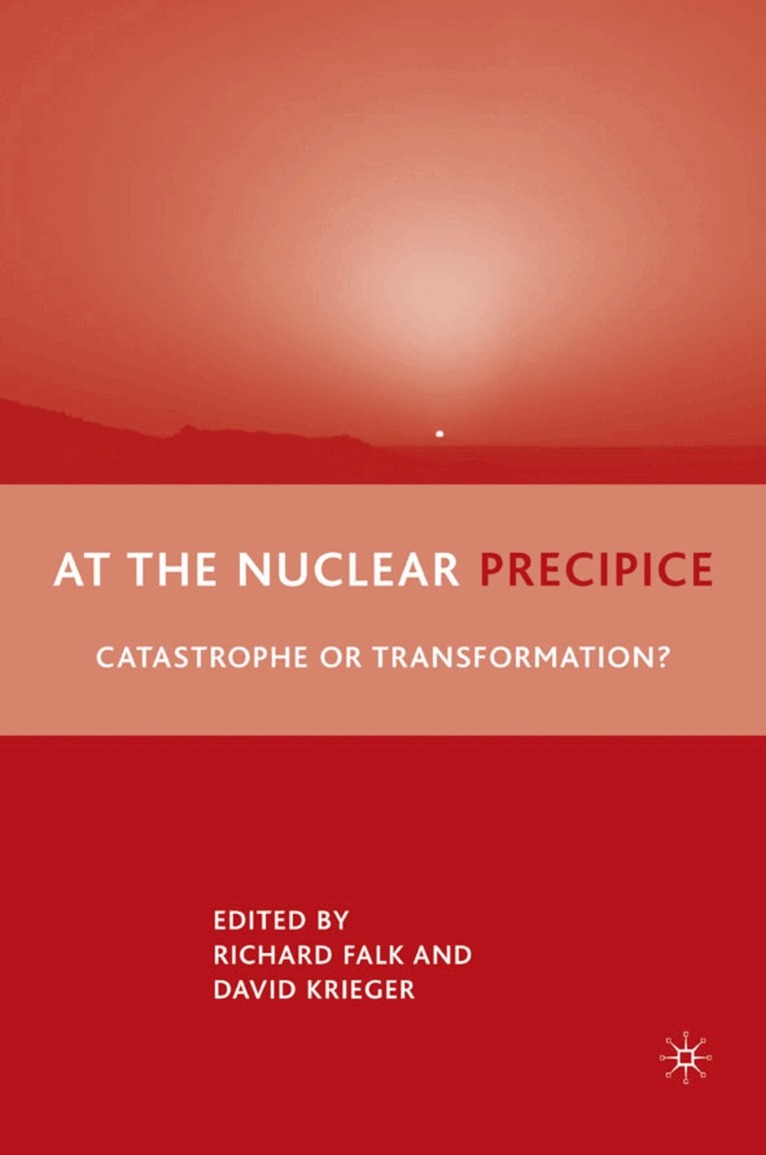
This book examines the intersections between international law and national policies, and nuclear proliferation and disarmament, offering a way out if policy makers of leading countries can summon the vision and political will to move away from the nuclear precipice and ensure humanity's future.
573 kr
Skickas inom 11-20 vardagar
This book examines the intersections between international law and national policies, and nuclear proliferation and disarmament, offering a way out if policy makers of leading countries can summon the vision and political will to move away from the nuclear precipice and ensure humanity's future.
705 kr
Skickas inom 10-15 vardagar
May Edel's The Chiga of Uganda is in the grand tradition of Franz Boas, Margaret Mead, and Leslie Spier. Written at a time when older ways were menaced by contact with other cultures, Edel's effort was part of a descriptive urgency that aimed to capture the past before the past disappeared. And that past should be viewed from the perspective of the people themselves, by students going into the field to observe, question, and report. This book is an enlarged and amplified edition of The Chiga of Western Uganda published in 1957 by the Oxford University Press for the International African Institute. It is enlarged by a major section on material culture hitherto unpublished.The Chiga of Uganda provides a special insight into a culture at that time (1933) still intact under the British protectorate. It is for the most part a picture of life as it was then still being lived. Where significant changes were already taking place, the various changes are discussed in the contexts in which they seemed relevant in social structure, kinship, marriage, economics, social control, religion, and education.What makes this edition unique is the new segment on material culture. This delves into Chiga patterns of food supply and preparation, horticulture, fire and heating, water supplies, cattle raising, hunting, fishing, and problems related to shelter, clothing, and hygiene. Two new special sections deal with tools and utensils, and, no less important, the physical skills and motor habits of the people. Edel's concrete yet wide-ranging descriptions provide an irreplaceable insight into a people and a culture at a unique point in world and colonial history.The new introduction, written by Abraham Edel, provides a special sort of insight, drawing heavily upon the correspondence that May Edel wrote at the time. The introduction shows how the clouds of war and Nazism in Europe at the time were already changing the character and context of anthropology no less than every other area of human endeavor. A final new aspect of The Chiga of Uganda is May Edel's last reflections focusing on African tribalism, which turns out to be not all that different from ethnic and national rivalries in the Western world. This book will be indispensable to anthropologists, Africanists, and historians.
1 115 kr
Tillfälligt slut
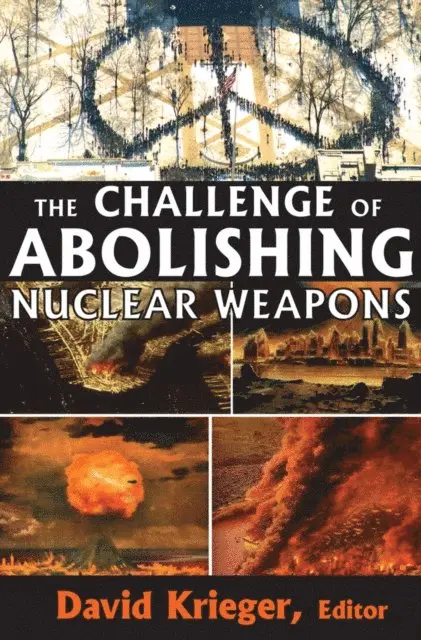
In the more than sixty years since the advent of nuclear weapons, there has been little meaningful progress toward nuclear disarmament. Some countries have nuclear weapons, while other states are forbidden to acquire them, a status quo that lacks rational basis and cannot be sustained. In this remarkable collection, scholars and policy analysts argue that humankind has a choice: either allow nuclear weapons to continue to proliferate throughout the world or move toward their complete elimination.The vast majority of people on the planet would surely opt to abolish nuclear weapons. But decisions about nuclear weapons are not made by the public, but by small groups of political elites. Consequently, in a world with nuclear weapons, the fate of humanity rests in the hands of a small number of individuals, whose perceptions, communications, and judgment determine whether there is to be a future.The contributors to this volume provide historical perspective on nuclear weapons policy; explore the role of international law in furthering the prospects of nuclear weapons abolition; consider the obstacles to abolition; present a path to achieving a nuclear weapons-free world; and look beyond abolition to consider issues of post-abolition sovereignty and general and complete disarmament. The goal of a nuclear weapons-free world can be awakened by an engaged citizenry bringing pressure from below in demanding action from political leaders. This book contributes to this awakening and engagement.
671 kr
Skickas inom 10-15 vardagar
In the more than sixty years since the advent of nuclear weapons, there has been little meaningful progress toward nuclear disarmament. Some countries have nuclear weapons, while other states are forbidden to acquire them, a status quo that lacks rational basis and cannot be sustained. In this remarkable collection, scholars and policy analysts argue that humankind has a choice: either allow nuclear weapons to continue to proliferate throughout the world or move toward their complete elimination.The vast majority of people on the planet would surely opt to abolish nuclear weapons. But decisions about nuclear weapons are not made by the public, but by small groups of political elites. Consequently, in a world with nuclear weapons, the fate of humanity rests in the hands of a small number of individuals, whose perceptions, communications, and judgment determine whether there is to be a future.The contributors to this volume provide historical perspective on nuclear weapons policy; explore the role of international law in furthering the prospects of nuclear weapons abolition; consider the obstacles to abolition; present a path to achieving a nuclear weapons-free world; and look beyond abolition to consider issues of post-abolition sovereignty and general and complete disarmament. The goal of a nuclear weapons-free world can be awakened by an engaged citizenry bringing pressure from below in demanding action from political leaders. This book contributes to this awakening and engagement.
2 088 kr
Skickas inom 10-15 vardagar
May Edel's The Chiga of Uganda is in the grand tradition of Franz Boas, Margaret Mead, and Leslie Spier. Written at a time when older ways were menaced by contact with other cultures, Edel's effort was part of a descriptive urgency that aimed to capture the past before the past disappeared. And that past should be viewed from the perspective of the people themselves, by students going into the field to observe, question, and report. This book is an enlarged and amplified edition of The Chiga of Western Uganda published in 1957 by the Oxford University Press for the International African Institute. It is enlarged by a major section on material culture hitherto unpublished.The Chiga of Uganda provides a special insight into a culture at that time (1933) still intact under the British protectorate. It is for the most part a picture of life as it was then still being lived. Where significant changes were already taking place, the various changes are discussed in the contexts in which they seemed relevant—in social structure, kinship, marriage, economics, social control, religion, and education.What makes this edition unique is the new segment on material culture. This delves into Chiga patterns of food supply and preparation, horticulture, fire and heating, water supplies, cattle raising, hunting, fishing, and problems related to shelter, clothing, and hygiene. Two new special sections deal with tools and utensils, and, no less important, the physical skills and motor habits of the people. Edel's concrete yet wide-ranging descriptions provide an irreplaceable insight into a people and a culture at a unique point in world and colonial history.The new introduction, written by Abraham Edel, provides a special sort of insight, drawing heavily upon the correspondence that May Edel wrote at the time. The introduction shows how the clouds of war and Nazism in Europe at the time were already changing the character and context of anthropology no less than every other area of human endeavor. A final new aspect of The Chiga of Uganda is May Edel's last reflections focusing on African tribalism, which turns out to be not all that different from ethnic and national rivalries in the Western world. This book will be indispensable to anthropologists, Africanists, and historians.
2 290 kr
Skickas inom 10-15 vardagar
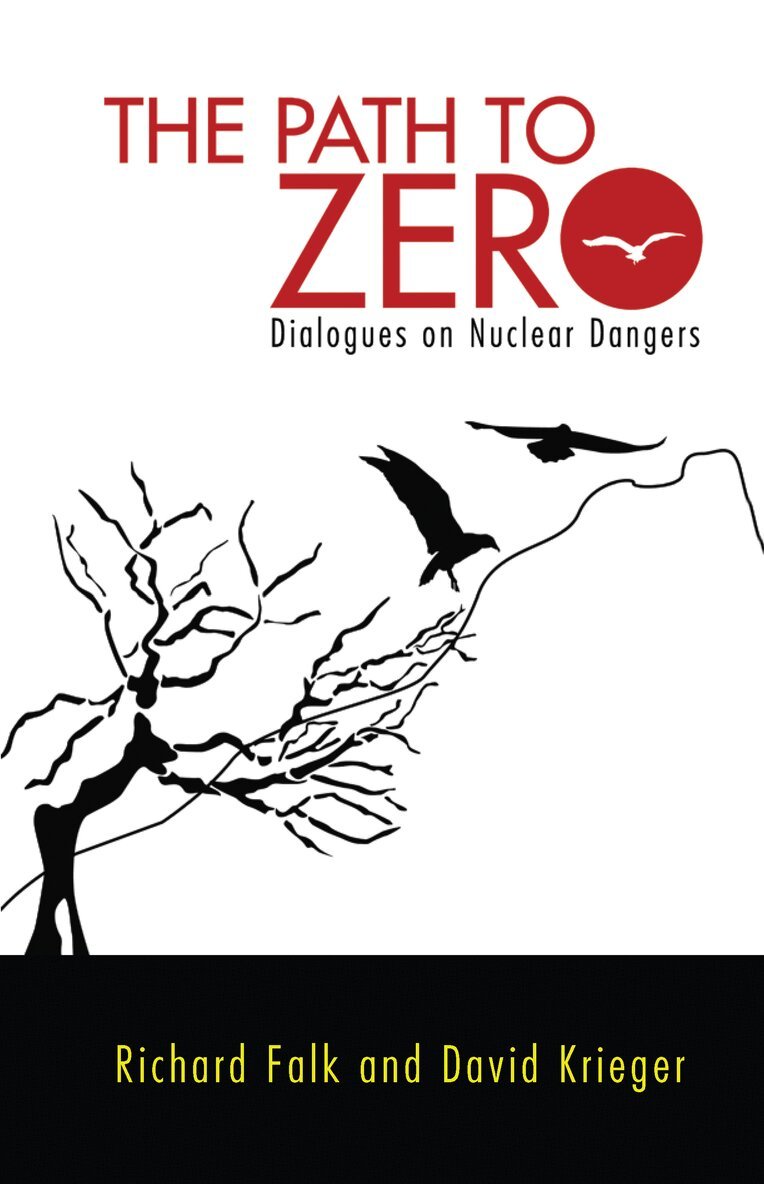
The Path to Zero argues that it is time to re-open the public debate on nuclear weapons. In a series of clear and well-reasoned dialogues, long-time scholars and peace activists Richard Falk and David Krieger probe key questions about our nuclear capability and dig beneath the secrecy that has largely surrounded its existence. Falk and Krieger argue that Hiroshima and Nagasaki were only the beginning. In recent times, nuclear annihilation at the hands of rogue states and terrorists has become an even greater concern than the spectre of nuclear war between superpowers. The Path to Zero argues that whilst none of us has the power to bring about global change alone, together we are immensely powerful - powerful enough to overcome the threats of the Nuclear Age and move us appreciably along 'the path to zero'.
549 kr
Skickas inom 10-15 vardagar
The Path to Zero argues that it is time to re-open the public debate on nuclear weapons. In a series of clear and well-reasoned dialogues, long-time scholars and peace activists Richard Falk and David Krieger probe key questions about our nuclear capability and dig beneath the secrecy that has largely surrounded its existence. Falk and Krieger argue that Hiroshima and Nagasaki were only the beginning. In recent times, nuclear annihilation at the hands of rogue states and terrorists has become an even greater concern than the spectre of nuclear war between superpowers. The Path to Zero argues that whilst none of us has the power to bring about global change alone, together we are immensely powerful - powerful enough to overcome the threats of the Nuclear Age and move us appreciably along 'the path to zero'.
953 kr
Skickas inom 5-8 vardagar
516 kr
Skickas inom 10-15 vardagar
Der vorliegende Band ist aus dem dreijährigen Forschungsprojekt "Interreligiöse Umweltethik" des Instituts fur Kommunikationsforschung heraus entstanden, das vom Schweizerischen Nationalfonds finanziert wurde und im Rahmen des Schwerpunktprogramms Umwelt lief Das Buch setzt sich aus drei Teilen zusammen: Im ersten Teil wird der Zusammenhang zwischen Natur und Kultur reflektiert. Ausgehend von der Tatsache, dass Umweltforschung schon längst nicht mehr ausschliessliche Fragestellung oder gar Eigentum der Naturwissenschaften ist, werden Natur und Kultur als soziales System aufgefasst. Umwelttfagen, ihre Thematisierung oder Ignorierung sind Ausdruck gesellschaftlicher Kommunikation, bzw. der Art, wie eine Gesellschaft organisiert ist. Dabei wird versucht, Prinzipien einer (geisteswissenschaftlichen) Kulturökologie als Beitrag zur aktuellen Umwelt-und Ökologiediskussion zu skizzieren. Zentral im ersten Teil dieses Bandes ist die Frage nach einer "ökologischen" Kultur. Damit ist nicht eine Kultur gemeint, die an ihre natürliche Umwelt "angepasst" ist oder wird, sondern die Organisation gesellschaftlicher Kommunikation, die in sich genügend Komplexität, aber auch Flexibilität aufweist, um die Informationen, welche die Naturwissenschaften ständig liefern, politisch, wirtschaftlich, rechtlich usw. umzusetzen.
Innovative Wirtschaftskommunikation
Interdisziplinare Problemlosungen fur die Wirtschaft
Häftad, Tyska, 2006
748 kr
Skickas inom 10-15 vardagar
435 kr
Skickas inom 11-20 vardagar
The information age has brought about a growing conflict between proponents of a data-driven society on the one side and demands for protection of individual freedom, autonomy, and dignity by means of privacy on the other. The causes of this conflict are rooted in the modern Western opposition of individual and society and a self-understanding of the human as an autonomous rational subject with an inalienable right to informational self-determination. Andréa Belliger and David J. Krieger propose a theory of information as a common good and redefine the individual as an informational self who exists in networks made up of both humans and nonhumans. Privacy is replaced by publicy and issues of data use and data protection are described in terms of governance instead of government.