David L. Hildebrand – författare
Visar alla böcker från författaren David L. Hildebrand. Handla med fri frakt och snabb leverans.
6 produkter
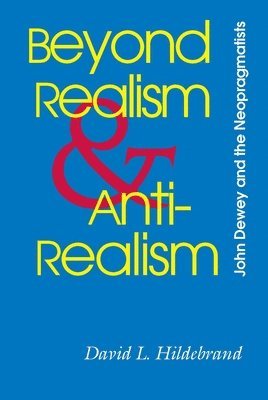
Beyond Realism and Antirealism
John Dewey and the Neopragmatists
Inbunden, 2003
1481 kr
Lägg i varukorg
Perhaps the most significant development in American philosophy in the late 20th century has been the extraordinary renaissance of pragmatism, marked most notably by the reformulations of the so-called ""neopragmatists"" Richard Rorty and Hilary Putnam. With pragmatism offering the allure of …
Beyond Realism and Antirealism
John Dewey and the Neopragmatists
Häftad, 2003
601 kr
Lägg i varukorg
Perhaps the most significant development in American philosophy in recent times has been the extraordinary renaissance of Pragmatism, marked most notably by the reformulations of the so-called "Neopragmatists" Richard Rorty and Hilary Putnam. With Pragmatism offering the allure of potentially …
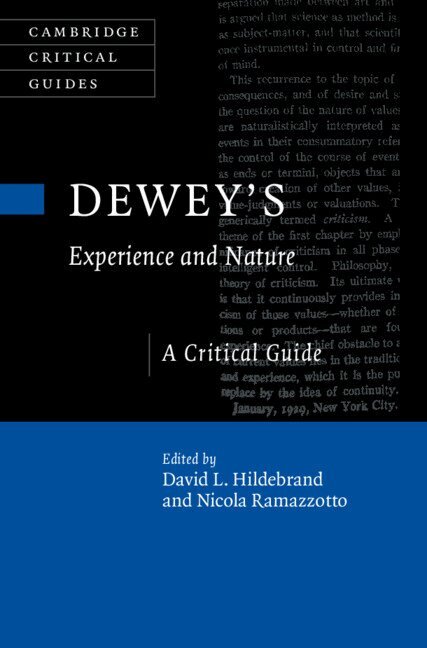
Dewey's Experience and Nature
A Critical Guide
Av David L. Hildebrand, Nicola Ramazzotto
Inbunden, 2026
1800 kr
Kommande
Marking the centennial of John Dewey's Experience and Nature (1925), this volume offers the first book-length critical guide to what is widely considered Dewey's philosophical masterpiece. Written by an international team of leading scholars, the book explores Experience and Nature's enduring …
Dewey's Experience and Nature
A Critical Guide
Av David L. Hildebrand, Nicola Ramazzotto
Häftad, 2026
659 kr
Kommande
Marking the centennial of John Dewey's Experience and Nature (1925), this volume offers the first book-length critical guide to what is widely considered Dewey's philosophical masterpiece. Written by an international team of leading scholars, the book explores Experience and Nature's enduring …
Dewey
A Beginner''s Guide
E-bok, 2008
80 kr
Lägg i varukorg
A ground-breaking introduction to one of America''s most prominent philosophers An icon of philosophy and psychology during the first half of the 20th century, Dewey is known as the father of Functional Psychology and a pivotal figure of the Pragmatist movement as well as the progressive movement …
Dewey
A Beginner's Guide
Häftad, 2008
111 kr
Tillfälligt slut
An icon of philosophy and psychology during the first half of the 20th century, Dewey is known as the father of Functional Psychology and a pivotal figure of the Pragmatist movement as well as the progressive movement in education. This concise and critical look at Dewey’s work examines his unique …