David L. Wagner - Böcker
Visar alla böcker från författaren David L. Wagner. Handla med fri frakt och snabb leverans.
4 produkter
4 produkter
317 kr
Skickas inom 7-10 vardagar
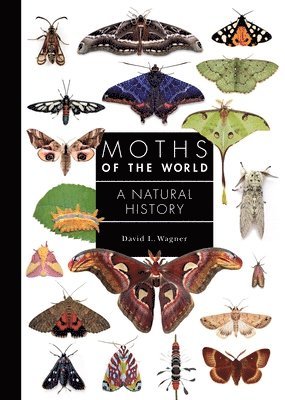
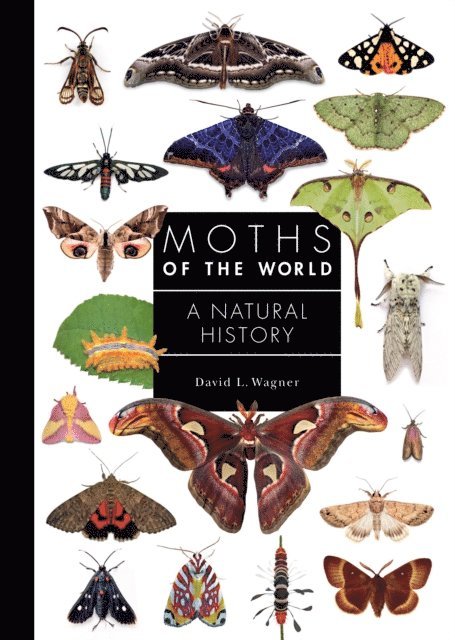
A marvelously illustrated guide to the world’s mothsWith more than 160,000 named species, moths are a familiar sight to most of us, flickering around lights, pollinating wildflowers about meadows and gardens, and as unwelcome visitors to our woolens. They come in a variety of colors, from earthy greens and browns to gorgeous patterns of infinite variety, and range in size from enormous atlas moths to tiny leafmining moths. Moths of the World is an essential guide to this astonishing group of insects, highlighting their remarkable diversity, miraculous metamorphoses, marvelous caterpillars, and much more.Features hundreds of breathtaking color photos of moths from around the worldCovers anatomy, evolution, life cycle, behavior, ecology, and conservationProfiles species from every major family, showcasing their endless variety of sizes, colors, shapes, and fascinating life historiesDiscusses habitats, distribution, and hostplant associationsWritten by a world-renowned expertA Guide to Every Family is a richly illustrated series covering some of the world’s most fascinating organisms, using a family-by-family approach wherever possible. Each book explores key topics such as anatomy, evolution, habitats, and lifestyle, and includes profiles of selected species to reveal the remarkable breadth of characteristics, appearance, and behavior across genera and families. Stunning color photographs, distribution maps, tables of information, and compelling species accounts combine to make this series irresistible for anyone interested in natural history at the global scale.
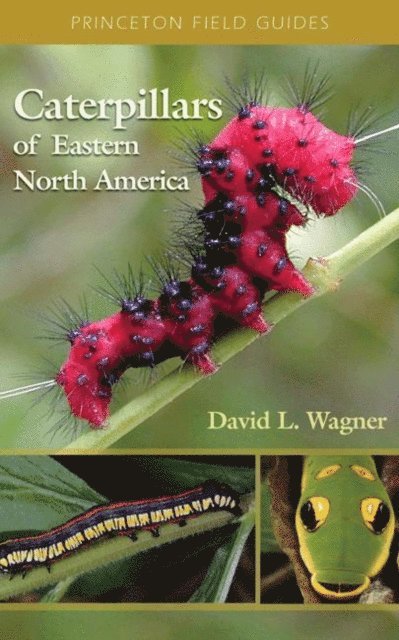
Caterpillars of Eastern North America
A Guide to Identification and Natural History
Häftad, Engelska, 2005
269 kr
Skickas inom 7-10 vardagar
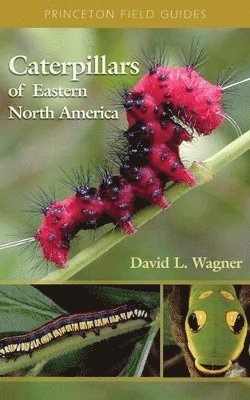
This lavishly illustrated guide will enable you to identify the caterpillars of nearly 700 butterflies and moths found east of the Mississippi. The more than 1,200 color photographs and two dozen line drawings include numerous exceptionally striking images. The giant silk moths, tiger moths, and many other species covered include forest pests, common garden guests, economically important species, and of course, the Mescal Worm and Mexican Jumping Bean caterpillars. Full-page species accounts cover almost 400 species, with up to six images per species including an image of the adult plus succinct text with information on distribution, seasonal activity, foodplants, and life history. These accounts are generously complemented with additional images of earlier instars, closely related species, noteworthy behaviors, and other intriguing aspects of caterpillar biology. Many caterpillars are illustrated here for the first time. Dozens of new foodplant records are presented and erroneous records are corrected. The book provides considerable information on the distribution, biology, and taxonomy of caterpillars beyond that available in other popular works on Eastern butterflies and moths.The introductory chapter covers caterpillar structure, life cycles, rearing, natural enemies, photography, and conservation. The section titled "Caterpillar Projects" will be of special interest to educators. Given the dearth of accessible guides on the identification and natural history of caterpillars, Caterpillars of Eastern North America is a must for entomologists and museum curators, forest managers, conservation biologists and others who seek a compact, easy-to-use guide to the caterpillars of this vast region. * A compact guide to nearly 700 caterpillars east of the Mississippi, from forest pests to garden guests and economically important species *1,200 color photos and 24 line drawings enable easy identification * Full-page species accounts with image of adult insect for almost 400 species, plus succinct text on distribution and other vital information * Many caterpillars illustrated here for the first time * Current information on distribution, biology, and taxonomy not found in other popular works * A section geared toward educators, "Caterpillar Projects" * An indispensable resource for all who seek an easy-to-use guide to the caterpillars of this vast region
123 kr
Tillfälligt slut
1 165 kr
Skickas inom 7-10 vardagar
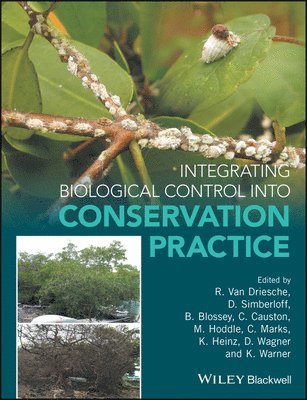
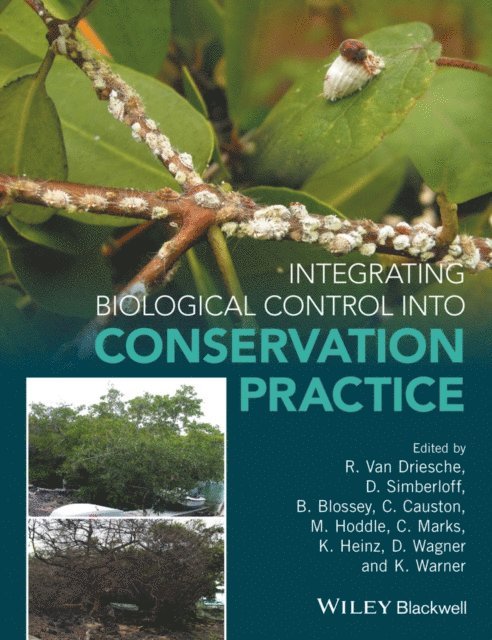
Invasive species have a critical and growing effect upon natural areas. They can modify, degrade, or destroy wildland ecosystem structure and function, and reduce native biodiversity. Landscape-level solutions are needed to address these problems. Conservation biologists seek to limit such damage and restore ecosystems using a variety of approaches. One such approach is biological control: the deliberate importation and establishment of specialized natural enemies, which can address invasive species problems and which should be considered as a possible component of restoration. Biological control can be an effective tool against many invasive insects and plants but it has rarely been successfully employed against other groups. Safety is of paramount concern and requires that the natural enemies used be specialized and that targeted pests be drivers of ecological degradation. While modern approaches allow species to be selected with a high level of security, some risks do remain. However, as in all species introductions, these should be viewed in the context of the risk of failing to reduce the impact of the invasive species.This unique book identifies the balance among these factors to show how biological control can be integrated into ecosystem restoration as practiced by conservation biologists. Jointly developed by conservation biologists and biological control scientists, it contains chapters on matching tools to management goals; tools in action; measuring and evaluating ecological outcomes of biological control introductions; managing conflict over biological control; and includes case studies as well as an ethical framework for integrating biological control and conservation practice.Integrating Biological Control into Conservation Practice is suitable for graduate courses in invasive species management and biological control, as well as for research scientists in government and non-profit conservation organizations.