David Lingelbach – författare
836 kr
Läs direkt efter köp
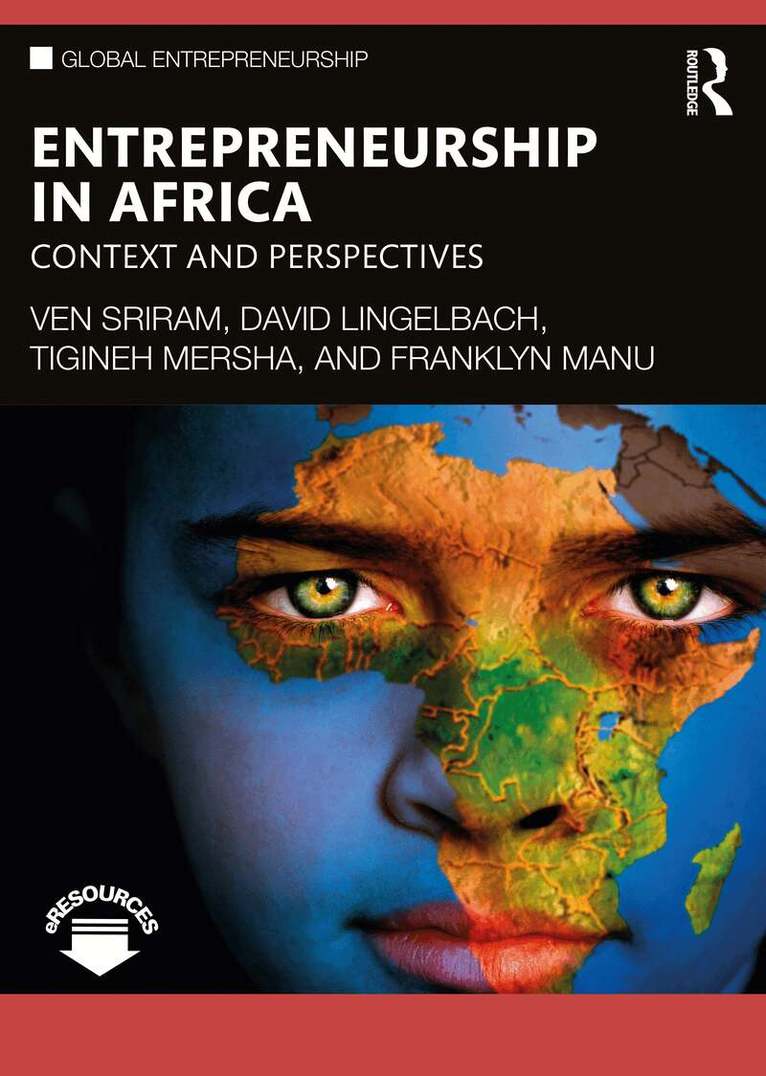
It is now widely recognized that in regions like Africa, for economic and other reasons, the public sector has had to disengage and divest from many areas of the economy and allow private enterprise, especially scalable start-ups and new ventures, to enter and flourish if economic development and employment are to grow. There is, however, a training and education gap since entrepreneurship is rarely taught formally at African universities and, when it is, it is often approached from a Western perspective which may not be appropriate given that African environments are significantly different from most Western ones in terms of economic infrastructure and political considerations.This book allows readers to understand the African entrepreneurial context by guiding them through the principal stages in the life of a new venture, and offers approaches, both Western and indigenous, that can inform their entrepreneurial actions. It concludes by examining some specialized topics, including female, youth, and social entrepreneurship, as well as real estate and technology. Exercises throughout the book will enable readers to evaluate their motivations and preparedness for entrepreneurship and learn how to communicate a new venture’s key features to potential stakeholders. By focusing on the distinctive features of entrepreneurship in the African context, and taking a conversational tone, this is an informative and practical text that will be useful for students of Global Entrepreneurship and Business as well as actual and prospective entrepreneurs in the private, non-profit, and public sectors.
866 kr
Läs direkt efter köp
It is now widely recognized that in regions like Africa, for economic and other reasons, the public sector has had to disengage and divest from many areas of the economy and allow private enterprise, especially scalable start-ups and new ventures, to enter and flourish if economic development and employment are to grow. There is, however, a training and education gap since entrepreneurship is rarely taught formally at African universities and, when it is, it is often approached from a Western perspective which may not be appropriate given that African environments are significantly different from most Western ones in terms of economic infrastructure and political considerations.This book allows readers to understand the African entrepreneurial context by guiding them through the principal stages in the life of a new venture, and offers approaches, both Western and indigenous, that can inform their entrepreneurial actions. It concludes by examining some specialized topics, including female, youth, and social entrepreneurship, as well as real estate and technology. Exercises throughout the book will enable readers to evaluate their motivations and preparedness for entrepreneurship and learn how to communicate a new venture’s key features to potential stakeholders. By focusing on the distinctive features of entrepreneurship in the African context, and taking a conversational tone, this is an informative and practical text that will be useful for students of Global Entrepreneurship and Business as well as actual and prospective entrepreneurs in the private, non-profit, and public sectors.
2 549 kr
Skickas inom 10-15 vardagar
733 kr
Skickas inom 10-15 vardagar
1 899 kr
Läs direkt efter köp
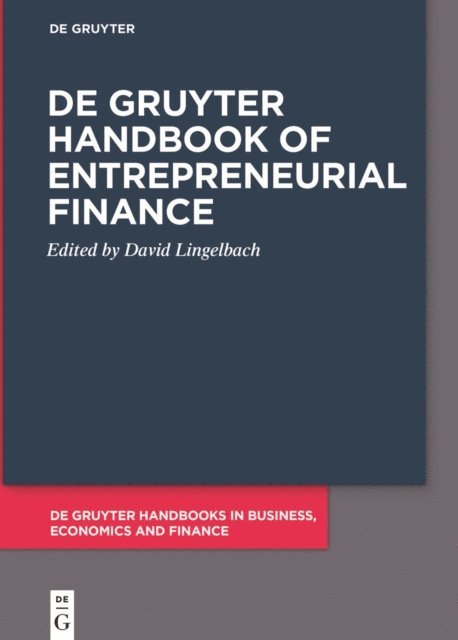
As of early 2022, seven of the ten largest firms in the world by market capitalization had been funded through various types of entrepreneurial finance. This handbook provides an up-to-date survey of what we know about this significant phenomenon in all its forms, and where our knowledge about it needs to head from here. The handbook embraces a wide range of established and emerging academic and practitioner voices across the globe to explore the theoretical and practical flux and tension in the field.
Until recently, most studies have taken a supply side perspective, focusing on the perspective of those who provide funding to new ventures. This book takes a different, demand side perspective, beginning with the entrepreneur and gradually broadening our view to include close by and then more distant funding sources. Following this approach, it is organized into four parts detailing the individual level (founders’ resources, bricolage and bootstrapping, effectuation and portfolio entrepreneurship); the inner circle (informal financing, business groups, incubators and accelerators); the wider world (formal debt, microfinance, venture capital, corporate venture capital, business angels, government funding and family offices); and emerging perspectives (non-Western perspectives, gender, indigenous perspectives, post-conflict and disaster zones and ethics).
The introduction considers the general state of the field, while the conclusion takes on additional topics relevant to entrepreneurial finance, such as decentralized finance, big data, behavioral economics, financial innovation and COVID-19, as well as possible ways in which entrepreneurial finance can have a greater impact on other disciplines.
This handbook will be a core reference work for researchers, practitioners, and policy makers seeking an up-to-date academic survey of entrepreneurial finance. It can also be used as a primary text in Ph.D. seminars in entrepreneurship, entrepreneurial finance, and finance. Instructors in Master’s level courses in entrepreneurial finance and venture capital will also find the book of benefit.
1 916 kr
Läs direkt efter köp
As of early 2022, seven of the ten largest firms in the world by market capitalization had been funded through various types of entrepreneurial finance. This handbook provides an up-to-date survey of what we know about this significant phenomenon in all its forms, and where our knowledge about it needs to head from here. The handbook embraces a wide range of established and emerging academic and practitioner voices across the globe to explore the theoretical and practical flux and tension in the field.
Until recently, most studies have taken a supply side perspective, focusing on the perspective of those who provide funding to new ventures. This book takes a different, demand side perspective, beginning with the entrepreneur and gradually broadening our view to include close by and then more distant funding sources. Following this approach, it is organized into four parts detailing the individual level (founders’ resources, bricolage and bootstrapping, effectuation and portfolio entrepreneurship); the inner circle (informal financing, business groups, incubators and accelerators); the wider world (formal debt, microfinance, venture capital, corporate venture capital, business angels, government funding and family offices); and emerging perspectives (non-Western perspectives, gender, indigenous perspectives, post-conflict and disaster zones and ethics).
The introduction considers the general state of the field, while the conclusion takes on additional topics relevant to entrepreneurial finance, such as decentralized finance, big data, behavioral economics, financial innovation and COVID-19, as well as possible ways in which entrepreneurial finance can have a greater impact on other disciplines.
This handbook will be a core reference work for researchers, practitioners, and policy makers seeking an up-to-date academic survey of entrepreneurial finance. It can also be used as a primary text in Ph.D. seminars in entrepreneurship, entrepreneurial finance, and finance. Instructors in Master’s level courses in entrepreneurial finance and venture capital will also find the book of benefit.
1 148 kr
Skickas
297 kr
Skickas inom 5-8 vardagar
347 kr
Läs direkt efter köp
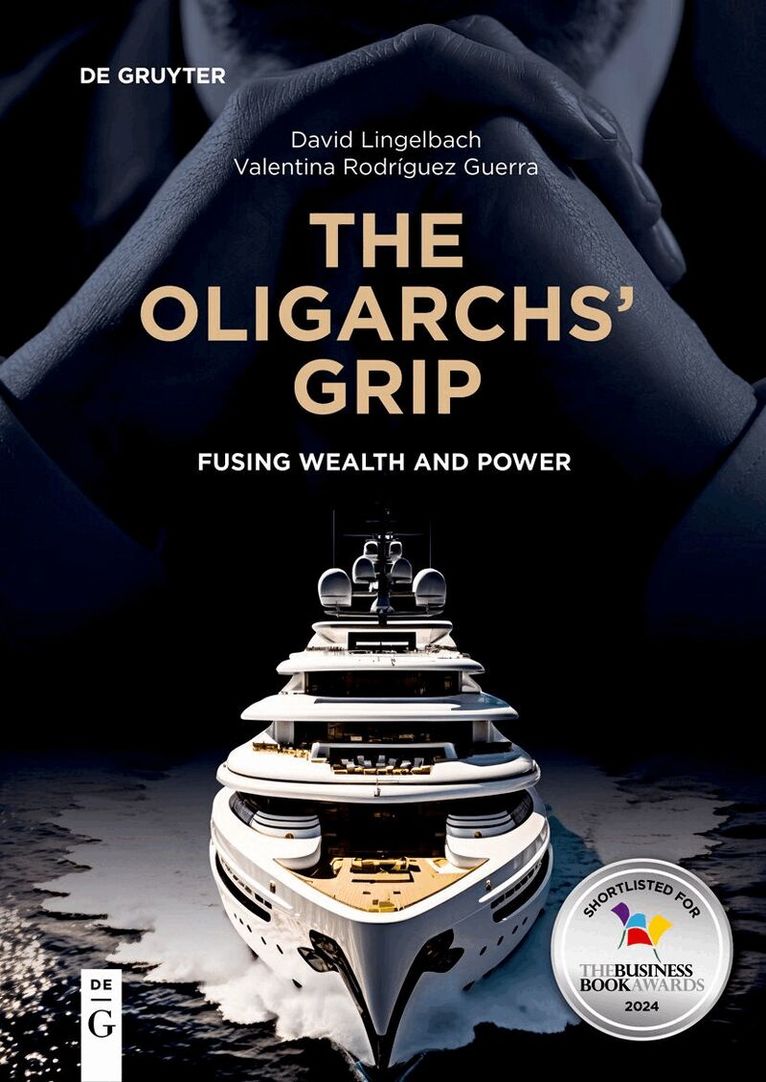
Shortlisted in the International Business Book category at the Business Book Awards in partnership with Pathway Group 2024
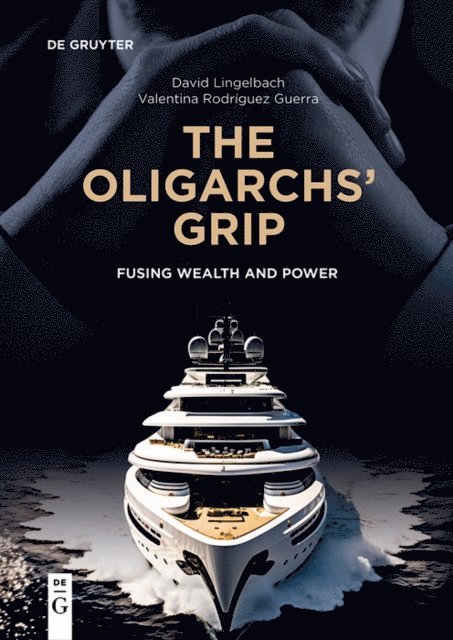
The first ever guide to oligarchs as a global and historical phenomenon.
Today, more than twenty oligarchs serve as heads of state or government in countries such as Russia, South Africa, Lebanon, and El Salvador. Many have a net worth in excess of $1 billion, and they all – whether directly or indirectly – impact our daily lives.
Who are they and how have they dominated our world? What lessons can we learn from them, and what might the future hold?
In The Oligarchs’ Grip: Fusing Wealth and Power, entrepreneurship professor David Lingelbach and oligarch researcher Valentina Rodríguez Guerra draw upon more than 25 years of research (including conversations with Vladimir Putin and other oligarchs), 16 case studies, and dozens of historical examples to develop the first-ever model revealing the strategies oligarchs employ to fuse wealth and power, and transition between the two. This model gives insight into how oligarchs use multiple control mechanisms to exploit an increasingly uncertain world.
The Oligarchs’ Grip is a fascinating read for economists, political scientists, business academics, policymakers, businesspeople and anyone interested in oligarchs and the wealth and power they wield on the politico-economic scene today.
Book talk with both authors: https://www.youtube.com/watch?v=2iAwhJjN3hk
337 kr
Läs direkt efter köp
Shortlisted in the International Business Book category at the Business Book Awards in partnership with Pathway Group 2024
The first ever guide to oligarchs as a global and historical phenomenon.
Today, more than twenty oligarchs serve as heads of state or government in countries such as Russia, South Africa, Lebanon, and El Salvador. Many have a net worth in excess of $1 billion, and they all – whether directly or indirectly – impact our daily lives.
Who are they and how have they dominated our world? What lessons can we learn from them, and what might the future hold?
In The Oligarchs’ Grip: Fusing Wealth and Power, entrepreneurship professor David Lingelbach and oligarch researcher Valentina Rodríguez Guerra draw upon more than 25 years of research (including conversations with Vladimir Putin and other oligarchs), 16 case studies, and dozens of historical examples to develop the first-ever model revealing the strategies oligarchs employ to fuse wealth and power, and transition between the two. This model gives insight into how oligarchs use multiple control mechanisms to exploit an increasingly uncertain world.
The Oligarchs’ Grip is a fascinating read for economists, political scientists, business academics, policymakers, businesspeople and anyone interested in oligarchs and the wealth and power they wield on the politico-economic scene today.
Book talk with both authors: https://www.youtube.com/watch?v=2iAwhJjN3hk
556 kr
Skickas inom 3-6 vardagar
161 kr
Kommande