David M. Kaplan – författare
Visar alla böcker från författaren David M. Kaplan. Handla med fri frakt och snabb leverans.
14 produkter
14 produkter
1 434 kr
Skickas inom 3-6 vardagar
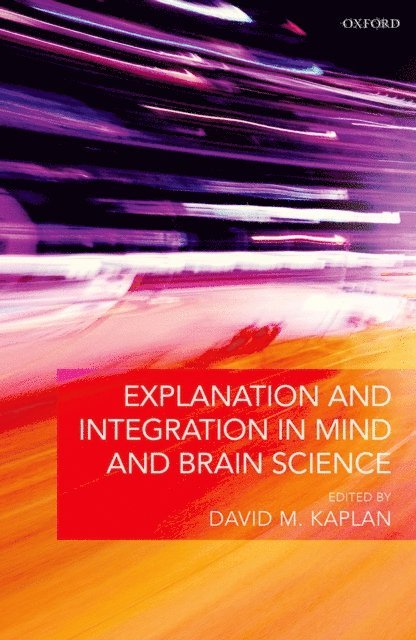
This collection brings together a set of new papers that advance the debate concerning the nature of explanation in mind and brain science, and help to clarify the prospects for bonafide integration across these fields. Long a topic of debate among philosophers and scientists alike, there is growing appreciation that understanding the complex relationship between the psychological sciences and the neurosciences, especially how their respective explanatory frameworks interrelate, is of fundamental importance for achieving progress across these scientific domains. Traditional philosophical discussions tend to construe the relationship between them in stark terms - either they are related in terms of complete independence (i.e., autonomy) or complete dependence (i.e., reduction), leaving little room for more interesting relations such as that of mutually beneficial interaction or integration. A unifying thread across the diverse set of contributions to this volume is the rejection of the assumption that no stable middle ground exists between these two extremes, and common embrace of the idea that these sciences are partially dependent on or constrained by one another. By addressing whether the explanatory patterns employed across these domains are similar or different in kind, and to what extent they inform and constrain each another, this volume helps to deepen our understanding of the prospects for successfully integrating mind and brain science.
1 126 kr
Skickas inom 5-8 vardagar
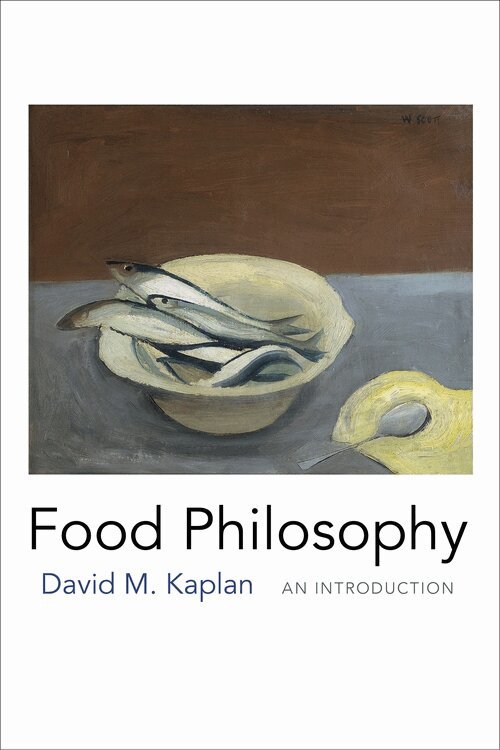
Food is a challenging subject. There is little consensus about how and what we should produce and consume. It is not even clear what food is or whether people have similar experiences of it. On one hand, food is recognized as a basic need, if not a basic right. On the other hand, it is hard to generalize about it given the wide range of practices and cuisines, and the even wider range of tastes.This book is an introduction to the philosophical dimensions of food. David M. Kaplan examines the nature and meaning of food, how we experience it, the social role it plays, its moral and political dimensions, and how we judge it to be delicious or awful. He shows how the different branches of philosophy contribute to a broader understanding of food: what food is (metaphysics), how we experience food (epistemology), what taste in food is (aesthetics), how we should make and eat food (ethics), how governments should regulate food (political philosophy), and why food matters to us (existentialism). Kaplan embarks on a series of philosophical investigations, considering topics such as culinary identity and authenticity, tasting and food criticism, appetite and disgust, meat eating and techno-foods, and consumerism and conformity. He emphasizes how different narratives help us navigate the complex world of food and reminds us we all have responsibilities to ourselves, to others, and to animals. An original treatment of a timely subject, Food Philosophy is suitable for undergraduates while making a significant contribution to scholarly debates.
287 kr
Skickas inom 5-8 vardagar
Food is a challenging subject. There is little consensus about how and what we should produce and consume. It is not even clear what food is or whether people have similar experiences of it. On one hand, food is recognized as a basic need, if not a basic right. On the other hand, it is hard to generalize about it given the wide range of practices and cuisines, and the even wider range of tastes.This book is an introduction to the philosophical dimensions of food. David M. Kaplan examines the nature and meaning of food, how we experience it, the social role it plays, its moral and political dimensions, and how we judge it to be delicious or awful. He shows how the different branches of philosophy contribute to a broader understanding of food: what food is (metaphysics), how we experience food (epistemology), what taste in food is (aesthetics), how we should make and eat food (ethics), how governments should regulate food (political philosophy), and why food matters to us (existentialism). Kaplan embarks on a series of philosophical investigations, considering topics such as culinary identity and authenticity, tasting and food criticism, appetite and disgust, meat eating and techno-foods, and consumerism and conformity. He emphasizes how different narratives help us navigate the complex world of food and reminds us we all have responsibilities to ourselves, to others, and to animals. An original treatment of a timely subject, Food Philosophy is suitable for undergraduates while making a significant contribution to scholarly debates.
849 kr
Tillfälligt slut
290 kr
Tillfälligt slut
860 kr
Skickas inom 5-8 vardagar
This book explores food from a philosophical perspective, bringing together sixteen leading philosophers to consider the most basic questions about food: What is it exactly? What should we eat? How do we know it is safe? How should food be distributed? What is good food? David M. Kaplan's erudite and informative introduction grounds the discussion, showing how philosophers since Plato have taken up questions about food, diet, agriculture, and animals. However, until recently, few have considered food a standard subject for serious philosophical debate. Each of the essays in this book brings in-depth analysis to many contemporary debates in food studies - Slow Food, sustainability, food safety, and politics - and addresses such issues as "happy meat", aquaculture, veganism, and table manners. The result is an extraordinary resource that guides readers to think more clearly and responsibly about what we consume and how we provide for ourselves, and illuminates the reasons why we act as we do.
262 kr
Skickas inom 5-8 vardagar
This book explores food from a philosophical perspective, bringing together sixteen leading philosophers to consider the most basic questions about food: What is it exactly? What should we eat? How do we know it is safe? How should food be distributed? What is good food? David M. Kaplan's erudite and informative introduction grounds the discussion, showing how philosophers since Plato have taken up questions about food, diet, agriculture, and animals. However, until recently, few have considered food a standard subject for serious philosophical debate. Each of the essays in this book brings in-depth analysis to many contemporary debates in food studies - Slow Food, sustainability, food safety, and politics - and addresses such issues as "happy meat", aquaculture, veganism, and table manners. The result is an extraordinary resource that guides readers to think more clearly and responsibly about what we consume and how we provide for ourselves, and illuminates the reasons why we act as we do.
2 018 kr
Skickas inom 10-15 vardagar
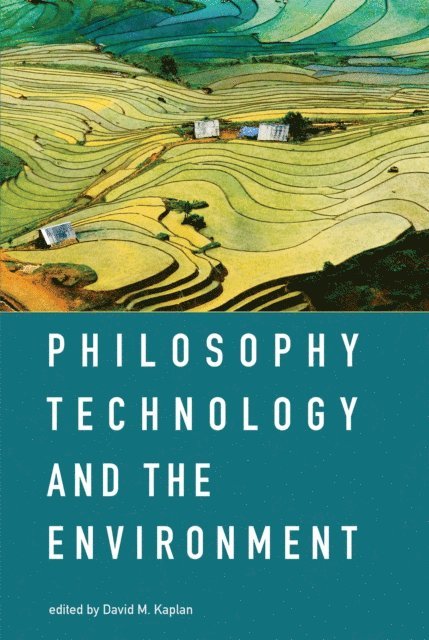
Ideal for professors who want to provide a comprehensive set of the most important readings in the philosophy of technology, from foundational to the cutting edge, this book introduces students to the various ways in which societies, technologies, and environments shape one another. The readings examine the nature of technology as well as the effects of technologies upon human knowledge, activities, societies, and environments. Students will learn to appreciate the ways that philosophy informs our understanding of technology, and to see how technology relates to ethics, politics, nature, human nature, computers, science, food, and animals.
1 214 kr
Skickas inom 10-15 vardagar
Ideal for professors who want to provide a comprehensive set of the most important readings in the philosophy of technology, from foundational to the cutting edge, this book introduces students to the various ways in which societies, technologies, and environments shape one another. The readings examine the nature of technology as well as the effects of technologies upon human knowledge, activities, societies, and environments. Students will learn to appreciate the ways that philosophy informs our understanding of technology, and to see how technology relates to ethics, politics, nature, human nature, computers, science, food, and animals.
983 kr
Skickas inom 7-10 vardagar
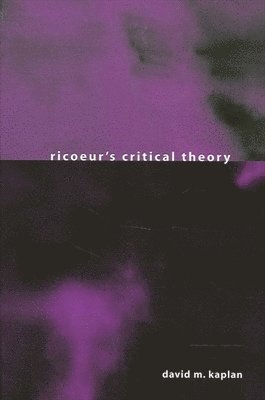
The first book-length treatment of Paul Ricoeur's conception of philosophy as critical theory.In Ricoeur's Critical Theory, David M. Kaplan revisits the Habermas-Gadamer debates to show how Paul Ricoeur's narrative-hermeneutics and moral-political philosophy provide a superior interpretive, normative, and critical framework. Arguing that Ricoeur's unique version of critical theory surpasses the hermeneutic philosophy of Gadamer, Kaplan adds a theory of argumentation necessary to criticize false consciousness and distorted communication. He also argues that Ricoeur develops Habermas's critical theory, adding an imaginative, creative dimension and a concern for community values and ideas of the Good Life. He then shows how Ricoeur's political philosophy steers a delicate path between liberalism, communitarianism, and socialism. Ricoeur's version of critical theory not only identifies and criticizes social pathologies, posits Kaplan, but also projects utopian alternatives for personal and social transformation that would counter and heal the effects of unjust societies. The author concludes by applying Ricoeur's critical theory to three related problems-the politics of identity and recognition, technology, and globalization and democracy-to show how his works add depth, complexity, and practical solutions to these problems.
438 kr
Skickas inom 5-8 vardagar
The first book-length treatment of Paul Ricoeur's conception of philosophy as critical theory.In Ricoeur's Critical Theory, David M. Kaplan revisits the Habermas-Gadamer debates to show how Paul Ricoeur's narrative-hermeneutics and moral-political philosophy provide a superior interpretive, normative, and critical framework. Arguing that Ricoeur's unique version of critical theory surpasses the hermeneutic philosophy of Gadamer, Kaplan adds a theory of argumentation necessary to criticize false consciousness and distorted communication. He also argues that Ricoeur develops Habermas's critical theory, adding an imaginative, creative dimension and a concern for community values and ideas of the Good Life. He then shows how Ricoeur's political philosophy steers a delicate path between liberalism, communitarianism, and socialism. Ricoeur's version of critical theory not only identifies and criticizes social pathologies, posits Kaplan, but also projects utopian alternatives for personal and social transformation that would counter and heal the effects of unjust societies. The author concludes by applying Ricoeur's critical theory to three related problems-the politics of identity and recognition, technology, and globalization and democracy-to show how his works add depth, complexity, and practical solutions to these problems.
983 kr
Skickas inom 7-10 vardagar
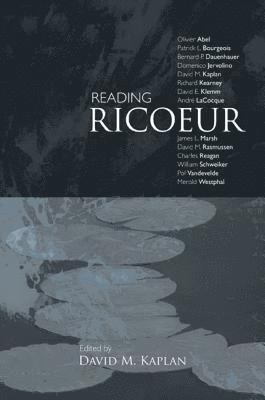
Introduces readers to the work of Paul Ricoeur, one of the twentieth century's leading philosophers.In Reading Ricoeur, fourteen well-known scholars interpret, evaluate, and criticize the works of Paul Ricoeur, one of the twentieth century's most important and far-reaching philosophers. The contributors discuss Ricoeur's entire philosophical career: from his existentialist-phenomenology of the 1940s and '50s; his hermeneutics and critique of structuralism in the 1960s and '70s; his narrative and moral philosophy of the 1980s; his political and legal philosophy of the 1990s; his recent work on memory, forgiveness, and recognition; as well as his enduring interests in religious language and the problem of evil. The contributors not only explain the central concepts and structures of Ricoeur's philosophy, but they also bring him into dialogue with his contemporaries, including Sartre, Heidegger, Gadamer, Habermas, Rawls, and Lyotard. Reading Ricoeur demonstrates the central role of Paul Ricoeur in the development of twentieth-century philosophy.
380 kr
Tillfälligt slut
Introduces readers to the work of Paul Ricoeur, one of the twentieth century's leading philosophers.In Reading Ricoeur, fourteen well-known scholars interpret, evaluate, and criticize the works of Paul Ricoeur, one of the twentieth century's most important and far-reaching philosophers. The contributors discuss Ricoeur's entire philosophical career: from his existentialist-phenomenology of the 1940s and '50s; his hermeneutics and critique of structuralism in the 1960s and '70s; his narrative and moral philosophy of the 1980s; his political and legal philosophy of the 1990s; his recent work on memory, forgiveness, and recognition; as well as his enduring interests in religious language and the problem of evil. The contributors not only explain the central concepts and structures of Ricoeur's philosophy, but they also bring him into dialogue with his contemporaries, including Sartre, Heidegger, Gadamer, Habermas, Rawls, and Lyotard. Reading Ricoeur demonstrates the central role of Paul Ricoeur in the development of twentieth-century philosophy.
8 749 kr
Skickas inom 10-15 vardagar
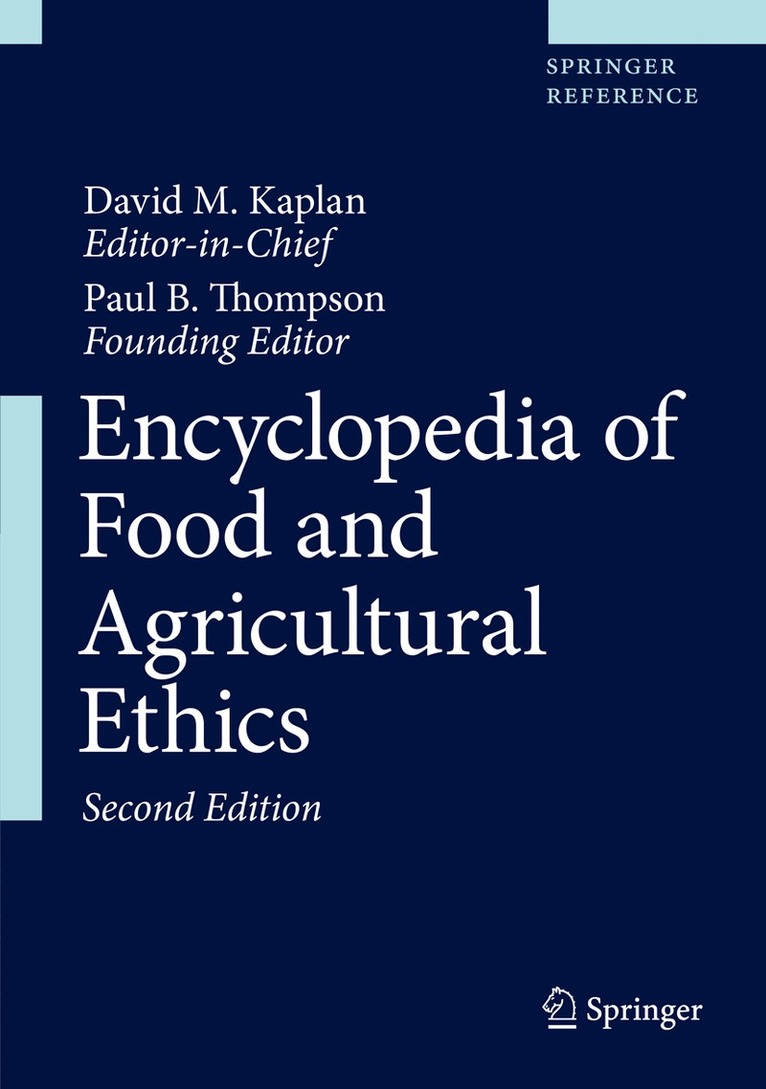
The second edition of this extensive work is the definitive source on issues pertaining to the full range of topics in the important area of food and agricultural ethics. Altogether about 100 new entries appear in this new edition. The start of the 21st century has seen intensified debate, discussion, and criticism of food and agriculture. Scholars, activists, and citizens increasingly question the goals and ethical rationale behind production, distribution and consumption of food, and the use of crops for fuel and fiber. These wide-ranging debates encompass questions in human nutrition, animal rights, and the environmental impacts of agricultural production. The encyclopedia provides a detailed analysis of these issues and hundreds of other topics including the use of antibiotics in animal feedlots, the Green Revolution, organic farming, Islam and Food, and cannibalism.The Encyclopedia of Food and Agricultural Ethics, 2nd edition is an indispensable reference point for future research and writing on topics in agriculture, food, animal, and eating ethics.