David N. Power OMI – författare
Visar alla böcker från författaren David N. Power OMI. Handla med fri frakt och snabb leverans.
5 produkter
5 produkter
Häftad, Engelska, 2012
259 kr
Skickas inom 5-8 vardagar
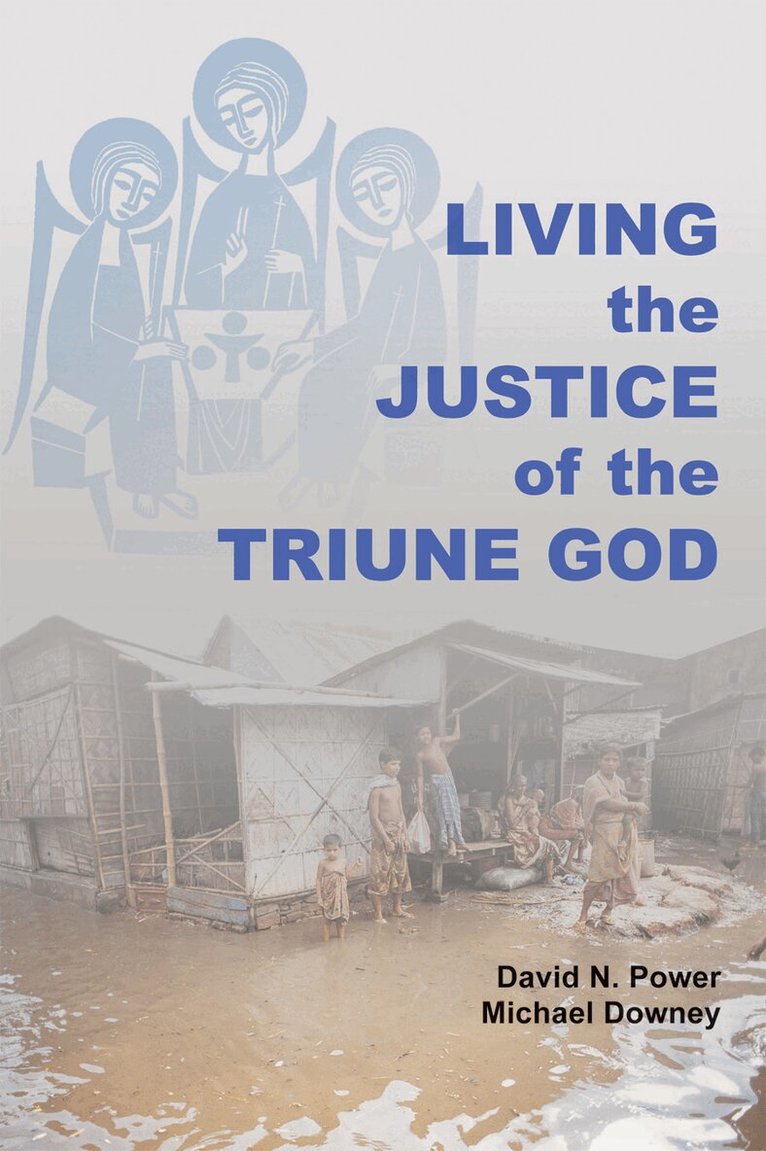
This groundbreaking book is distinctive for the explicit attention it gives to the communal, intersubjective, cultural, and linguistic embodiment of the workings of God in the world. It emphasizes not simply acting justly but living with, in, and from the justice of the triune God by which we are justified. Finally, it offers an important sacramental and liturgical grounding to the Christian understanding of both justice and the triune God. David N. Power and Michael Downey make clear to contemporary believers why a spiritual and sacramental life that is ordered by its trinitarian orientation must include the desire for justice. In short, it is an ethic of social justice that springs from contemplation of the Divine Trinity in the world.
Inbunden, Engelska, 2008
2 355 kr
Skickas inom 10-15 vardagar
This is a magisterial work on the mission, ministry, and order of the church that is historically comprehensive, theologically progressive, ecumenically and globally focused, and practical in its prescriptions.What is the mission of the church? What are the ministries that further its mission? How should the traditional orders of bishop/overseer, priest/presbyter, and deacon be reconsidered in the light of 21st century challenges and ecumenical unity? These big questions involve a constellation of neuralgic issues both within the Roman Catholic Church and between it and its sister churches, both East and West: women priests, women bishops, married priests, lay ministries, the unaccountability of bishops to their flocks.The rapid decline of priests in the US has led to an enormous number of lay people in leadership positions, but they can't preside at the Eucharist (the heart and soul of Catholic identity and practice), and their roles are nebulous, undefined, and severely constrained. Catholic women are voting with their feet over the church's failure to ordain women.Lay theologians, men and women, now outnumber priest theologians, but have little "standing" in the church outside of academia. Far-reaching agreements on theological issues have been made between Roman Catholicism and Anglicanism and Lutheranism, but the practical consequences (e.g., shared Eucharist's) are nil. It is against this background that David Power, the doyen of sacramental theologians in North America, has written a magisterial work on the mission, ministry, and order of the church that is historically comprehensive, theologically progressive, ecumenically and globally focused, and practical in its prescriptions.
Häftad, Engelska, 2008
587 kr
Skickas inom 10-15 vardagar
This is a magisterial work on the mission, ministry, and order of the church that is historically comprehensive, theologically progressive, ecumenically and globally focused, and practical in its prescriptions.What is the mission of the church? What are the ministries that further its mission? How should the traditional orders of bishop/overseer, priest/presbyter, and deacon be reconsidered in the light of 21st century challenges and ecumenical unity? These big questions involve a constellation of neuralgic issues both within the Roman Catholic Church and between it and its sister churches, both East and West: women priests, women bishops, married priests, lay ministries, the unaccountability of bishops to their flocks.The rapid decline of priests in the US has led to an enormous number of lay people in leadership positions, but they can't preside at the Eucharist (the heart and soul of Catholic identity and practice), and their roles are nebulous, undefined, and severely constrained. Catholic women are voting with their feet over the church's failure to ordain women.Lay theologians, men and women, now outnumber priest theologians, but have little "standing" in the church outside of academia. Far-reaching agreements on theological issues have been made between Roman Catholicism and Anglicanism and Lutheranism, but the practical consequences (e.g., shared Eucharist's) are nil. It is against this background that David Power, the doyen of sacramental theologians in North America, has written a magisterial work on the mission, ministry, and order of the church that is historically comprehensive, theologically progressive, ecumenically and globally focused, and practical in its prescriptions.
E-bok
PDF, Engelska, 2008613 kr
Läs direkt efter köp
What is the mission of the church? What are the ministries that futher its mission? How should the traditional orders of bishop/overseer, priest/presbyter, and deacon be reconsidered in the light of 21st century challenges and ecumenical unity? These big questions involve a constellation of neuralgic issues both within the Roman Catholic Church and between it and its sister churches, both East and West: women priests, women bishops, married priests, lay ministries, the unaccountability of bishops to their flocks. The rapid decline of priests in the US has led to an enormous number of lay people in leadership positions, but they can''t preside at the Eucharist (the heart and soul of Catholic identity and practice), and their roles are nebulous, undefined, and severely constrained. Catholic women are voting with their feet over the church''s failure to ordain women. Lay theologians, men and women, now outnumber priest theologians, but have little "standing" in the church outside of academia. Far-reaching agreements on theological issues have been made between Roman Catholicism and Anglicanism and Lutheranism, but the practical consequences (e.g., shared Eucharists) are nil. It is against this background that David Power, the doyen of sacramental theologians in North America, has written a magisterial work on the mission, ministry, and order of the church that is historically comprehensive, theologically progressive, ecumenically and globally focused, and practical in its prescriptions.
E-bok
PDF, Engelska, 2008471 kr
Läs direkt efter köp
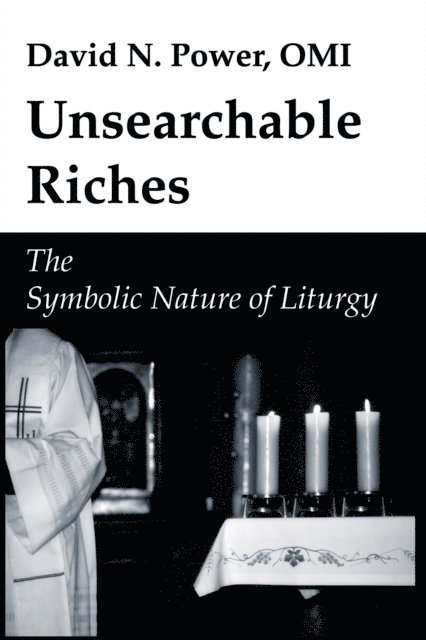
"e;This study has two aims. The first is to relate studies on symbolism and its modes to an understanding of the liturgy. The second is to relate these studies to the renewal of the liturgy in a time of crisis. Since the first aim is affected by the second, it may be well to say something about the nature of the crisis at this point . . . "e;The crisis as it touches on liturgy is twofold. First there is a crisis of vision and second a crisis of hope. The churches are forced to ask how well the vision of reality, or the world view, projected in liturgical celebration expresses a sense of being in time and a sense of the holy that are pertinent to contemporary fact and contemporary models of reality. This is the crisis of vision. At the same time, the churches are part of a humanity which lives in a time of disintegration and destruction, a humanity continually compelled to consider whether there are any hopes by which it is possible to face the future. The despair of the age is represented in the twofold holocaust of the century. There is the holocaust of the Jewish people under the Nazi regime, and there is the imminent nuclear holocaust which threatens the entire world. Can those who profess faith in Jesus Christ profess it in such an age?"e; --from the Introduction