247 kr
David Nirenberg – författare
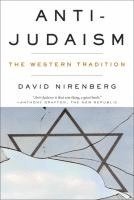
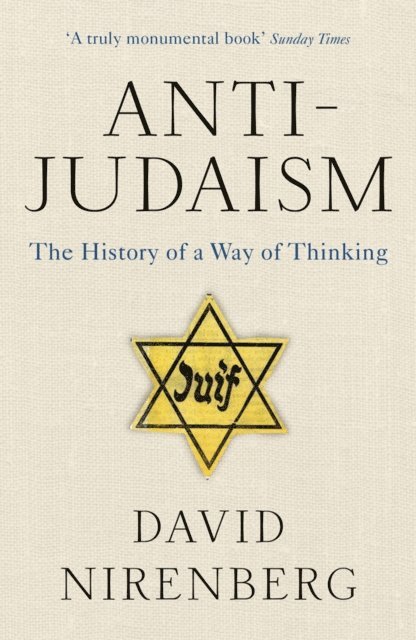
- Häftad, Engelska, 2014This incisive history upends the complacency that confines anti-Judaism to the ideological extremes in the Western tradition. With deep learning and elegance, David Nirenberg shows how foundational anti-Judaism is to the history of the West.Questions of how we are Jewish and, more critically, how and why we are not have been churning within the Western imagination throughout its history. Ancient Egyptians, Greeks, and Romans; Christians and Muslims of every period; even the secularists of modernity have used Judaism in constructing their visions of the world. The thrust of this tradition construes Judaism as an opposition, a danger often from within, to be criticized, attacked, and eliminated. The intersections of these ideas with the world of power—the Roman destruction of the Second Temple, the Spanish Inquisition, the German Holocaust—are well known. The ways of thought underlying these tragedies can be found at the very foundation of Western history.
- Inbunden, Engelska, 2014
821 kr
Skickas inom 5-8 vardagar
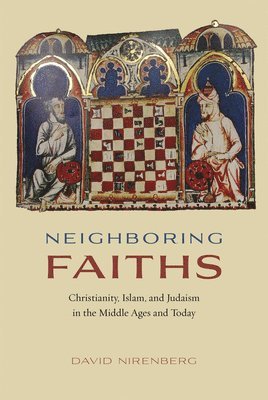
Christianity, Judaism, and Islam are usually treated as autonomous religions, but in fact across the long course of their histories the three religions have developed in interaction with one another. The author examines how Muslims, Christians, and Jews lived with and thought about each other during the Middle Ages and what the medieval past can tell us about how they do so today. There have been countless scripture-based studies of the three "religions of the book," but Nirenberg goes beyond those to pay close attention to how the three religious neighbors loved, tolerated, massacred, and expelled each other-all in the name of God-in periods and places both long ago and far away. Nirenberg argues that the three religions need to be studied in terms of how each affected the development of the others over time, their proximity of religious and philosophical thought as well as their overlapping geographics, and how the three "neighbors" define-and continue to define-themselves and their place in terms of one another.From dangerous attractions leading to interfaith marriage; to interreligious conflicts leading to segregation, violence, and sometimes extermination; to strategies for bridging the interfaith gap through language, vocabulary, and poetry, Nirenberg aims to understand the intertwined past of the three faiths as a way for their heirs to produce the future-together. - Häftad, Engelska, 2016
273 kr
Skickas inom 5-8 vardagar
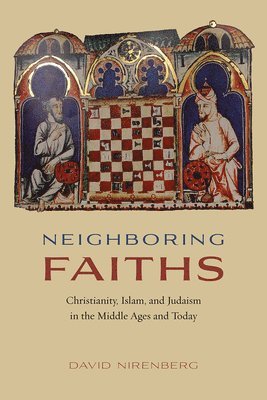
Christianity, Judaism, and Islam are usually treated as autonomous religions, but in fact across the long course of their histories the three religions have developed in interaction with one another. In Neighboring Faiths, David Nirenberg examines how Muslims, Christians, and Jews lived with and thought about each other during the Middle Ages and what the medieval past can tell us about how they do so today. There have been countless scripture-based studies of the three "religions of the book," but Nirenberg goes beyond those to pay close attention to how the three religious neighbors loved, tolerated, massacred, and expelled each other-all in the name of God-in periods and places both long ago and far away. Nirenberg argues that the three religions need to be studied in terms of how each affected the development of the others over time, their proximity of religious and philosophical thought as well as their overlapping geographies, and how the three "neighbors" define-and continue to define-themselves and their place in terms of one another. From dangerous attractions leading to interfaith marriage; to interreligious conflicts leading to segregation, violence, and sometimes extermination; to strategies for bridging the interfaith gap through language, vocabulary, and poetry, Nirenberg aims to understand the intertwined past of the three faiths as a way for their heirs to produce the future-together. - Inbunden, Engelska, 2021
278 kr
Skickas inom 5-8 vardagar
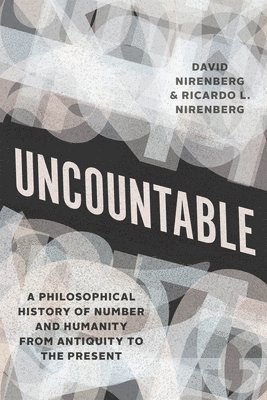
Ranging from math to literature to philosophy, Uncountable explains how numbers triumphed as the basis of knowledge—and compromise our sense of humanity. - Häftad, Engelska, 2024
192 kr
Skickas inom 5-8 vardagar
Ranging from math to literature to philosophy, Uncountable explains how numbers triumphed as the basis of knowledge—and compromise our sense of humanity.Our knowledge of mathematics has structured much of what we think we know about ourselves as individuals and communities, shaping our psychologies, sociologies, and economies. In pursuit of a more predictable and more controllable cosmos, we have extended mathematical insights and methods to more and more aspects of the world. Today those powers are greater than ever, as computation is applied to virtually every aspect of human activity. Yet, in the process, are we losing sight of the human? When we apply mathematics so broadly, what do we gain and what do we lose, and at what risk to humanity?These are the questions that David and Ricardo L. Nirenberg ask in Uncountable, a provocative account of how numerical relations became the cornerstone of human claims to knowledge, truth, and certainty. There is a limit to these number-based claims, they argue, which they set out to explore. The Nirenbergs, father and son, bring together their backgrounds in math, history, literature, religion, and philosophy, interweaving scientific experiments with readings of poems, setting crises in mathematics alongside world wars, and putting medieval Muslim and Buddhist philosophers in conversation with Einstein, Schrödinger, and other giants of modern physics. The result is a powerful lesson in what counts as knowledge and its deepest implications for how we live our lives. - Häftad, Engelska, 2015
287 kr
Skickas inom 5-8 vardagar
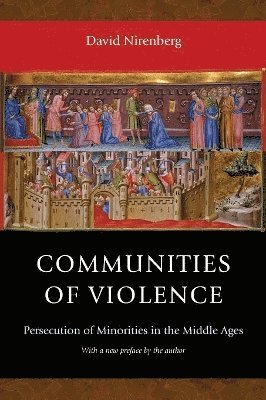
In the wake of modern genocide, we tend to think of violence against minorities as a sign of intolerance, or, even worse, a prelude to extermination. Violence in the Middle Ages, however, functioned differently, according to David Nirenberg. In this provocative book, he focuses on specific attacks against minorities in fourteenth-century France and the Crown of Aragon (Aragon, Catalonia, and Valencia). He argues that these attacks--ranging from massacres to verbal assaults against Jews, Muslims, lepers, and prostitutes--were often perpetrated not by irrational masses laboring under inherited ideologies and prejudices, but by groups that manipulated and reshaped the available discourses on minorities. Nirenberg shows that their use of violence expressed complex beliefs about topics as diverse as divine history, kinship, sex, money, and disease, and that their actions were frequently contested by competing groups within their own society. Nirenberg's readings of archival and literary sources demonstrates how violence set the terms and limits of coexistence for medieval minorities.The particular and contingent nature of this coexistence is underscored by the book's juxtapositions--some systematic (for example, that of the Crown of Aragon with France, Jew with Muslim, medieval with modern), and some suggestive (such as African ritual rebellion with Catalan riots). Throughout, the book questions the applicability of dichotomies like tolerance versus intolerance to the Middle Ages, and suggests the limitations of those analyses that look for the origins of modern European persecutory violence in the medieval past. - E-bokPDF, Engelska, 2012
798 kr
Läs direkt efter köp
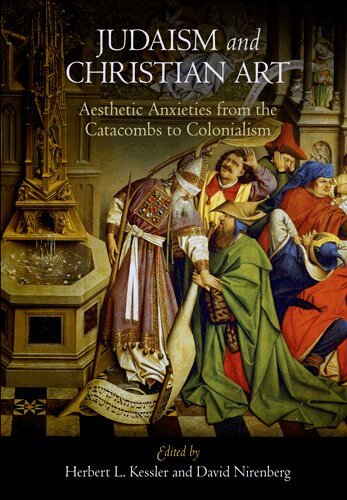
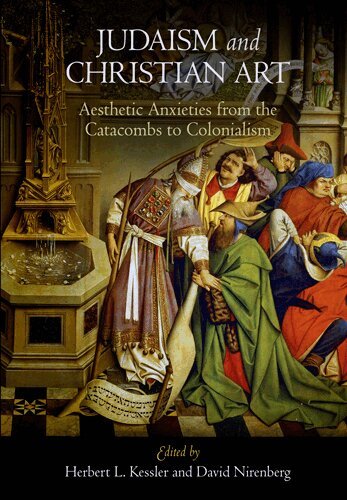
Christian cultures across the centuries have invoked Judaism in order to debate, represent, and contain the dangers presented by the sensual nature of art. By engaging Judaism, both real and imagined, they explored and expanded the perils and possibilities for Christian representation of the material world.The thirteen essays in Judaism and Christian Art reveal that Christian art has always defined itself through the figures of Judaism that it produces. From its beginnings, Christianity confronted a host of questions about visual representation. Should Christians make art, or does attention to the beautiful works of human hands constitute a misplaced emphasis on the things of this world or, worse, a form of idolatry ("Thou shalt make no graven image")? And if art is allowed, upon what styles, motifs, and symbols should it draw? Christian artists, theologians, and philosophers answered these questions and many others by thinking about and representing the relationship of Christianity to Judaism. This volume is the first dedicated to the long history, from the catacombs to colonialism but with special emphasis on the Middle Ages and the Renaissance, of the ways in which Christian art deployed cohorts of "Jews"-more figurative than real-in order to conquer, defend, and explore its own territory. - E-bokEngelska, 2015
400 kr
Läs direkt efter köp
In the wake of modern genocide, we tend to think of violence against minorities as a sign of intolerance, or, even worse, a prelude to extermination. Violence in the Middle Ages, however, functioned differently, according to David Nirenberg. In this provocative book, he focuses on specific attacks against minorities in fourteenth-century France and the Crown of Aragon (Aragon, Catalonia, and Valencia). He argues that these attacks--ranging from massacres to verbal assaults against Jews, Muslims, lepers, and prostitutes--were often perpetrated not by irrational masses laboring under inherited ideologies and prejudices, but by groups that manipulated and reshaped the available discourses on minorities. Nirenberg shows that their use of violence expressed complex beliefs about topics as diverse as divine history, kinship, sex, money, and disease, and that their actions were frequently contested by competing groups within their own society. Nirenberg''s readings of archival and literary sources demonstrates how violence set the terms and limits of coexistence for medieval minorities. The particular and contingent nature of this coexistence is underscored by the book''s juxtapositions--some systematic (for example, that of the Crown of Aragon with France, Jew with Muslim, medieval with modern), and some suggestive (such as African ritual rebellion with Catalan riots). Throughout, the book questions the applicability of dichotomies like tolerance versus intolerance to the Middle Ages, and suggests the limitations of those analyses that look for the origins of modern European persecutory violence in the medieval past.
- E-bokEngelska, 2013
133 kr
Läs direkt efter köp
A magisterial history, ranging from antiquity to the present, that reveals anti-Judaism to be a mode of thought deeply embedded in the Western tradition. There is a widespread tendency to regard anti-Judaism – whether expressed in a casual remark or implemented through pogrom or extermination campaign – as somehow exceptional: an unfortunate indicator of personal prejudice or the shocking outcome of an extremist ideology married to power. But, as David Nirenberg argues in this ground-breaking study, to confine anit-Judaism to the margins of our culture is to be dangerously complacent. Anti-Judaism is not an irrational closet in the vast edifice of Western thought, but rather one of the basic tools with which that edifice was constructed. - Del 1 - Co-Produced Religions
Co-Production of Judaism, Christianity, and Islam
Artefacts, Rituals, Communities, Narratives, Doctrines, Concepts
Inbunden, Engelska, 20251 735 kr
Skickas inom 5-8 vardagar
- Inbunden, Tyska, 2015
471 kr
Skickas inom 3-6 vardagar
- E-bokPDF, Tyska, 2013
90 kr
Läs direkt efter köp
David Nirenberg, international renommierter Spezialist für die Beziehungen der jüdischen, christlichen und islamischen Kulturen in der Geschichte, konzentriert sich in diesem Essay auf die Denkfigur des "Jüdischen" als ein durchgängiges politisches Konzept der abendländischen Geschichte. Im Vordergrund steht nicht das Judentum als historische und gelebte Religion, sondern das Attribut "jüdisch" als Figur des christlichen Denkens. Ohne diese ideengeschichtlichen Traditionen zu kennen, lassen sich weder die Politische Theologie Carl Schmitts verstehen noch die Bilder des Judentums, die Schmitts Theorie hervorbrachte. Auf seiner intellektuellen Reise zeigt Nirenberg an frühchristlichen, mittelalterlichen und modernen Beispielen, wie "Judentum" und "jüdisch" als Vokabeln der politischen Sprache Bedeutung gewonnen haben. So war "jüdisch" in der christlichen Regierungslehre Inbegriff der gefährlichen Attraktion von weltlicher Macht. Karl Marx bezeichnete die Judenemanzipation "in ihrer letzten Konsequenz" als "Emanzipation der Menschheit vom Judentum". Die Beständigkeit und die Verwendungsweisen der Denkfigur des "Jüdischen" sind nach Nirenberg Anlass für ein grundsätzliches Nachdenken über Ideen-, Begriffs- und Diskursgeschichte. - Del 49 - La storia. Temi
Antigiudaismo: La Tradizione Occidentale
Häftad, Italienska, 2016629 kr
Tillfälligt slut