David Omissi – författare
Visar alla böcker från författaren David Omissi. Handla med fri frakt och snabb leverans.
4 produkter
Sepoy and the Raj
The Indian Army, 1860-1940
Av David Omissi
Inbunden, 1995
1685 kr
Lägg i varukorg
This is the first scholarly study of the subject for twenty years, and the only one based on extensive archival research. The Indian Army conquered India for the British, and protected the Raj against its enemies within and without. In this evocative and compassionate work, David Omissi examines …
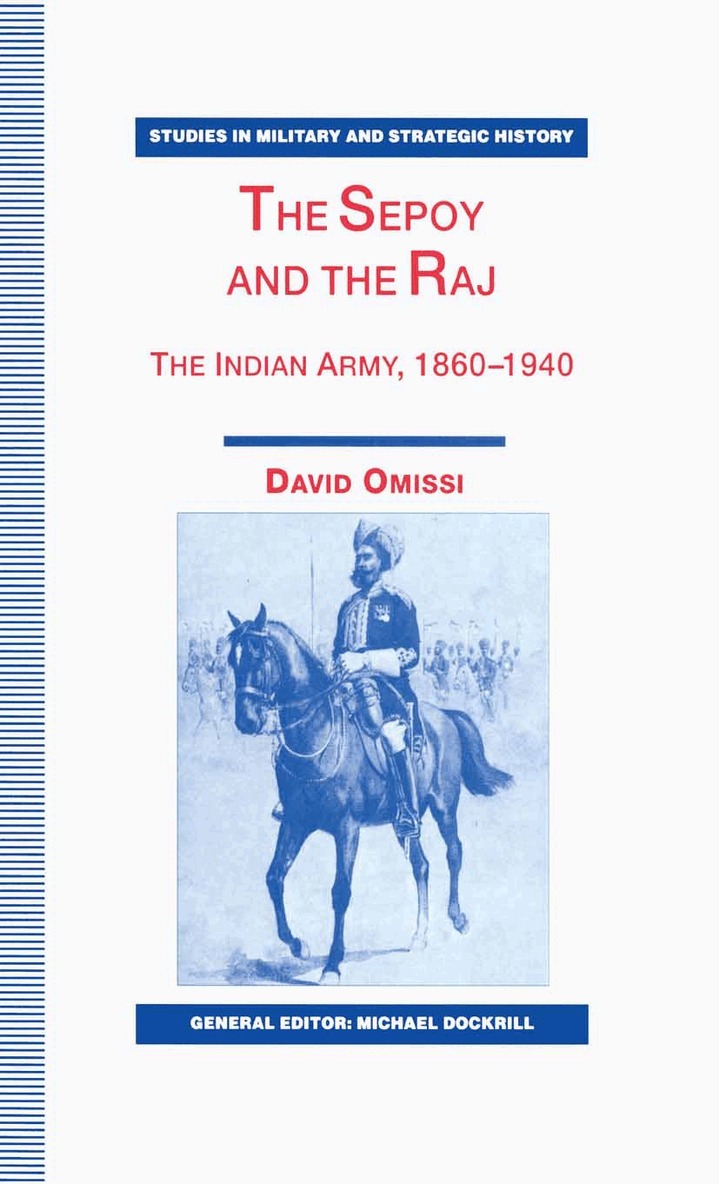
Sepoy and the Raj
The Indian Army, 1860-1940
Av David Omissi
Häftad, 1998
1797 kr
Lägg i varukorg
This is the first scholarly study of the subject for twenty years, and the only one based on extensive archival research. The Indian Army conquered India for the British, and protected the Raj against its enemies within and without. In this evocative and compassionate work, David Omissi examines …
Sepoy and the Raj
The Indian Army, 1860-1940
Av David Omissi
E-bok, 2016
2309 kr
Lägg i varukorg
This is the first scholarly study of the subject for twenty years, and the only one based on extensive archival research. The Indian Army conquered India for the British, and protected the Raj against its enemies within and without. In this evocative and compassionate work, David Omissi examines …
Air Power and Colonial Control
Av David Omissi
E-bok, 2017
1249 kr
Lägg i varukorg
Air policing was used in many colonial possessions, but its most effective incidence occurred in the crescent of territory from north-eastern Africa, through South-West Arabia, to North West Frontier of India. This book talks about air policing and its role in offering a cheaper means of …