David P. Fidler - Böcker
Visar alla böcker från författaren David P. Fidler. Handla med fri frakt och snabb leverans.
11 produkter
11 produkter
2 458 kr
Skickas inom 5-8 vardagar
International Law and Infectious Diseases is the first comprehensive analysis of the intersection between international law and infectious diseases. Infectious diseases pose a global threat, and international law plays an important but under-explored role in infectious disease control. The book analyses the globalization of public health; and it examines the history of international law in this area, the International Health Regulations, and international law on trade, human rights, armed conflict and arms control, and the environment. Fidler develops the concepts of microbialpolitik and global health jurisprudence to provide a political perspective and a framework for future legal action. The aim of this series of monographs is to publish important and original pieces of research on all aspects of public international law. Topics that are given particular prominence are those, which, while of interest to the academic lawyer, also have important bearing on issues which, touch the actual conduct of international relations. None the less the series is wide in scope and includes monographs on the history and philosophical foundations of international law.
928 kr
Skickas inom 7-10 vardagar
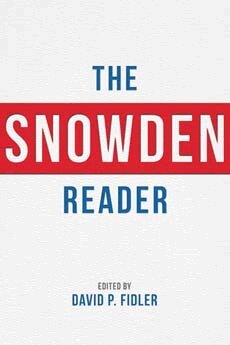
When Edward Snowden began leaking NSA documents in June 2013, his actions sparked impassioned debates about electronic surveillance, national security, and privacy in the digital age. The Snowden Reader looks at Snowden's disclosures and their aftermath. Critical analyses by experts discuss the historical, political, legal, and ethical issues raised by the disclosures. Over forty key documents related to the case are included, with introductory notes explaining their significance: documents leaked by Snowden; responses from the NSA, the Obama administration, and Congress; statements by foreign leaders, their governments, and international organizations; judicial rulings; findings of review committees; and Snowden's own statements. This book provides a valuable introduction and overview for anyone who wants to go beyond the headlines to understand this historic episode.
319 kr
Skickas inom 7-10 vardagar
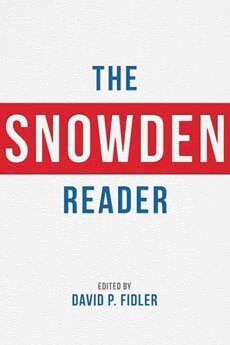
When Edward Snowden began leaking NSA documents in June 2013, his actions sparked impassioned debates about electronic surveillance, national security, and privacy in the digital age. The Snowden Reader looks at Snowden's disclosures and their aftermath. Critical analyses by experts discuss the historical, political, legal, and ethical issues raised by the disclosures. Over forty key documents related to the case are included, with introductory notes explaining their significance: documents leaked by Snowden; responses from the NSA, the Obama administration, and Congress; statements by foreign leaders, their governments, and international organizations; judicial rulings; findings of review committees; and Snowden's own statements. This book provides a valuable introduction and overview for anyone who wants to go beyond the headlines to understand this historic episode.
Empire And Community
Edmund Burke's Writings And Speeches On International Relations
Inbunden, Engelska, 2019
2 088 kr
Skickas inom 10-15 vardagar
Edmund Burke has long been regarded as one of the most important political thinkers of the late eighteenth century, and his writings and speeches continue to inspire and challenge to the present day. But Burke's thinking on international relations has not been fully addressed by the scholarly community. This situation is ironic given that so much o
2 289 kr
Skickas inom 10-15 vardagar
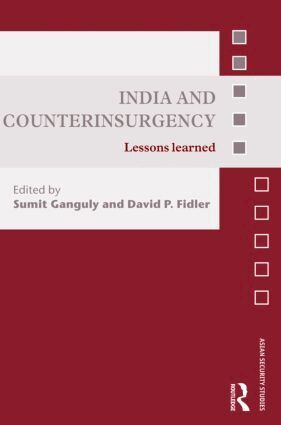
This edited volume focuses on India's experiences waging counterinsurgency campaigns since its independence in 1947. Filling a clear gap in the literature, the book traces and assess the origins, evolution and current state of India's counterinsurgency strategies and capabilities, focusing on key counterinsurgency campaigns waged by India within and outside its territory. It also analyzes the development of Indian doctrine on counterinsurgency, and locates this within the overall ebb and flow of India's defense and security policies. The central argument is that counterinsurgency has been an integral part of India's overall security policy and can thereby impart much to political and military leaders in other states. Since its emergence from British colonialism, India's defence policies have not merely sought to protect and preserve India's inherited colonial borders from threats by rival states, but have also sought to prevent and suppress secessionist movements. In countering insurgencies, the Indian state has fashioned strategies that seek to repress militarily any secessionist movement, while simultaneously forging a range of civilian administrative and institutional arrangements that attempt to address the grievances of disaffected populations. The book highlights key strategic and tactical innovations that the Indian Army and security forces made to deal with a range of insurgent movements. Simultaneously, it also examines how the civilian-military nexus enabled India's policy makers to utilize existing, and formulate novel, institutional means to address extant political grievances. India has been most successful where it has managed to use calibrated force, obtained the trust of much of the aggrieved population and made persuasive commitments to political and institutional reform. Examination of these elements of India's counterinsurgency performance can be compared to counterinsurgency doctrine developed by other countries, including the United States, and thus yield comparative policy prescriptions and recommendations that can be applied to other counterinsurgency contexts. This book will be of great interest to students of counterinsurgency and irregular warfare, Indian politics, Asian Security Studies and Strategic Studies in general.
831 kr
Skickas inom 10-15 vardagar
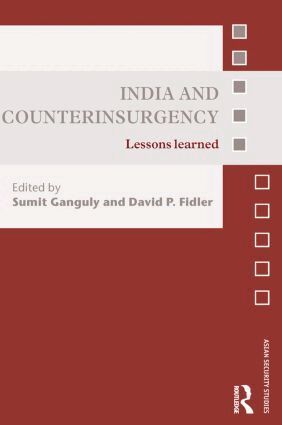
This edited volume focuses on India's experiences waging counterinsurgency campaigns since its independence in 1947. Filling a clear gap in the literature, the book traces and assess the origins, evolution and current state of India's counterinsurgency strategies and capabilities, focusing on key counterinsurgency campaigns waged by India within and outside its territory. It also analyzes the development of Indian doctrine on counterinsurgency, and locates this within the overall ebb and flow of India's defense and security policies. The central argument is that counterinsurgency has been an integral part of India's overall security policy and can thereby impart much to political and military leaders in other states. Since its emergence from British colonialism, India's defence policies have not merely sought to protect and preserve India's inherited colonial borders from threats by rival states, but have also sought to prevent and suppress secessionist movements. In countering insurgencies, the Indian state has fashioned strategies that seek to repress militarily any secessionist movement, while simultaneously forging a range of civilian administrative and institutional arrangements that attempt to address the grievances of disaffected populations. The book highlights key strategic and tactical innovations that the Indian Army and security forces made to deal with a range of insurgent movements. Simultaneously, it also examines how the civilian-military nexus enabled India's policy makers to utilize existing, and formulate novel, institutional means to address extant political grievances. India has been most successful where it has managed to use calibrated force, obtained the trust of much of the aggrieved population and made persuasive commitments to political and institutional reform. Examination of these elements of India's counterinsurgency performance can be compared to counterinsurgency doctrine developed by other countries, including the United States, and thus yield comparative policy prescriptions and recommendations that can be applied to other counterinsurgency contexts. This book will be of great interest to students of counterinsurgency and irregular warfare, Indian politics, Asian Security Studies and Strategic Studies in general.
Biosecurity in the Global Age
Biological Weapons, Public Health, and the Rule of Law
Inbunden, Engelska, 2007
309 kr
Skickas inom 10-15 vardagar
Biosecurity comprehensively analyzes the dramatic transformations that are reshaping how the international community addresses biological weapons and infectious diseases. The book examines the renewed threat from biological weapons, and explores the new world of biological weapons governance. Gostin and Fidler argue that the arms control approach in the Biological Weapons Convention no longer dominates. Other strategies have emerged to challenge the arms control approach, and the book identifies four important policy trends—the criminalization of biological weapons, regulation of the biological sciences, management of the biodefense imperative, and preparation for biological weapons attack. The book also explores the challenges to public health resulting from new security threats. The authors look at the linkages between security and public health policy, both at the national and international level. For instance, Gostin and Fidler scrutinize the difficulty of developing policies that improve defenses against both biological weapons and the threat of infectious diseases from new viral strains. The new worlds of biological weapons and public health governance raise the importance of crafting policy responses informed by the rule of law. Thinking about the rule of law underscores the importance of finding globalized forms of biosecurity governance. The book explores patterns in recent governance initiatives and advocates building a "global biosecurity concert" as a way to address the threats biological weapons and infectious diseases present in the early 21st century.
Empire And Community
Edmund Burke's Writings And Speeches On International Relations
Häftad, Engelska, 1999
943 kr
Skickas inom 10-15 vardagar
Empire and Community provides the first comprehensive presentation of Edmund Burke’s thinking on international relations. Although Burke’s writings and speeches have been the subject of much analysis and controversy, his perspective on international relations has not been fully addressed by the scholarly community. David P. Fidler and Jennifer M. Welsh establish Burke as a “classical thinker” on international relations and help to situate his thinking within current international relations theory. Their detailed introduction is followed by edited selections from Burke’s writings and speeches on Ireland, America, India, and the French Revolution.
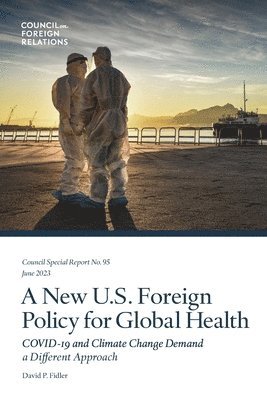
A New U.S. Foreign Policy for Global Health: COVID-19 and Climate Change Demand a Different Approach
Häftad, Engelska, 2023
261 kr
Skickas inom 3-6 vardagar
1 422 kr
Skickas inom 7-10 vardagar
Elgar Advanced Introductions are stimulating and thoughtful introductions to major fields in the social sciences, business, and law, expertly written by the world’s leading scholars. Designed to be accessible yet rigorous, they offer concise and lucid surveys of the substantive and policy issues associated with discrete subject areas. This succinct Advanced Introduction delivers insights into the pressing technological, political, and legal challenges of cybersecurity. Exploring cybersecurity threats on both a national and global scale, it provides guidance on how countries use domestic and international law to counter crime, terrorism, espionage, and armed conflict in cyberspace. Key features:Centres cybersecurity law within the internet as a technology, cyberspace as a political and governance space, and transformations in international relations over the past twenty yearsTracks how the development of policies on responding to different cyber threats, improving cyber defences, and increasing cyber deterrence affects the use and effectiveness of cybersecurity lawAnalyses whether the ongoing evolution of cyber threats changes, or should change, how countries apply domestic and international law to counter cybersecurity challenges concerning crime, terrorism, espionage, and armed conflict This Advanced Introduction is an invaluable resource for researchers and students of law, public policy, and international relations focusing on how digital technologies, the internet, and cyberspace affect world affairs. It also serves as an accessible entry point for government, corporate, and NGO staff concerned with cybersecurity law.
266 kr
Skickas inom 7-10 vardagar
Elgar Advanced Introductions are stimulating and thoughtful introductions to major fields in the social sciences, business, and law, expertly written by the world’s leading scholars. Designed to be accessible yet rigorous, they offer concise and lucid surveys of the substantive and policy issues associated with discrete subject areas. This succinct Advanced Introduction delivers insights into the pressing technological, political, and legal challenges of cybersecurity. Exploring cybersecurity threats on both a national and global scale, it provides guidance on how countries use domestic and international law to counter crime, terrorism, espionage, and armed conflict in cyberspace. Key features:Centres cybersecurity law within the internet as a technology, cyberspace as a political and governance space, and transformations in international relations over the past twenty yearsTracks how the development of policies on responding to different cyber threats, improving cyber defences, and increasing cyber deterrence affects the use and effectiveness of cybersecurity lawAnalyses whether the ongoing evolution of cyber threats changes, or should change, how countries apply domestic and international law to counter cybersecurity challenges concerning crime, terrorism, espionage, and armed conflict This Advanced Introduction is an invaluable resource for researchers and students of law, public policy, and international relations focusing on how digital technologies, the internet, and cyberspace affect world affairs. It also serves as an accessible entry point for government, corporate, and NGO staff concerned with cybersecurity law.