David P. MacKinnon - Böcker
Visar alla böcker från författaren David P. MacKinnon. Handla med fri frakt och snabb leverans.
4 produkter
4 produkter
1 343 kr
Skickas inom 10-15 vardagar
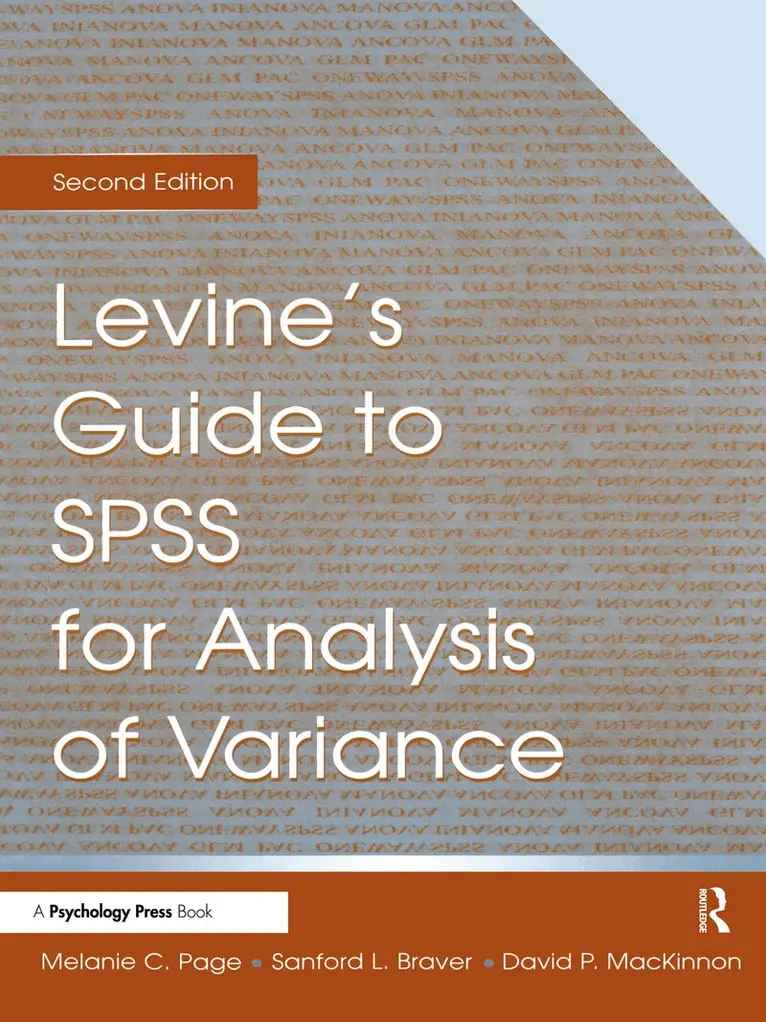
A greatly expanded and heavily revised second edition, this popular guide provides instructions and clear examples for running analyses of variance (ANOVA) and several other related statistical tests of significance with SPSS. No other guide offers the program statements required for the more advanced tests in analysis of variance. All of the programs in the book can be run using any version of SPSS, including versions 11 and 11.5. A table at the end of the preface indicates where each type of analysis (e.g., simple comparisons) can be found for each type of design (e.g., mixed two-factor design).Providing comprehensive coverage of the basic and advanced topics in ANOVA, this is the only book available that provides extensive coverage of SPSS syntax, including the commands and subcommands that tell SPSS what to do, as well as the pull-down menu point-and-click method (PAC). Detailed explanation of the syntax, including what is necessary, desired, and optional helps ensure that users can validate the analysis being performed. The book features the output of each design along with a complete explanation of the related printout. The new edition was reorganized to provide all analysis related to one design type in the same chapter. It now features expanded coverage of analysis of covariance (ANCOVA) and mixed designs, new chapters on designs with random factors, multivariate designs, syntax used in PAC, and all new examples of output with complete explanations. The new edition is accompanied by downloadable resources with all of the book's data sets, as well as exercises for each chapter.This book is ideal for readers familiar with the basic concepts of the ANOVA technique including both practicing researchers and data analysts, as well as advanced students learning analysis of variance.
2 170 kr
Skickas inom 10-15 vardagar
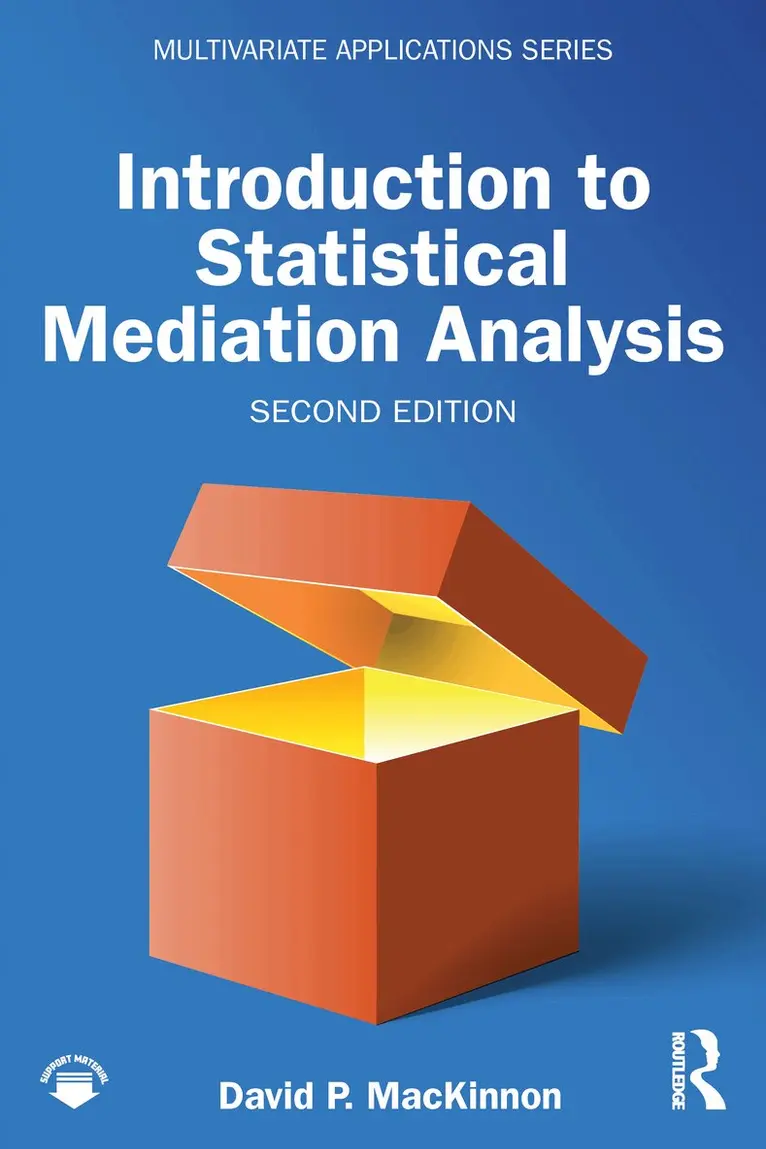
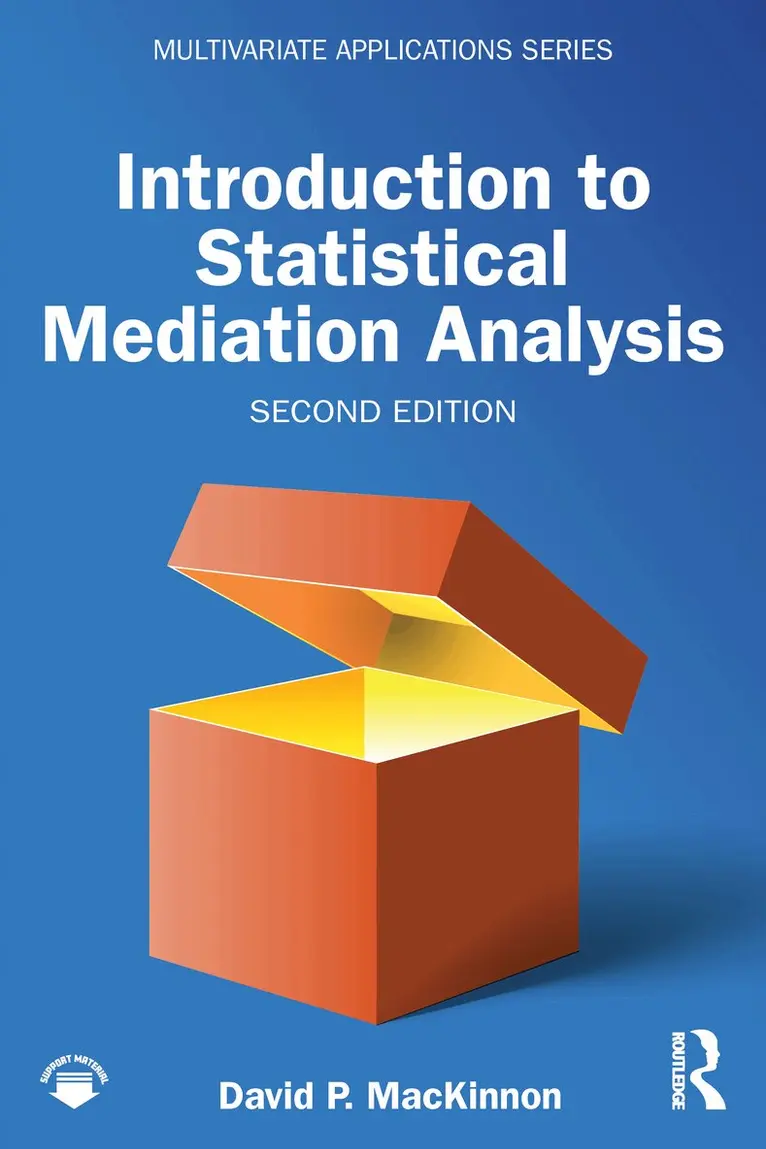
This volume introduces the statistical, methodological, and conceptual aspects of mediation analysis. Applications from health, social, and developmental psychology, sociology, communication, exercise science, and epidemiology are emphasized throughout. Single-mediator, multilevel, and longitudinal models are reviewed. The author's goal is to help the reader apply mediation analysis to their own data and understand its limitations. Each chapter features an overview, numerous worked examples, a summary, and exercises (with answers to the odd numbered questions). The accompanying downloadable resources contain outputs described in the book from SAS, SPSS, LISREL, EQS, MPLUS, and CALIS, and a program to simulate the model. The notation used is consistent with existing literature on mediation in psychology.The book opens with a review of the types of research questions the mediation model addresses. Part II describes the estimation of mediation effects including assumptions, statistical tests, and the construction of confidence limits. Advanced models including mediation in path analysis, longitudinal models, multilevel data, categorical variables, and mediation in the context of moderation are then described. The book closes with a discussion of the limits of mediation analysis, additional approaches to identifying mediating variables, and future directions. Introduction to Statistical Mediation Analysis is intended for researchers and advanced students in health, social, clinical, and developmental psychology as well as communication, public health, nursing, epidemiology, and sociology. Some exposure to a graduate level research methods or statistics course is assumed. The overview of mediation analysis and the guidelines for conducting a mediation analysis will be appreciated by all readers.
799 kr
Skickas inom 10-15 vardagar
This volume introduces the statistical, methodological, and conceptual aspects of mediation analysis. Applications from health, social, and developmental psychology, sociology, communication, exercise science, and epidemiology are emphasized throughout. Single-mediator, multilevel, and longitudinal models are reviewed. The author's goal is to help the reader apply mediation analysis to their own data and understand its limitations. Each chapter features an overview, numerous worked examples, a summary, and exercises (with answers to the odd numbered questions). The accompanying downloadable resources contain outputs described in the book from SAS, SPSS, LISREL, EQS, MPLUS, and CALIS, and a program to simulate the model. The notation used is consistent with existing literature on mediation in psychology.The book opens with a review of the types of research questions the mediation model addresses. Part II describes the estimation of mediation effects including assumptions, statistical tests, and the construction of confidence limits. Advanced models including mediation in path analysis, longitudinal models, multilevel data, categorical variables, and mediation in the context of moderation are then described. The book closes with a discussion of the limits of mediation analysis, additional approaches to identifying mediating variables, and future directions. Introduction to Statistical Mediation Analysis is intended for researchers and advanced students in health, social, clinical, and developmental psychology as well as communication, public health, nursing, epidemiology, and sociology. Some exposure to a graduate level research methods or statistics course is assumed. The overview of mediation analysis and the guidelines for conducting a mediation analysis will be appreciated by all readers.
2 103 kr
Skickas inom 10-15 vardagar
A greatly expanded and heavily revised second edition, this popular guide provides instructions and clear examples for running analyses of variance (ANOVA) and several other related statistical tests of significance with SPSS. No other guide offers the program statements required for the more advanced tests in analysis of variance. All of the programs in the book can be run using any version of SPSS, including versions 11 and 11.5. A table at the end of the preface indicates where each type of analysis (e.g., simple comparisons) can be found for each type of design (e.g., mixed two-factor design).Providing comprehensive coverage of the basic and advanced topics in ANOVA, this is the only book available that provides extensive coverage of SPSS syntax, including the commands and subcommands that tell SPSS what to do, as well as the pull-down menu point-and-click method (PAC). Detailed explanation of the syntax, including what is necessary, desired, and optional helps ensure that users can validate the analysis being performed. The book features the output of each design along with a complete explanation of the related printout. The new edition was reorganized to provide all analysis related to one design type in the same chapter. It now features expanded coverage of analysis of covariance (ANCOVA) and mixed designs, new chapters on designs with random factors, multivariate designs, syntax used in PAC, and all new examples of output with complete explanations. The new edition is accompanied by downloadable resources with all of the book's data sets, as well as exercises for each chapter.This book is ideal for readers familiar with the basic concepts of the ANOVA technique including both practicing researchers and data analysts, as well as advanced students learning analysis of variance.