David P Mindell - Böcker
Visar alla böcker från författaren David P Mindell. Handla med fri frakt och snabb leverans.
4 produkter
4 produkter
1 517 kr
Skickas inom 11-20 vardagar
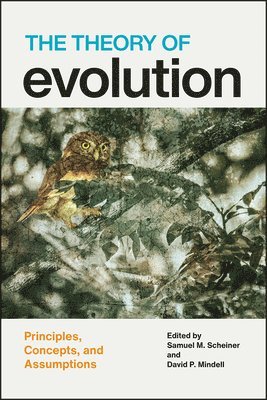
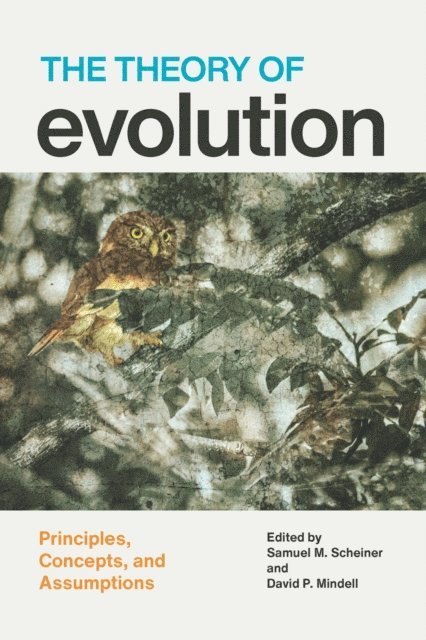
Darwin's nineteenth-century writings laid the foundations for modern studies of evolution, and theoretical developments in the mid-twentieth century fostered the Modern Synthesis. Since that time, a great deal of new biological knowledge has been generated, including details of the genetic code, lateral gene transfer, and developmental constraints. Our improved understanding of these and many other phenomena have been working their way into evolutionary theory, changing it and improving its correspondence with evolution in nature. And while the study of evolution is thriving both as a basic science to understand the world and in its applications in agriculture, medicine, and public health, the broad scope of evolution--operating across genes, whole organisms, clades, and ecosystems--presents a significant challenge for researchers seeking to integrate abundant new data and content into a general theory of evolution.This book gives us that framework and synthesis for the twenty-first century. The Theory of Evolution presents a series of chapters by experts seeking this integration by addressing the current state of affairs across numerous fields within evolutionary biology, ranging from biogeography to multilevel selection, speciation, and macroevolutionary theory. By presenting current syntheses of evolution's theoretical foundations and their growth in light of new datasets and analyses, this collection will enhance future research and understanding.
385 kr
Skickas inom 7-10 vardagar
Darwin's nineteenth-century writings laid the foundations for modern studies of evolution, and theoretical developments in the mid-twentieth century fostered the Modern Synthesis. Since that time, a great deal of new biological knowledge has been generated, including details of the genetic code, lateral gene transfer, and developmental constraints. Our improved understanding of these and many other phenomena have been working their way into evolutionary theory, changing it and improving its correspondence with evolution in nature. And while the study of evolution is thriving both as a basic science to understand the world and in its applications in agriculture, medicine, and public health, the broad scope of evolution--operating across genes, whole organisms, clades, and ecosystems--presents a significant challenge for researchers seeking to integrate abundant new data and content into a general theory of evolution.This book gives us that framework and synthesis for the twenty-first century. The Theory of Evolution presents a series of chapters by experts seeking this integration by addressing the current state of affairs across numerous fields within evolutionary biology, ranging from biogeography to multilevel selection, speciation, and macroevolutionary theory. By presenting current syntheses of evolution's theoretical foundations and their growth in light of new datasets and analyses, this collection will enhance future research and understanding.
297 kr
Skickas inom 10-15 vardagar
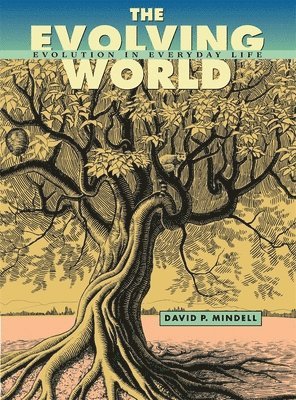
In the 150 years since Darwin, evolutionary biology has proven as essential as it is controversial, a critical concept for answering questions about everything from the genetic code and the structure of cells to the reproduction, development, and migration of animal and plant life. But today, as David P. Mindell makes undeniably clear in The Evolving World, evolutionary biology is much more than an explanatory concept. It is indispensable to the world we live in. This book provides the first truly accessible and balanced account of how evolution has become a tool with applications that are thoroughly integrated, and deeply useful, in our everyday lives and our societies, often in ways that we do not realize.When we domesticate wild species for agriculture or companionship; when we manage our exposure to pathogens and prevent or control epidemics; when we foster the diversity of species and safeguard the functioning of ecosystems: in each of these cases, Mindell shows us, evolutionary biology applies. It is at work when we recognize that humans represent a single evolutionary family with variant cultures but shared biological capabilities and motivations. And last but not least, we see here how evolutionary biology comes into play when we use knowledge of evolution to pursue justice within the legal system and to promote further scientific discovery through education and academic research.More than revealing evolution's everyday uses and value, The Evolving World demonstrates the excitement inherent in its applications--and convinces us as never before that evolutionary biology has become absolutely necessary for human existence.
227 kr
Skickas inom 7-10 vardagar
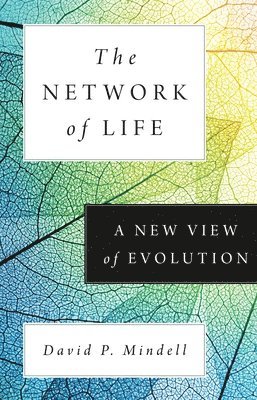
Why evolution is like a network, not a family tree—and why it matters for understanding the health of all living thingsIn The Network of Life, David Mindell explains why the conventional narrative of evolution needs to evolve. Ever since Darwin, evolution has largely been thought to work like a family tree in which species are related through a series of branching events. But, today, a growing knowledge of the ways species share genetic materials in a process known as horizontal evolution has revealed that evolution is actually a network of shared genealogy in which species are more interconnected than previously thought. In this book, Mindell presents this new narrative of life’s evolution and its profound implications for all life on Earth.The Network of Life describes the drivers of horizontal evolution—interbreeding and genetic recombination, the merger of species, horizontal gene transfer, and coevolution. The network view of evolution that emerges supports a new symbiotic theory of health, which holds that the future health of humans, other species, and our shared environments depends on evolution and adaptation across life’s network.Difficult times lie ahead for many of Earth’s species as climates and habitats transform. At the same time, new and altered life-forms are arising and spreading in association with human activities. We are also learning to reshape and create life by mimicking the mechanisms of horizontal evolution, and we are coevolving with technology as we enhance our bodies, brains, and life spans. The Network of Life shows why and how increasing our knowledge of horizontal evolution can provide critical lessons as we navigate our looming challenges.