David Patrick Geggus - Böcker
Visar alla böcker från författaren David Patrick Geggus. Handla med fri frakt och snabb leverans.
5 produkter
5 produkter
241 kr
Skickas inom 10-15 vardagar
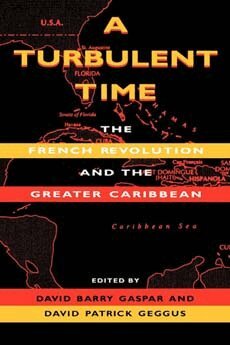
"Stimulating, incisive, insightful, sometimes revisionist, this volume is required reading for historians of comparative colonialism in an age of revolution." —Choice"[An] eminently original and intellectually exciting book." —William and Mary QuarterlyThis volume examines several slave societies in the Greater Caribbean to illustrate the pervasive and multi-layered impact of the revolutionary age on the region. Built precariously on the exploitation of slave labor, organized according to the doctrine of racial discrimination, the plantation colonies were particularly vulnerable to the message of the French Revolution, which proved all the more potent because it coincided with the emergence of the antislavery movement in the Atlantic world and interacted with local traditions of resistance among the region's slaves, free coloreds, and white colonists.
283 kr
Skickas inom 7-10 vardagar
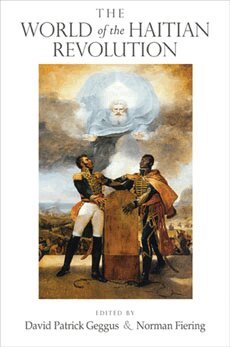
In January 1804, the once wealthy colony of Saint-Domingue declared its independence from France and adopted the Amerindian name "Haiti." Independence was the outcome of the extraordinary uprising of the colony's slaves. Although a central event in the history of the French in the New World, the full significance of the revolution has yet to be realized. These essays deepen our understanding of Haiti during the period from 1791 to 1815. They consider the colony's history and material culture; its "free people of color"; the events leading up to the revolution and its violent unfolding; the political and economic fallout from the revolution; and its cultural representations.
447 kr
Skickas inom 10-15 vardagar
"Stimulating, incisive, insightful, sometimes revisionist, this volume is required reading for historians of comparative colonialism in an age of revolution." —Choice"[An] eminently original and intellectually exciting book." —William and Mary QuarterlyThis volume examines several slave societies in the Greater Caribbean to illustrate the pervasive and multi-layered impact of the revolutionary age on the region. Built precariously on the exploitation of slave labor, organized according to the doctrine of racial discrimination, the plantation colonies were particularly vulnerable to the message of the French Revolution, which proved all the more potent because it coincided with the emergence of the antislavery movement in the Atlantic world and interacted with local traditions of resistance among the region's slaves, free coloreds, and white colonists.
278 kr
Skickas inom 7-10 vardagar
The Haitian Revolution of 1789–1803 transformed the Caribbean's wealthiest colony into the first independent state in Latin America, encompassed the largest slave uprising in the Americas, and inflicted a humiliating defeat on three colonial powers. In Haitian Revolutionary Studies, David Patrick Geggus sheds new light on this tremendous upheaval by marshaling an unprecedented range of evidence drawn from archival research in six countries. Geggus's fine-grained essays explore central issues and little-studied aspects of the conflict, including new historiography and sources, the origins of the black rebellion, and relations between slaves and free people of color. The contributions of vodou and marronage to the slave uprising, Toussaint Louverture and the abolition question, the policies of the major powers toward the revolution, and its interaction with the early French Revolution are also addressed. Questions about ethnicity, identity, and historical knowledge inform this essential study of a complex revolution.
474 kr
Skickas inom 10-15 vardagar
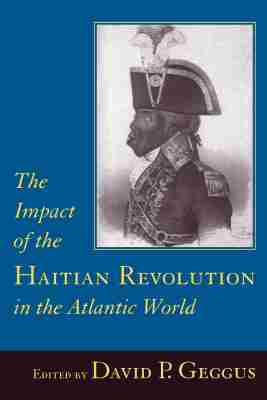
The slave revolution that two hundred years ago created the state of Haiti alarmed and excited public opinion on both sides of the Atlantic. Its repercussions ranged from the world commodity markets to the imagination of poets, from the council chambers of the great powers to slave quarters in Virginia and Brazil and most points in between. Sharing attention with such tumultuous events as the French Revolution and the Napoleonic War, Haiti's fifteen-year struggle for racial equality, slave emancipation, and colonial independence challenged notions about racial hierarchy that were gaining legitimacy in an Atlantic world dominated by Europeans and the slave trade. The Impact of the Haitian Revolution in the Atlantic World explores the multifarious influence - from economic to ideological to psychological - that a revolt on a small Caribbean island had on the continents surrounding it. Fifteen international scholars, including eminent historians David Brion Davis, Seymour Drescher, and Robin Blackburn, explicate such diverse ramifications as the spawning of slave resistance and the stimulation of slavery's expansion, the opening of economic frontiers, and the formation of black and white diasporas. They show how the Haitian Revolution embittered contemporary debates about race and abolition and inspired poetry, plays, and novels. Seeking to disentangle its effects from those of the French Revolution, they demonstrate that its impact was ambiguous, complex, and contradictory.