David Patrick Houghton - Böcker
Visar alla böcker från författaren David Patrick Houghton. Handla med fri frakt och snabb leverans.
8 produkter
8 produkter
914 kr
Skickas inom 3-6 vardagar
1 674 kr
Tillfälligt slut
What shapes political behavior more: the situations in which individuals find themselves, or the internal psychological makeup---beliefs, values, and so on---of those individuals? This is perhaps the leading division within the psychological study of politics today. Political Psychology: Situations, Individuals, and Cases, 2nd edition, provides a concise, readable, and conceptually organized introduction to the topic of political psychology by examining this very question. Using this situationism--dispositionism framework—which roughly parallels the concerns of social and cognitive psychology—this book focuses on such key explanatory mechanisms as behaviorism, obedience, personality, groupthink, cognition, affect, emotion, and neuroscience to explore topics ranging from voting behavior and racism to terrorism and international relations. The new edition includes a new chapter on the psychology of the media and communication. Houghton has also updated the text to analyze recent political events such as the 2012 election, and to include up-and-coming research in the areas of neuroscience, behavioral economics, and more. Houghton's clear and engaging examples directly challenge students to place themselves in both real and hypothetical situations which involve intense moral and political dilemmas. This highly readable text will provide students with the conceptual foundation they need to make sense of the rapidly changing and increasingly important field of political psychology.
Citizen's Guide to American Foreign Policy
Tragic Choices and the Limits of Rationality
Inbunden, Engelska, 2013
1 952 kr
Skickas inom 3-6 vardagar
American foreign policy often looks like a trail of man-made debris and disaster. Of course, the explanations for many poorly-made decisions are rather complex. In this brief and cogent analysis, Houghton shows us that understanding American foreign policy often comes down to recognizing the cognitive limitations of the decision-makers, which affects the foreign policy process. Then there is the nature of the decisions themselves. Quite a few decisions in American foreign policy involve ‘tragic’ choices, where leaders are effectively confronted with a series of progressively bad or uncomfortable options. And it is equally clear that some policies are not the product of any one individual’s preferences, but emerge as a consequence of the way in which complex modern governments with large bureaucracies operate.Written with the interested layperson in mind, as well as students of international affairs, this Citizen’s Guide to American Foreign Policy asks questions like, "Why do presidents so often do things which seem to be directly against the national interests of the United States – not just in retrospect, but even at the time?" "Why do there seem to be so many fiascoes in US foreign policy?" "Why does Congress sometimes tie the hands of the president in foreign affairs?" "Why do presidents seem to respond more to opinion polls or to what’s on CNN and Fox News than they do to the core interests of the United States?" Houghton’s overview helps us see past the partisan in-fighting that too often obscures the central issues in foreign affairs. This is vital, required reading for all readers who wish to better understand America’s involvement in the world.
Citizen's Guide to American Foreign Policy
Tragic Choices and the Limits of Rationality
Häftad, Engelska, 2013
537 kr
Skickas inom 10-15 vardagar
American foreign policy often looks like a trail of man-made debris and disaster. Of course, the explanations for many poorly-made decisions are rather complex. In this brief and cogent analysis, Houghton shows us that understanding American foreign policy often comes down to recognizing the cognitive limitations of the decision-makers, which affects the foreign policy process. Then there is the nature of the decisions themselves. Quite a few decisions in American foreign policy involve ‘tragic’ choices, where leaders are effectively confronted with a series of progressively bad or uncomfortable options. And it is equally clear that some policies are not the product of any one individual’s preferences, but emerge as a consequence of the way in which complex modern governments with large bureaucracies operate.Written with the interested layperson in mind, as well as students of international affairs, this Citizen’s Guide to American Foreign Policy asks questions like, "Why do presidents so often do things which seem to be directly against the national interests of the United States – not just in retrospect, but even at the time?" "Why do there seem to be so many fiascoes in US foreign policy?" "Why does Congress sometimes tie the hands of the president in foreign affairs?" "Why do presidents seem to respond more to opinion polls or to what’s on CNN and Fox News than they do to the core interests of the United States?" Houghton’s overview helps us see past the partisan in-fighting that too often obscures the central issues in foreign affairs. This is vital, required reading for all readers who wish to better understand America’s involvement in the world.
Del 75 - Cambridge Studies in International Relations
US Foreign Policy and the Iran Hostage Crisis
Inbunden, Engelska, 2001
1 282 kr
Skickas inom 7-10 vardagar
Why did a handful of Iranian students seize the American embassy in Tehran in November 1979? Why did most members of the US government initially believe that the incident would be over quickly? Why did the Carter administration then decide to launch a rescue mission, and why did it fail so spectacularly? US Foreign Policy and the Iran Hostage Crisis examines these puzzles and others, using an analogical reasoning approach to decision-making, a theoretical perspective which highlights the role played by historical analogies in the genesis of foreign policy decisions. Using interviews with key decision-makers on both sides, Houghton provides an analysis of one of the United States' greatest foreign policy disasters, the events of which continue to poison relations between the two states. The book will be of interest to students and scholars of foreign policy analysis and international relations.
Del 75 - Cambridge Studies in International Relations
US Foreign Policy and the Iran Hostage Crisis
Häftad, Engelska, 2001
428 kr
Skickas inom 7-10 vardagar
Why did a handful of Iranian students seize the American embassy in Tehran in November 1979? Why did most members of the US government initially believe that the incident would be over quickly? Why did the Carter administration then decide to launch a rescue mission, and why did it fail so spectacularly? US Foreign Policy and the Iran Hostage Crisis examines these puzzles and others, using an analogical reasoning approach to decision-making, a theoretical perspective which highlights the role played by historical analogies in the genesis of foreign policy decisions. Using interviews with key decision-makers on both sides, Houghton provides an analysis of one of the United States' greatest foreign policy disasters, the events of which continue to poison relations between the two states. The book will be of interest to students and scholars of foreign policy analysis and international relations.
931 kr
Skickas inom 10-15 vardagar
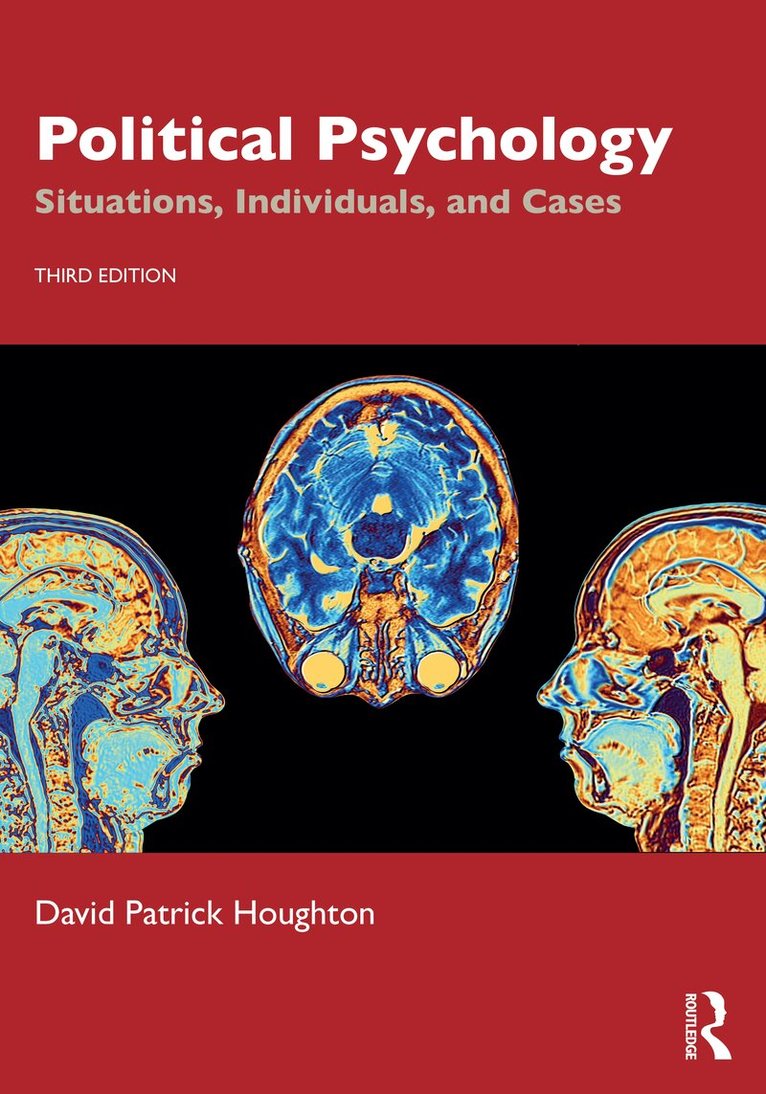
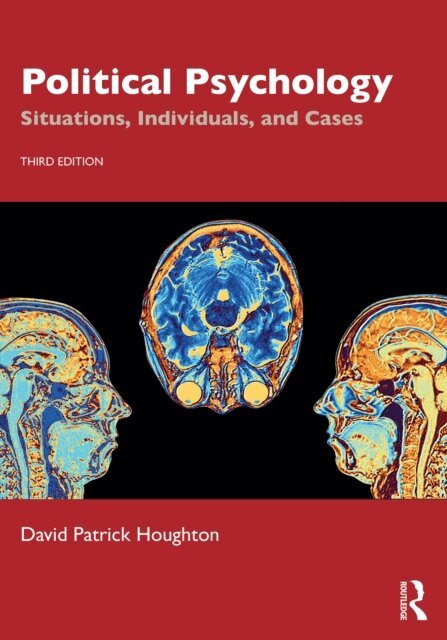
What shapes political behavior more: the situations in which individuals find themselves, or the internal psychological makeup—beliefs, values, and so on—of those individuals? This is perhaps the leading division within the psychological study of politics today. Political Psychology: Situations, Individuals, and Cases, 3rd edition, provides a concise, readable, and conceptually organized introduction to the topic of political psychology by examining this very question. Using this situationism—dispositionism framework—which roughly parallels the concerns of social psychology and cognitive neuroscience—this book focuses on such key explanatory mechanisms as emotion, cognition, neuropolitics, genopolitics, personality, beliefs and social identities to explore topics ranging from voting behavior and racism to terrorism and international relations.The new edition is completely revised and contains new chapters to introduce and conclude the book, as well as fundamentally updated material on (for instance) foreign policy decision-making and electoral choice. Houghton has also updated the text to bring us into the era of Donald J. Trump, to pick apart the results of the 2024 US presidential election, and to include up-and-coming research in the areas of neuropolitics and genopolitics. Houghton's clear and engaging examples directly challenge students to place themselves in both real and hypothetical situations which involve intense moral and political dilemmas. This highly readable text will provide students with the conceptual foundation they need to make sense of the rapidly changing and increasingly important field of political psychology.
2 053 kr
Skickas inom 10-15 vardagar
What shapes political behavior more: the situations in which individuals find themselves, or the internal psychological makeup—beliefs, values, and so on—of those individuals? This is perhaps the leading division within the psychological study of politics today. Political Psychology: Situations, Individuals, and Cases, 3rd edition, provides a concise, readable, and conceptually organized introduction to the topic of political psychology by examining this very question. Using this situationism—dispositionism framework—which roughly parallels the concerns of social psychology and cognitive neuroscience—this book focuses on such key explanatory mechanisms as emotion, cognition, neuropolitics, genopolitics, personality, beliefs and social identities to explore topics ranging from voting behavior and racism to terrorism and international relations.The new edition is completely revised and contains new chapters to introduce and conclude the book, as well as fundamentally updated material on (for instance) foreign policy decision-making and electoral choice. Houghton has also updated the text to bring us into the era of Donald J. Trump, to pick apart the results of the 2024 US presidential election, and to include up-and-coming research in the areas of neuropolitics and genopolitics. Houghton's clear and engaging examples directly challenge students to place themselves in both real and hypothetical situations which involve intense moral and political dilemmas. This highly readable text will provide students with the conceptual foundation they need to make sense of the rapidly changing and increasingly important field of political psychology.