David Paul Nord – författare
Visar alla böcker från författaren David Paul Nord. Handla med fri frakt och snabb leverans.
8 produkter
8 produkter
Inbunden, Engelska, 2004
807 kr
Skickas inom 5-8 vardagar
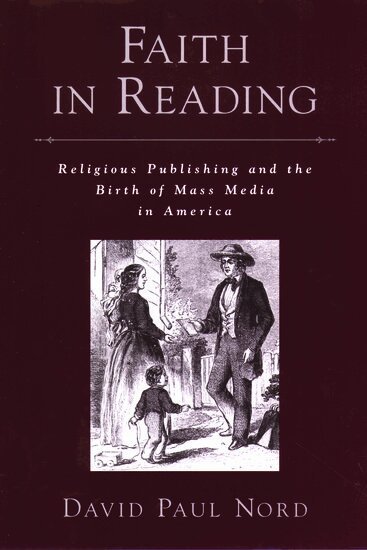
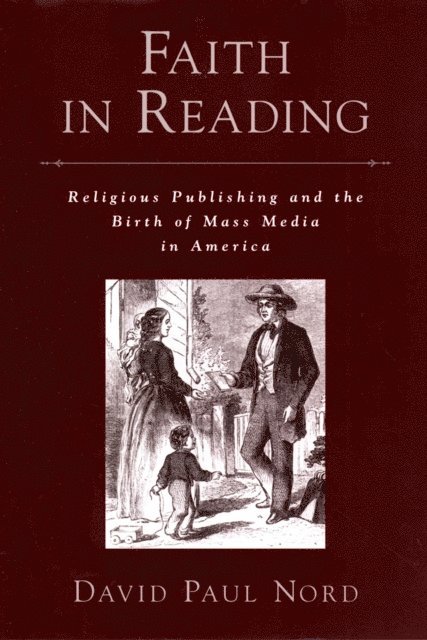
Faith in Reading tells the remarkable story of the unlikely origins of our modern media culture. In the early nineteenth century, a few visionary entrepreneurs decided the time was right to launch a true mass media in America. Though these entrepreneurs were savvy businessmen, their publishing enterprises were not commercial businesses but nonprofit religious organizations. These organizations believed it was possible - through new technology, national organization, and the grace of God - to place the same printed message into the hands of every man, woman, and child in America. Determined to combat ignorance, apathy, and infidelity with the written word, these organizations ended up giving birth to the American mass media.
Häftad, Engelska, 2007
366 kr
Skickas inom 5-8 vardagar
Faith in Reading tells the remarkable story of the unlikely origins of our modern media culture. In the early nineteenth century, a few visionary entrepreneurs decided the time was right to launch a true mass media in America. Though these entrepreneurs were savvy businessmen, their publishing enterprises were not commercial businesses but nonprofit religious organizations. These organizations believed it was possible - through new technology, national organization, and the grace of God - to place the same printed message into the hands of every man, woman, and child in America. Determined to combat ignorance, apathy, and infidelity with the written word, these organizations ended up giving birth to the American mass media.
E-bok
PDF, Engelska, 2004317 kr
Läs direkt efter köp
In the twenty-first century, mass media corporations are often seen as profit-hungry money machines. It was a different world in the early days of mass communication in America. Faith in Reading tells the remarkable story of the noncommercial religious origins of our modern media culture. In the early nineteenth century, a few visionary entrepreneurs decided the time was right to reach everyone in America through the medium of print. Though they were modern businessmen, their publishing enterprises were not commercial businesses but nonprofit societies committed to the publication of traditional religious texts. Drawing on organizational reports and archival sources, David Paul Nord shows how the managers of Bible and religious tract societies made themselves into large-scale manufacturers and distributors of print. These organizations believed it was possible to place the same printed message into the hands of every man, woman, and child in America. Employing modern printing technologies and business methods, they were remarkably successful, churning out millions of Bibles, tracts, religious books, and periodicals. They mounted massive campaigns to make books cheap and plentiful by turning them into modern, mass-produced consumer goods. Nord demonstrates how religious publishers learned to work against the flow of ordinary commerce. They believed that reading was too important to be left to the "market revolution," so they turned the market on its head, seeking to deliver their product to everyone, regardless of ability or even desire to buy. Wedding modern technology and national organization to a traditional faith in reading, these publishing societies imagined and then invented mass media in America.
E-bok
Engelska, 2004317 kr
Läs direkt efter köp
In the twenty-first century, mass media corporations are often seen as profit-hungry money machines. It was a different world in the early days of mass communication in America. Faith in Reading tells the remarkable story of the noncommercial religious origins of our modern media culture. In the early nineteenth century, a few visionary entrepreneurs decided the time was right to reach everyone in America through the medium of print. Though they were modern businessmen, their publishing enterprises were not commercial businesses but nonprofit societies committed to the publication of traditional religious texts. Drawing on organizational reports and archival sources, David Paul Nord shows how the managers of Bible and religious tract societies made themselves into large-scale manufacturers and distributors of print. These organizations believed it was possible to place the same printed message into the hands of every man, woman, and child in America. Employing modern printing technologies and business methods, they were remarkably successful, churning out millions of Bibles, tracts, religious books, and periodicals. They mounted massive campaigns to make books cheap and plentiful by turning them into modern, mass-produced consumer goods. Nord demonstrates how religious publishers learned to work against the flow of ordinary commerce. They believed that reading was too important to be left to the "market revolution," so they turned the market on its head, seeking to deliver their product to everyone, regardless of ability or even desire to buy. Wedding modern technology and national organization to a traditional faith in reading, these publishing societies imagined and then invented mass media in America.
Häftad, Engelska, 2006
260 kr
Skickas inom 5-8 vardagar
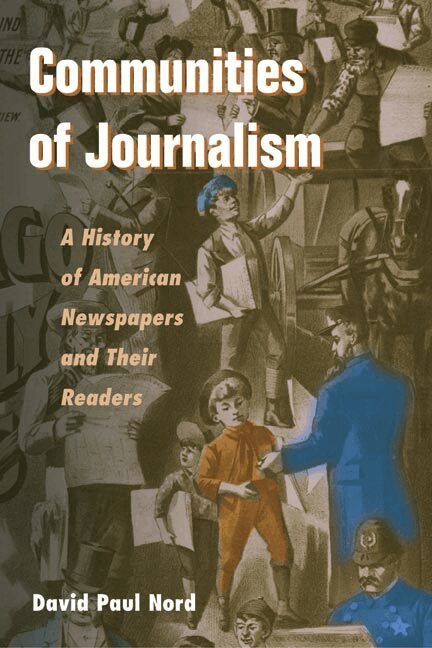
Widely acknowledged as one of our most insightful commentators on the history of journalism in the United States, David Paul Nord reveals how newspapers have intersected with religion, politics, reform, and urban life over nearly three centuries, His lively and wide-ranging discussion shows journalism to be a vital component of community. Ranging from the religion-infused towns of colonial America to the rapidly expanding urban metropolises of the late nineteenth century, Nord explores the cultural work of the press and how ordinary readers use journalism to form community attachments and engage in civic life.
Häftad, Engelska, 2014
605 kr
Skickas inom 10-15 vardagar
The fifth volume of A History of the Book in America addresses the economic, social, and cultural shifts affecting print culture from World War II to the present. During this period factors such as the expansion of government, the growth of higher education, the climate of the Cold War, globalization, and the development of multimedia and digital technologies influenced the patterns of consolidation and diversification established earlier.The thirty-three contributors to the volume explore the evolution of the publishing industry and the business of bookselling. The histories of government publishing, law and policy, the periodical press, literary criticism, and reading--in settings such as schools, libraries, book clubs, self-help programs, and collectors' societies--receive imaginative scrutiny as well. The Enduring Book demonstrates that the corporate consolidations of the last half-century have left space for the independent publisher, that multiplicity continues to define American print culture, and that even in the digital age, the book endures.Contributors:David Abrahamson, Northwestern UniversityJames L. Baughman, University of Wisconsin-MadisonKenneth Cmiel (d. 2006)James Danky, University of Wisconsin-MadisonRobert DeMaria Jr., Vassar CollegeDonald A. Downs, University of Wisconsin-MadisonRobert W. Frase (d. 2003)Paul C. Gutjahr, Indiana UniversityDavid D. Hall, Harvard Divinity SchoolJohn B. Hench, American Antiquarian SocietyPatrick Henry, New York City College of TechnologyDan Lacy (d. 2001)Marshall Leaffer, Indiana UniversityBruce Lewenstein, Cornell UniversityElizabeth Long, Rice UniversityBeth Luey, Arizona State UniversityTom McCarthy, Beirut, LebanonLaura J. Miller, Brandeis UniversityPriscilla Coit Murphy, Chapel Hill, N.C.David Paul Nord, Indiana UniversityCarol Polsgrove, Indiana UniversityDavid Reinking, Clemson UniversityJane Rhodes, Macalester CollegeJohn V. Richardson Jr., University of California, Los AngelesJoan Shelley Rubin, University of RochesterMichael Schudson, University of California, San Diego, and Columbia UniversityLinda Scott, University of OxfordDan Simon, Seven Stories PressIlan Stavans, Amherst CollegeHarvey M. Teres, Syracuse UniversityJohn B. Thompson, University of CambridgeTrysh Travis, University of FloridaJonathan Zimmerman, New York University
E-bok
Engelska, 2015347 kr
Läs direkt efter köp
The fifth volume of A History of the Book in America addresses the economic, social, and cultural shifts affecting print culture from World War II to the present. During this period factors such as the expansion of government, the growth of higher education, the climate of the Cold War, globalization, and the development of multimedia and digital technologies influenced the patterns of consolidation and diversification established earlier.The thirty-three contributors to the volume explore the evolution of the publishing industry and the business of bookselling. The histories of government publishing, law and policy, the periodical press, literary criticism, and reading — in settings such as schools, libraries, book clubs, self-help programs, and collectors'' societies — receive imaginative scrutiny as well. The Enduring Book demonstrates that the corporate consolidations of the last half-century have left space for the independent publisher, that multiplicity continues to define American print culture, and that even in the digital age, the book endures.Contributors:David Abrahamson, Northwestern UniversityJames L. Baughman, University of Wisconsin–MadisonKenneth Cmiel (d. 2006)James Danky, University of Wisconsin–MadisonRobert DeMaria Jr., Vassar CollegeDonald A. Downs, University of Wisconsin–MadisonRobert W. Frase (d. 2003)Paul C. Gutjahr, Indiana UniversityDavid D. Hall, Harvard Divinity SchoolJohn B. Hench, American Antiquarian SocietyPatrick Henry, New York City College of TechnologyDan Lacy (d. 2001)Marshall Leaffer, Indiana UniversityBruce Lewenstein, Cornell UniversityElizabeth Long, Rice UniversityBeth Luey, Arizona State UniversityTom McCarthy, Beirut, LebanonLaura J. Miller, Brandeis UniversityPriscilla Coit Murphy, Chapel Hill, N.C.David Paul Nord, Indiana UniversityCarol Polsgrove, Indiana UniversityDavid Reinking, Clemson UniversityJane Rhodes, Macalester CollegeJohn V. Richardson Jr., University of California, Los AngelesJoan Shelley Rubin, University of RochesterMichael Schudson, University of California, San Diego, and Columbia UniversityLinda Scott, University of OxfordDan Simon, Seven Stories PressIlan Stavans, Amherst CollegeHarvey M. Teres, Syracuse UniversityJohn B. Thompson, University of CambridgeTrysh Travis, University of FloridaJonathan Zimmerman, New York University
E-bok
PDF, Engelska, 2015347 kr
Läs direkt efter köp
The fifth volume of A History of the Book in America addresses the economic, social, and cultural shifts affecting print culture from World War II to the present. During this period factors such as the expansion of government, the growth of higher education, the climate of the Cold War, globalization, and the development of multimedia and digital technologies influenced the patterns of consolidation and diversification established earlier.The thirty-three contributors to the volume explore the evolution of the publishing industry and the business of bookselling. The histories of government publishing, law and policy, the periodical press, literary criticism, and reading — in settings such as schools, libraries, book clubs, self-help programs, and collectors'' societies — receive imaginative scrutiny as well. The Enduring Book demonstrates that the corporate consolidations of the last half-century have left space for the independent publisher, that multiplicity continues to define American print culture, and that even in the digital age, the book endures.Contributors:David Abrahamson, Northwestern UniversityJames L. Baughman, University of Wisconsin–MadisonKenneth Cmiel (d. 2006)James Danky, University of Wisconsin–MadisonRobert DeMaria Jr., Vassar CollegeDonald A. Downs, University of Wisconsin–MadisonRobert W. Frase (d. 2003)Paul C. Gutjahr, Indiana UniversityDavid D. Hall, Harvard Divinity SchoolJohn B. Hench, American Antiquarian SocietyPatrick Henry, New York City College of TechnologyDan Lacy (d. 2001)Marshall Leaffer, Indiana UniversityBruce Lewenstein, Cornell UniversityElizabeth Long, Rice UniversityBeth Luey, Arizona State UniversityTom McCarthy, Beirut, LebanonLaura J. Miller, Brandeis UniversityPriscilla Coit Murphy, Chapel Hill, N.C.David Paul Nord, Indiana UniversityCarol Polsgrove, Indiana UniversityDavid Reinking, Clemson UniversityJane Rhodes, Macalester CollegeJohn V. Richardson Jr., University of California, Los AngelesJoan Shelley Rubin, University of RochesterMichael Schudson, University of California, San Diego, and Columbia UniversityLinda Scott, University of OxfordDan Simon, Seven Stories PressIlan Stavans, Amherst CollegeHarvey M. Teres, Syracuse UniversityJohn B. Thompson, University of CambridgeTrysh Travis, University of FloridaJonathan Zimmerman, New York University