David Proverbs - Böcker
Visar alla böcker från författaren David Proverbs. Handla med fri frakt och snabb leverans.
9 produkter
9 produkter
2 155 kr
Skickas inom 10-15 vardagar
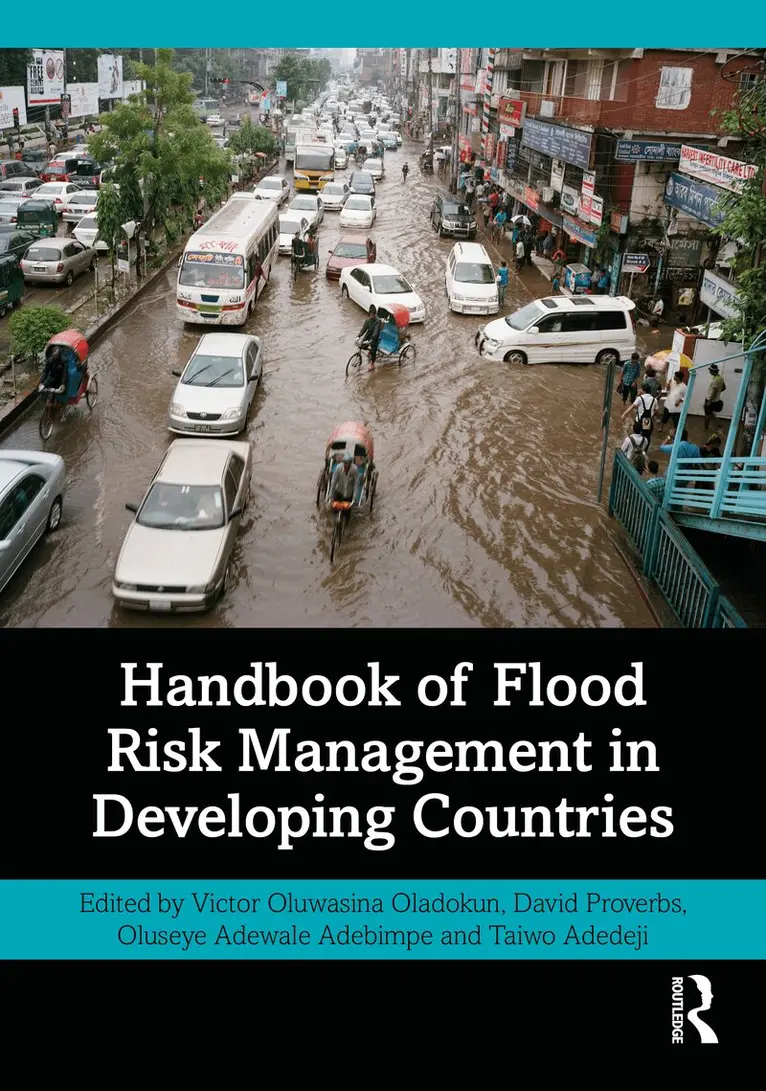
This new handbook brings together various views and experiences of the impacts of flooding and its management in Africa, Asia and Latin America by drawing from traditional and modern approaches adopted by communities, homeowners, academics, project managers, institutions and policy makers. Key stakeholders provide insights and perspectives on flood hazards, flood impacts, flood control and adaptation strategies across these regions. The inclusion of policy makers, emergency responders, leaders of key organizations and managers of flood defence projects makes this volume a unique addition to the flood management literature.The chapters are organized to reveal various impacts and challenges associated with the management of flooding, including response and recovery. The chapter contributions bring together the different impacts of flooding and propose various mitigation approaches. They describe procedures for managing flooding and reducing the impacts from the perspectives of policy makers, environmental planners and restorers of flood-affected communities. Also, the book considers some of the related aspects including land use, waste management, drainage systems, security challenges, urban planning and development and their contributions to flooding.The book's primary target is experienced researchers and practitioners in flood risk management. It would also serve as a key text for postgraduate students studying related programmes. Inhabitants of flood prone communities in such developing countries will also find the text an important resource for guidance and understanding. This multi-disciplinary book represents a valuable contribution for a wide range of professionals (e.g. in engineering, built environment, health, retail, etc) who are interested in flood control and management and/or faced with flood-related challenges in the course of their work.
Handbook of Flood Risk Management and Community Action
An International Perspective
Inbunden, Engelska, 2023
2 289 kr
Skickas inom 10-15 vardagar
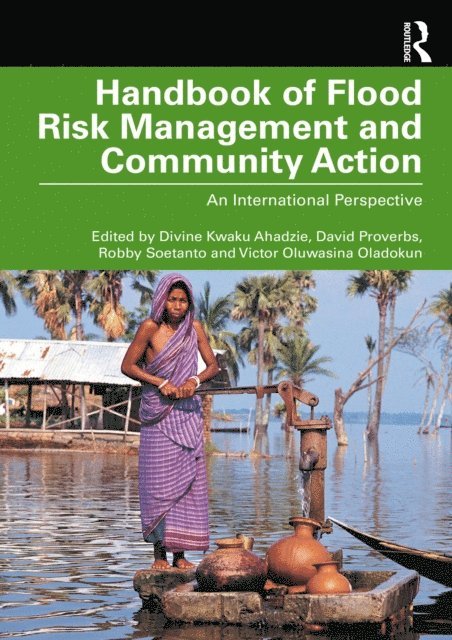
Recurring and worsening flood incidence around the world has necessitated the understanding and strengthening of community-based flood risk management from an international perspective. This handbook emphasises the need for community action as part of an integrated flood risk management approach, highlighting case studies that have received recognition and made positive impacts, resulting in resilience-enhancing actions which can improve global community understanding. The content has been arranged such that it covers flood risk management approaches in the three main interfaces of before, during and after the flood event. Experts writing on case studies from Africa, Oceania, Europe, Asia and the Americas come together to present lessons from regional and continental experiences that will be useful in providing an understanding of the nature and effectiveness of the human-centred approach. The successful implementation of local and scientific knowledge as complementary measures is also highlighted in a systematic review on the use of technologies for flood risk reduction. This interesting and diverse range of contributions seeks to showcase opportunities for cross-cultural knowledge transfer and uptake in the field of flood risk management.This handbook is essential reading for researchers, policy makers and leaders involved in flood and disaster management in the built environment, risk assessment, environmental and civil/construction engineering and community action planning.
New Insights in Flood Risk Management
Learning from Global Case Studies of Stakeholder Partnerships
Inbunden, Engelska, 2026
2 185 kr
Kommande
This edited book highlights the innovative ways in which a wide range of public and private stakeholders are collaborating and partnering in an endeavour to co-develop solutions that aim to improve the resilience of communities to flooding. Despite increased investments in flood risk management, government efforts in mitigating flood disasters remain under severe pressure and community support is fundamental in encouraging and upscaling local resilience strategies. At the core of this book is a demonstration of how countries are leveraging options in partnerships towards mobilising resources for both community and government efforts in enhancing flood resilience at the local, regional and national level, and before, during and after flood events. Insights from the positive impact of partnerships are shared and lessons are evaluated for adaptation into a global understanding of resilience enhancing frameworks for country specific use and guidance.The chapters seek to cut across people, industry, the built environment and the natural environment in highlighting how challenges in partnerships are dealt through effective communication, legal and coordination practices, knowledge production, monitoring and evaluation, social incentives and green financing and funding. This book offers policy makers, government officials, and researchers in environmental and civil engineering, geography and the built environment a deeper understanding of how partnerships can be leveraged as an alternative management approach for mitigating flood hazards.
1 105 kr
Skickas inom 10-15 vardagar
A 360-degree view of the response to flood riskAs major flooding events around the world show, the impact of flooding on the built environment can cause widespread chaos. These flood events form part of a wider pattern of increasing flood frequency coupled with increased vulnerability of the built environment to flood hazard. Flood risk can unite or divide communities and the responses to potential risk can range from denial to perfect adaptation. Drawing on the experience of communities and experts, Flood Hazards: Impacts and Responses for the Built Environment offers guidance on managing urban flooding and flood risk. It brings together a diversity of viewpoints and experiences on flood impacts and responses from leading academics, flood restoration specialists, emergency responders, architects, planning consultants, insurers, policymakers, and community representatives. By including the perspective of the community and the views of households and businesses at risk, this volume makes a unique contribution to the literature on flood management.The chapter organization loosely corresponds to the phases of the disaster management cycle, covering emergency preparation and response; recovery, repair, and reconstruction; and mitigation and adaptation. Contributors examine the types of impacts and discuss forecasting and emergency warning. They describe processes and good practice in recovery of flood-damaged property from the perspectives of the insurance industry, restorers, and loss adjusters. The book also deals with business continuity, land-use planning, property-level and infrastructure protection, and urban drainage, looking at the regulation and design of the built environment as one way to reduce risk. A section on community response to flooding sheds light on the experiences of flood-affected families.Written for students, practitioners, and researchers in flood risk management, as well as for professionals who may encounter flood-related issues in the course of their work, this cross-disciplinary book makes a valuable contribution towards designing a future built environment that is more resilient to flood risk.
2 960 kr
Skickas inom 7-10 vardagar
A 360-degree view of the response to flood riskAs major flooding events around the world show, the impact of flooding on the built environment can cause widespread chaos. These flood events form part of a wider pattern of increasing flood frequency coupled with increased vulnerability of the built environment to flood hazard. Flood risk can unite or divide communities and the responses to potential risk can range from denial to perfect adaptation. Drawing on the experience of communities and experts, Flood Hazards: Impacts and Responses for the Built Environment offers guidance on managing urban flooding and flood risk. It brings together a diversity of viewpoints and experiences on flood impacts and responses from leading academics, flood restoration specialists, emergency responders, architects, planning consultants, insurers, policymakers, and community representatives. By including the perspective of the community and the views of households and businesses at risk, this volume makes a unique contribution to the literature on flood management.The chapter organization loosely corresponds to the phases of the disaster management cycle, covering emergency preparation and response; recovery, repair, and reconstruction; and mitigation and adaptation. Contributors examine the types of impacts and discuss forecasting and emergency warning. They describe processes and good practice in recovery of flood-damaged property from the perspectives of the insurance industry, restorers, and loss adjusters. The book also deals with business continuity, land-use planning, property-level and infrastructure protection, and urban drainage, looking at the regulation and design of the built environment as one way to reduce risk. A section on community response to flooding sheds light on the experiences of flood-affected families.Written for students, practitioners, and researchers in flood risk management, as well as for professionals who may encounter flood-related issues in the course of their work, this cross-disciplinary book makes a valuable contribution towards designing a future built environment that is more resilient to flood risk.
1 842 kr
Skickas inom 5-8 vardagar
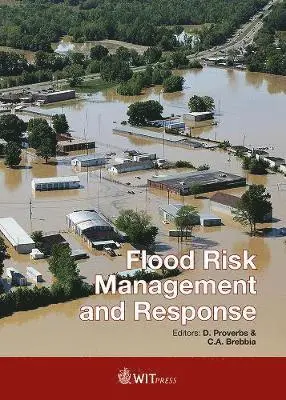
Flooding is a global phenomenon that claims countless lives worldwide each year. When flooding occurs in populated areas, it can cause substantial damage to property as well as threatening human life. Apart from the physical damage to buildings, contents and loss of life, which are the most obvious impacts of floods upon households, indirect losses are often overlooked. These indirect and intangible impacts are generally associated with disruption to normal life as well as longer term health issues including stress related illness. In many parts of the developing world, flooding can represent a major barrier to the alleviation of poverty as vulnerable communities are often exposed to sudden and life threatening events. How we respond and adapt to the challenges of flooding is key to developing our long term resilience.This book provides a platform for the work of researchers, academics and practitioners actively involved in improving our understanding of flood events and our approaches to response, recovery and resilience.A wide range of technical and management topics related to flooding and its impact are included: Flood management; Flood warning; Flood risk adaptation Flood protection - products and processes; Flood risk modelling; Flood forecasting; Flood vulnerability; Urban flood modelling; Flood risk assessment and recovery; Climate change impact; Socio and economic impact; Flood case studies; Flood damage assessment; Storm water control.
Del 208 - WIT Transactions on The Built Environment
Urban Water Systems & Floods IV
Häftad, Engelska, 2022
681 kr
Skickas inom 5-8 vardagar
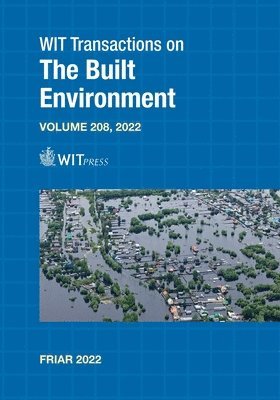
Research works were presented at the 8th International Conference on Flood and Urban Water Management with the aim of developing innovative solutions that can help bring about multiple benefits toward achieving integrated flood risk and urban water management strategies and policy. The papers resulting from these works form this book. Flooding is a global phenomenon that claims numerous lives worldwide each year. When flooding occurs in urban areas, it can cause substantial damage to property as well as threatening human life. In addition, many more people must endure the homelessness, upset and disruption that are left in the wake of floods. The increased frequency of flooding in the last few years, coupled with climate change predictions and urban development, suggest that these impacts are set to worsen in the future. How we respond and importantly, adapt to these challenges is key to developing our long term resilience at the property, community and city scale.As our cities continue to expand, their urban infrastructures need to be re-evaluated and adapted to new requirements related to the increase in population and the growing areas under urbanization. We also need to consider more nature-based interventions to the management of flood risk, including the adoption of more catchment-based approaches. These are now being recognised as being more sustainable and also able to achieve wider benefits to the environment and society as a whole.Water supply systems and urban drainage are also increasingly important due to this expansion. Topics such as contamination and pollution discharges in urban water bodies, as well as the monitoring of water recycling systems are currently receiving a great deal of attention from researchers and professional engineers working in the water industry. Mitigating losses from water distribution networks and effective, efficient and energy-saving management are key goals for optimising performance and reducing negative impacts. Sewer systems are under constant pressure due to growing urbanization and climate change, and the environmental impact caused by urban drainage overflows is related to both water quantity and water quality.This book is aimed at researchers, academics and practitioners involved in research and development activities across a wide range of technical and management topics related to urban water and flooding and its impacts on communities, property and people.
3 404 kr
Skickas inom 7-10 vardagar
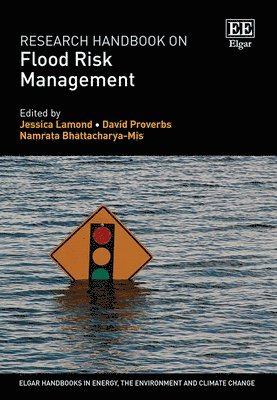
Pushing the boundaries of flood risk management research, this comprehensive Research Handbook presents pragmatic insights into all areas relating to flood risk. Through its use of dynamic and people-centred paradigms, it explores urban flood management within localities, properties, neighbourhoods and cities.Structured around the flood risk management cycle, chapters explore the critical importance of managing the consequences of flooding whilst examining key concepts such as mitigation, preparedness, emergency management and recovery. An international range of expert contributors from an array of disciplines recognize the inadequacies of existing governance approaches and mechanisms when it comes to addressing urban flooding, and identify the ways in which these can be strengthened in order to create an integrated flood and water management framework. Adopting a forward-thinking approach, the Research Handbook also investigates future directions of flood risk management research.The Research Handbook on Flood Risk Management will be an indispensable resource for academics, researchers, and students interested in environmental geography, environmental governance and regulation, urban studies, politics and public policy and the management of natural resources.
2 276 kr
Skickas inom 5-8 vardagar
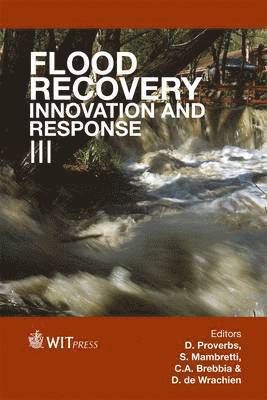
Flooding claims many lives worldwide each year. In addition, many more lives are affected by homelessness, disease and crop failures as a result of floods' destructiveness. The number of recent flood events coupled with climate change predictions and urban development, suggest that these statistics are likely to worsen in the future. Flooding in populated areas can cause substantial property damage as well as threaten human life. Apart from the obvious physical damage to buildings, contents and loss of life, there other more indirect losses that are often overlooked. These intangible impacts are generally associated with disruption to normal life as well as longer term health issues, including stress-related illness. The conference papers cover the following topics: Flood Risk Management; Flood Risk Vulnerability; Emergency Preparedness and Response; Flood Forecasting; Flood Case Studies; Responses to Reduce Vulnerability to Flooding.