David Quint - Böcker
Visar alla böcker från författaren David Quint. Handla med fri frakt och snabb leverans.
7 produkter
7 produkter
622 kr
Skickas inom 7-10 vardagar
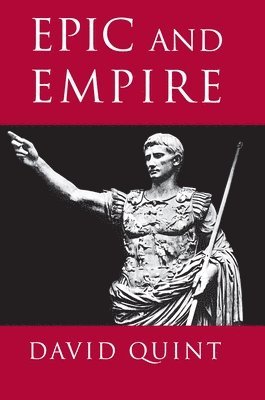
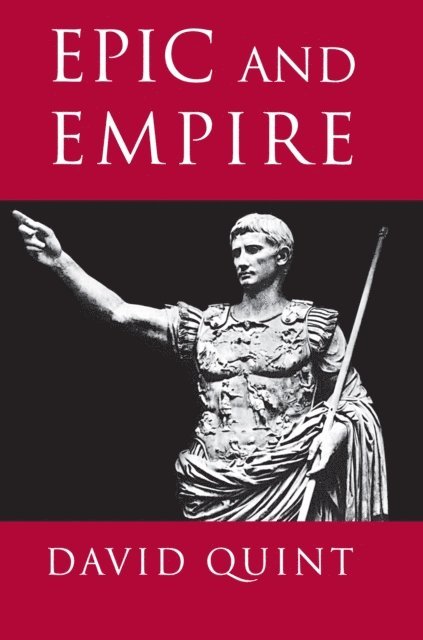
Alexander the Great, according to Plutarch, carried on his campaigns a copy of the Iliad, kept alongside a dagger; on a more pronounced ideological level, ancient Romans looked to the Aeneid as an argument for imperialism. In this major reinterpretation of epic poetry beginning with Virgil, David Quint explores the political context and meanings of key works in Western literature. He divides the history of the genre into two political traditions: the Virgilian epics of conquest and empire that take the victors' side (the Aeneid itself, Camoes's Lusiadas, Tasso's Gerusalemme liberata) and the countervailing epic of the defeated and of republican liberty (Lucan's Pharsalia, Ercilla's Araucana, and d'Aubigne's Les tragiques). These traditions produce opposing ideas of historical narrative: a linear, teleological narrative that belongs to the imperial conquerors, and an episodic and open-ended narrative identified with "romance," the story told of and by the defeated. Quint situates Paradise Lost and Paradise Regained within these rival traditions.He extends his political analysis to the scholarly revival of medieval epic in the late eighteenth and nineteenth centuries and to Sergei Eisenstein's epic film, Alexander Nevsky. Attending both to the topical contexts of individual poems and to the larger historical development of the epic genre, Epic and Empire provides new models for exploring the relationship between ideology and literary form.
378 kr
Skickas inom 7-10 vardagar
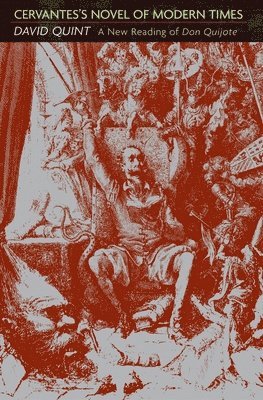
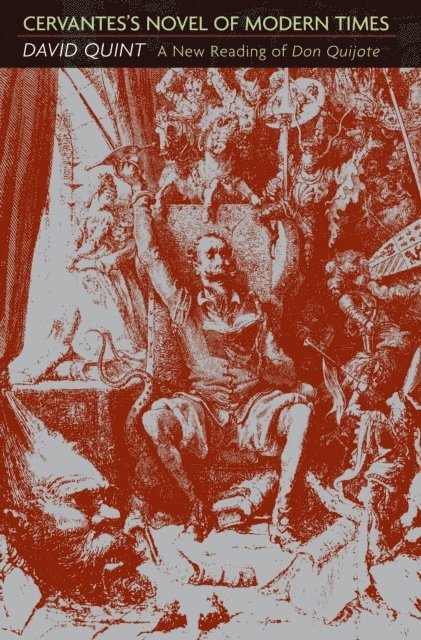
This book offers a radically new reading of Don Quijote, understanding it as a whole much greater than the sum of its famous parts. David Quint discovers a unified narrative and deliberate thematic design in a novel long taught as the very definition of the picaresque and as a rambling succession of individual episodes. Quint shows how repeated motifs and verbal details link the episodes, often in surprising and heretofore unnoticed ways. Don Quijote emerges as a work that charts and reflects upon the historical transition from feudalism to the modern times of a moneyed, commercial society. In Part One of the novel, this change is measured in a shift in the nature of erotic desire, and we find Don Quijote torn between his love for Dulcinea and his hopes to wed for wealth and social advancement. In Part Two, Don Quijote himself changes from anarchic madman to a gentler, wiser hero--a member of a middle class in the making. Throughout, Cervantes meditates on the literary form that he is inventing as a response to modernity, questioning the novel's relationship to other genres and the place of heroism and imagination within stories of everyday life.A new and coherent guide through the maze-like structure of Don Quijote, this book invites readers to appreciate the perennial modernity of Cervantes's masterpiece---a novel that confronts times not so distant from our own.
460 kr
Skickas inom 7-10 vardagar
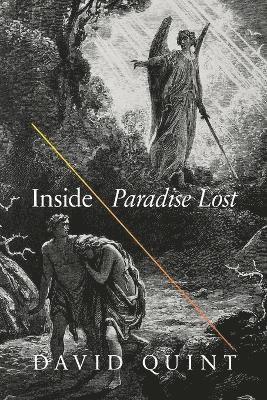
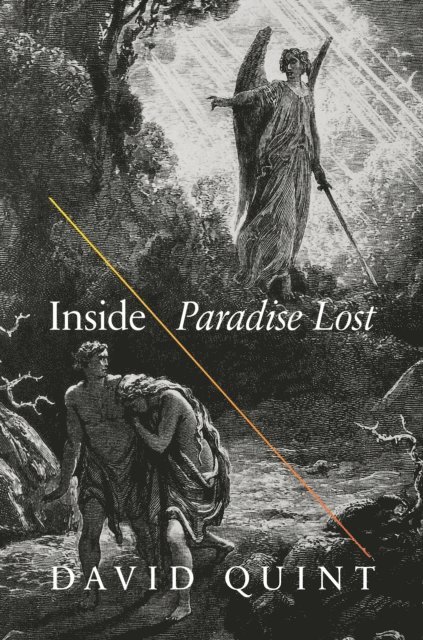
Inside "Paradise Lost" opens up new readings and ways of reading Milton's epic poem by mapping out the intricacies of its narrative and symbolic designs and by revealing and exploring the deeply allusive texture of its verse. David Quint's comprehensive study demonstrates how systematic patterns of allusion and keywords give structure and coherence both to individual books of Paradise Lost and to the overarching relationship among its books and episodes. Looking at poems within the poem, Quint provides new interpretations as he takes readers through the major subjects of Paradise Lost--its relationship to epic tradition and the Bible, its cosmology and politics, and its dramas of human choice. Quint shows how Milton radically revises the epic tradition and the Genesis story itself by arguing that it is better to create than destroy, by telling the reader to make love, not war, and by appearing to ratify Adam's decision to fall and die with his wife. The Milton of this Paradise Lost is a Christian humanist who believes in the power and freedom of human moral agency.As this indispensable guide and reference takes us inside the poetry of Milton's masterpiece, Paradise Lost reveals itself in new formal configurations and unsuspected levels of meaning and design.
948 kr
Skickas inom 7-10 vardagar
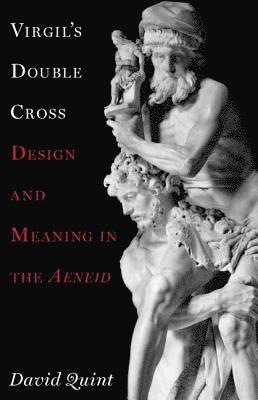
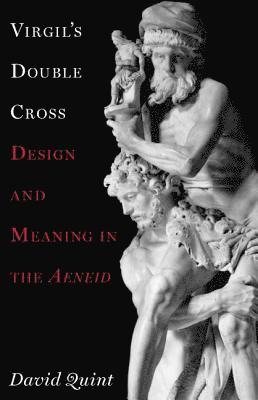
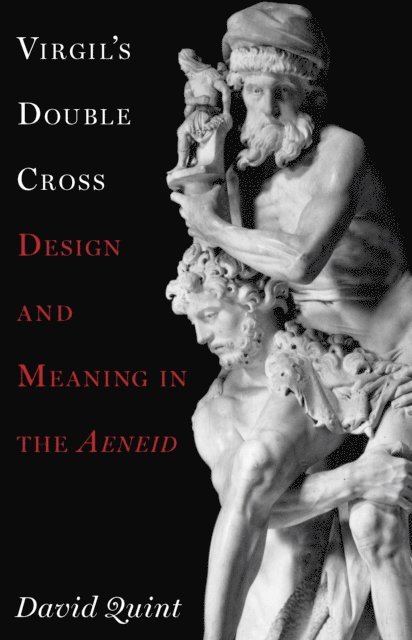
The message of Virgil's Aeneid once seemed straightforward enough: the epic poem returned to Aeneas and the mythical beginnings of Rome in order to celebrate the city's present world power and to praise its new master, Augustus Caesar. Things changed when late twentieth-century readers saw the ancient poem expressing their own misgivings about empire and one-man rule. In this timely book, David Quint depicts a Virgil who consciously builds contradiction into the Aeneid. The literary trope of chiasmus, reversing and collapsing distinctions, returns as an organizing signature in Virgil's writing: a double cross for the reader inside the Aeneid's story of nation, empire, and Caesarism.Uncovering verbal designs and allusions, layers of artfulness and connections to Roman history, Quint's accessible readings of the poem's famous episodes--the fall of Troy, the story of Dido, the trip to the Underworld, and the troubling killing of Turnus—disclose unsustainable distinctions between foreign war/civil war, Greek/Roman, enemy/lover, nature/culture, and victor/victim. The poem's form, Quint shows, imparts meanings it will not say directly. The Aeneid's life-and-death issues—about how power represents itself in grand narratives, about the experience of the defeated and displaced, and about the ironies and revenges of history—resonate deeply in the twenty-first century.This new account of Virgil's masterpiece reveals how the Aeneid conveys an ambivalence and complexity that speak to past and present.
415 kr
Skickas inom 7-10 vardagar
The message of Virgil's Aeneid once seemed straightforward enough: the epic poem returned to Aeneas and the mythical beginnings of Rome in order to celebrate the city's present world power and to praise its new master, Augustus Caesar. Things changed when late twentieth-century readers saw the ancient poem expressing their own misgivings about empire and one-man rule. In this timely book, David Quint depicts a Virgil who consciously builds contradiction into the Aeneid. The literary trope of chiasmus, reversing and collapsing distinctions, returns as an organizing signature in Virgil's writing: a double cross for the reader inside the Aeneid's story of nation, empire, and Caesarism.Uncovering verbal designs and allusions, layers of artfulness and connections to Roman history, Quint's accessible readings of the poem's famous episodes--the fall of Troy, the story of Dido, the trip to the Underworld, and the troubling killing of Turnus—disclose unsustainable distinctions between foreign war/civil war, Greek/Roman, enemy/lover, nature/culture, and victor/victim. The poem's form, Quint shows, imparts meanings it will not say directly. The Aeneid's life-and-death issues—about how power represents itself in grand narratives, about the experience of the defeated and displaced, and about the ironies and revenges of history—resonate deeply in the twenty-first century.This new account of Virgil's masterpiece reveals how the Aeneid conveys an ambivalence and complexity that speak to past and present.
360 kr
Skickas inom 7-10 vardagar
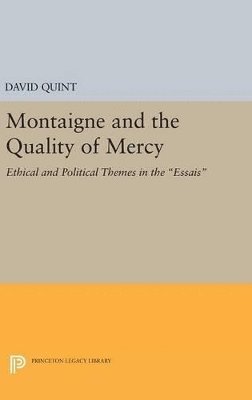
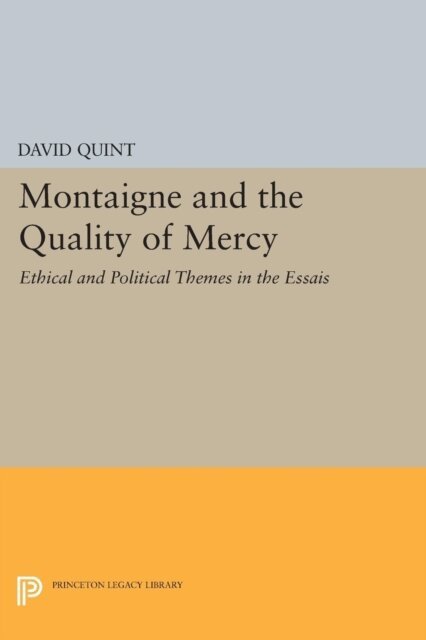
In a fresh reading of Montaigne's Essais, David Quint portrays the great Renaissance writer as both a literary man and a deeply engaged political thinker concerned with the ethical basis of society and civil discourse. From the first essay, Montaigne places the reader in a world of violent political conflict reminiscent of the French Wars of Religion through which he lived and wrote. Quint shows how a group of interrelated essays, including the famous one on the cannibals of Brazil, explores the confrontation between warring adversaries: a clement or vindictive victor and his suppliant or defiant captive. How can the two be reconciled? In a climate of hatred and obstinacy, Montaigne argues not only for the political necessity but also for the moral imperative of trusting and submitting to others and of extending mercy to them. For Quint, this ethical message informs other topics of the Essais: Montaigne's criticism of stoic models of virtue, his project to reform the cruel behavior of his noble class, his self-portrait that depicts his relaxed and unstudied nature, and his measuring of his own behavior against the classical virtue of Socrates.Quint's reading, attentive to Montaigne's verbal artistry and to his historical and cultural context, shows the essayist always aware of the other side of the issue. The moral thought of the Essais emerges as startlingly modern, both in the perennial urgency of Montaigne's concerns and in the self-questioning open-endedness of his doctrine. Originally published in 1998. The Princeton Legacy Library uses the latest print-on-demand technology to again make available previously out-of-print books from the distinguished backlist of Princeton University Press. These editions preserve the original texts of these important books while presenting them in durable paperback and hardcover editions. The goal of the Princeton Legacy Library is to vastly increase access to the rich scholarly heritage found in the thousands of books published by Princeton University Press since its founding in 1905.
Montaigne and the Quality of Mercy
Ethical and Political Themes in the Essais
Inbunden, Engelska, 2016
1 626 kr
Skickas inom 3-6 vardagar
In a fresh reading of Montaigne's Essais, David Quint portrays the great Renaissance writer as both a literary man and a deeply engaged political thinker concerned with the ethical basis of society and civil discourse. From the first essay, Montaigne places the reader in a world of violent political conflict reminiscent of the French Wars of Religion through which he lived and wrote. Quint shows how a group of interrelated essays, including the famous one on the cannibals of Brazil, explores the confrontation between warring adversaries: a clement or vindictive victor and his suppliant or defiant captive. How can the two be reconciled? In a climate of hatred and obstinacy, Montaigne argues not only for the political necessity but also for the moral imperative of trusting and submitting to others and of extending mercy to them. For Quint, this ethical message informs other topics of the Essais: Montaigne's criticism of stoic models of virtue, his project to reform the cruel behavior of his noble class, his self-portrait that depicts his relaxed and unstudied nature, and his measuring of his own behavior against the classical virtue of Socrates.Quint's reading, attentive to Montaigne's verbal artistry and to his historical and cultural context, shows the essayist always aware of the other side of the issue. The moral thought of the Essais emerges as startlingly modern, both in the perennial urgency of Montaigne's concerns and in the self-questioning open-endedness of his doctrine. Originally published in 1998. The Princeton Legacy Library uses the latest print-on-demand technology to again make available previously out-of-print books from the distinguished backlist of Princeton University Press. These editions preserve the original texts of these important books while presenting them in durable paperback and hardcover editions. The goal of the Princeton Legacy Library is to vastly increase access to the rich scholarly heritage found in the thousands of books published by Princeton University Press since its founding in 1905.