David R Harris – författare
Visar alla böcker från författaren David R Harris. Handla med fri frakt och snabb leverans.
14 produkter
Modelling Ecological Change
Perspectives from Neoecology, Palaeoecology and Environmental Archaeology
Av David R Harris, Kenneth D Thomas
Häftad, 1991
1278 kr
Lägg i varukorg
A collection of papers connecting theory and method of archaeology with related disciplines of neoecology, paleoecology, and environmental science.
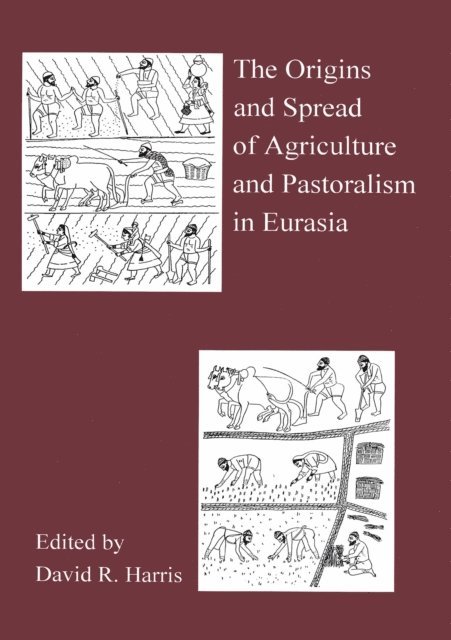
Origins And Spread Of Agriculture And Pastoralism In Eurasia
Crops, Fields, Flocks And Herds
E-bok, 2024
1524 kr
Lägg i varukorg
As the first book to examine the origins and spread of agriculture and pastoralism in Europe and Asia as a whole, this major contribution should be essential reading for archaeologists, anthropologists, biologists and geographers. Adopting a novel approach to the subject, the authors examine it …
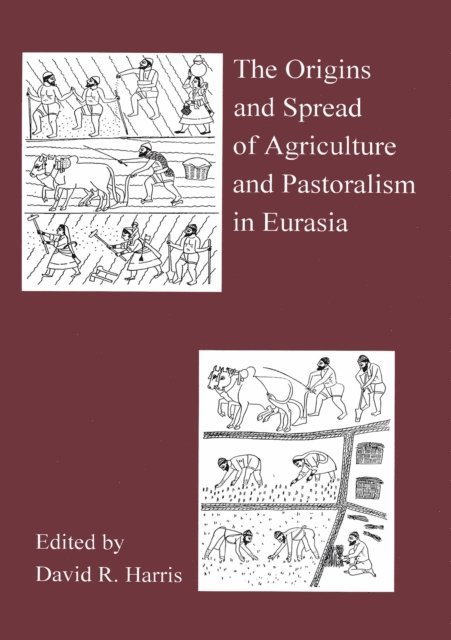
Origins And Spread Of Agriculture And Pastoralism In Eurasia
Crops, Fields, Flocks And Herds
E-bok, 2024
1535 kr
Lägg i varukorg
As the first book to examine the origins and spread of agriculture and pastoralism in Europe and Asia as a whole, this major contribution should be essential reading for archaeologists, anthropologists, biologists and geographers. Adopting a novel approach to the subject, the authors examine it …
Modelling Ecological Change
Perspectives from Neoecology, Palaeoecology and Environmental Archaeology
Inbunden, 2017
3147 kr
Lägg i varukorg
A collection of papers connecting theory and method of archaeology with related disciplines of neoecology, paleoecology, and environmental science.
Foraging and Farming
The Evolution of Plant Exploitation
Av David R. Harris, Gordon C. Hillman
Inbunden, 2014
7781 kr
Lägg i varukorg
This book is one of a series of more than 20 volumes resulting from the World Archaeological Congress, September 1986, attempting to bring together not only archaeologists and anthropologists from many parts of the world, as well as academics from contingent disciplines, but also non-academics from …
Foraging and Farming
The Evolution of Plant Exploitation
Av David R. Harris, Gordon C. Hillman
Häftad, 2016
934 kr
Lägg i varukorg
This book is one of a series of more than 20 volumes resulting from the World Archaeological Congress, September 1986, attempting to bring together not only archaeologists and anthropologists from many parts of the world, as well as academics from contingent disciplines, but also non-academics from …
Modelling Ecological Change
Perspectives from Neoecology, Palaeoecology and Environmental Archaeology
E-bok, 2016
1516 kr
Lägg i varukorg
A collection of papers connecting theory and method of archaeology with related disciplines of neoecology, paleoecology, and environmental science.
Modelling Ecological Change
Perspectives from Neoecology, Palaeoecology and Environmental Archaeology
E-bok, 2016
1516 kr
Lägg i varukorg
A collection of papers connecting theory and method of archaeology with related disciplines of neoecology, paleoecology, and environmental science.
Foraging and Farming
The Evolution of Plant Exploitation
Av Gordon C. Hillman, David R. Harris
E-bok, 2014
1082 kr
Lägg i varukorg
This book is one of a series of more than 20 volumes resulting from the World Archaeological Congress, September 1986, attempting to bring together not only archaeologists and anthropologists from many parts of the world, as well as academics from contingent disciplines, but also non-academics from …
Foraging and Farming
The Evolution of Plant Exploitation
Av Gordon C. Hillman, David R. Harris
E-bok, 2014
1106 kr
Lägg i varukorg
This book is one of a series of more than 20 volumes resulting from the World Archaeological Congress, September 1986, attempting to bring together not only archaeologists and anthropologists from many parts of the world, as well as academics from contingent disciplines, but also non-academics from …
Origins And Spread Of Agriculture And Pastoralism In Eurasia
Crops, Fields, Flocks And Herds
Häftad, 1996
1323 kr
Lägg i varukorg
As the first book to examine the origins and spread of agriculture and pastoralism in Europe and Asia as a whole, this major contribution should be essential reading for archaeologists, anthropologists, biologists and geographers. Adopting a novel approach to the subject, the authors examine it …
Origins of Agriculture in Western Central Asia – An Environmental–Archaeological Study
An Environmental-Archaeological Study
Inbunden, 2010
1020 kr
Lägg i varukorg
In Origins of Agriculture in Western Central Asia, archaeologist David R. Harris addresses questions of when, how, and why agriculture and settled village life began east of the Caspian Sea. The book describes and assesses evidence from archaeological investigations in Turkmenistan and adjacent …
Archaeology of V. Gordon Childe
Contemporary Perspectives
Inbunden, 1994
720 kr
Tillfälligt slut
Although V. Gordon Childe died 36 years ago, he remains the world's most renowned prehistorian. His What Happened in History, first published in 1942, is probably the most widely read book ever written by an archaeologist. His influence and reputation endure despite the fact that many of the …