David Rafferty – författare
Visar alla böcker från författaren . Handla med fri frakt och snabb leverans.
2 produkter
2 produkter
Inbunden, Engelska, 2025
1 487 kr
Skickas inom 5-8 vardagar
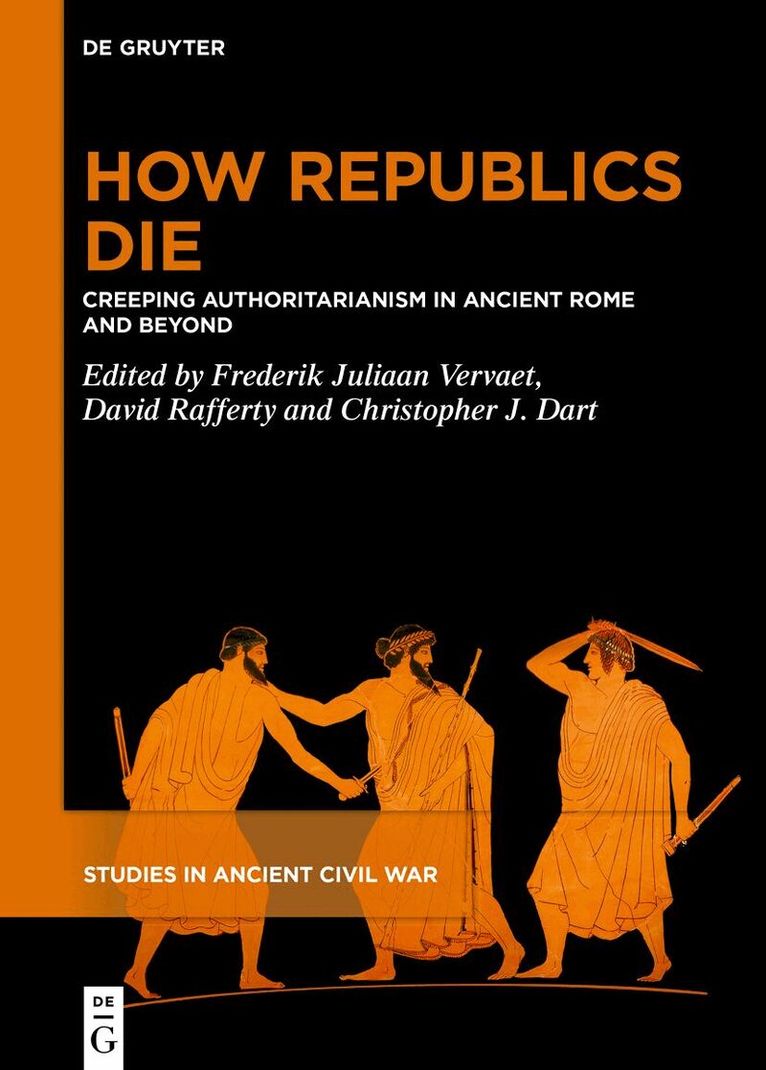
Authoritarianism is everywhere on the advance; democracies seem fragile and threatened. We console ourselves that where rule by the people has long established itself, it has never collapsed from internal causes. Except it did, once: in Rome.This book gathers together Roman historians with political scientists and scholars of other periods of authoritarian takeover to explore how open and democratic political systems have historically fallen prey to autocrats. The Late Roman Republic is the main focus, with a mix of large-scale thematic and analytical chapters paired with more detailed case studies, from some of the leading scholars in the field. Other chapters widen the scope, analysing comparable cases from ancient Athens to Napoleon to Hitler’s Germany and Franco’s Spain. The book as a whole draws on contemporary political science scholarship on democratic decay and competitive authoritarianism. It shows that these concepts are not only applicable to modern states, but that we can properly use them to study past democratic collapses as well. This provides the tools for a more historically-informed understanding of how republics die, as part of a renewed conversation between historians and political scientists.
E-bok
PDF, Engelska, 2019751 kr
Läs direkt efter köp
This study is the first comprehensive treatment of the provincial allocations system in the late Roman Republic, between the provincial law carried by Gaius Gracchus in 123 BCE and that carried by Pompeius Magnus in 52 BCE. It considers the actual process of allocations, from the Senate's decree of consular and praetorian provinces through to the transfer of command on the ground. Different chapters address the system of allotment (sortitio), the authorisation of troops and funds (ornatio), and the ritual prerequisites for departure, all based solidly on the surviving evidence. An appendix recording the Senate's year-by-year decisions supports this and allows us to see trends in the data. Since provincial questions were of central importance to the senatorial class, they were the source of many of the political contests which dominate our source record. And at every stage, the institutions shaped the politics. A new picture emerges, of structural conflicts revolving around the relationship between consuls and tribunes. As Rafferty argues, this made the provincial allocations system one of the central causes of Rome's growing political dysfunction in the late Republic.