David Rockwell - Böcker
Visar alla böcker från författaren David Rockwell. Handla med fri frakt och snabb leverans.
4 produkter
4 produkter
1 752 kr
Kommande
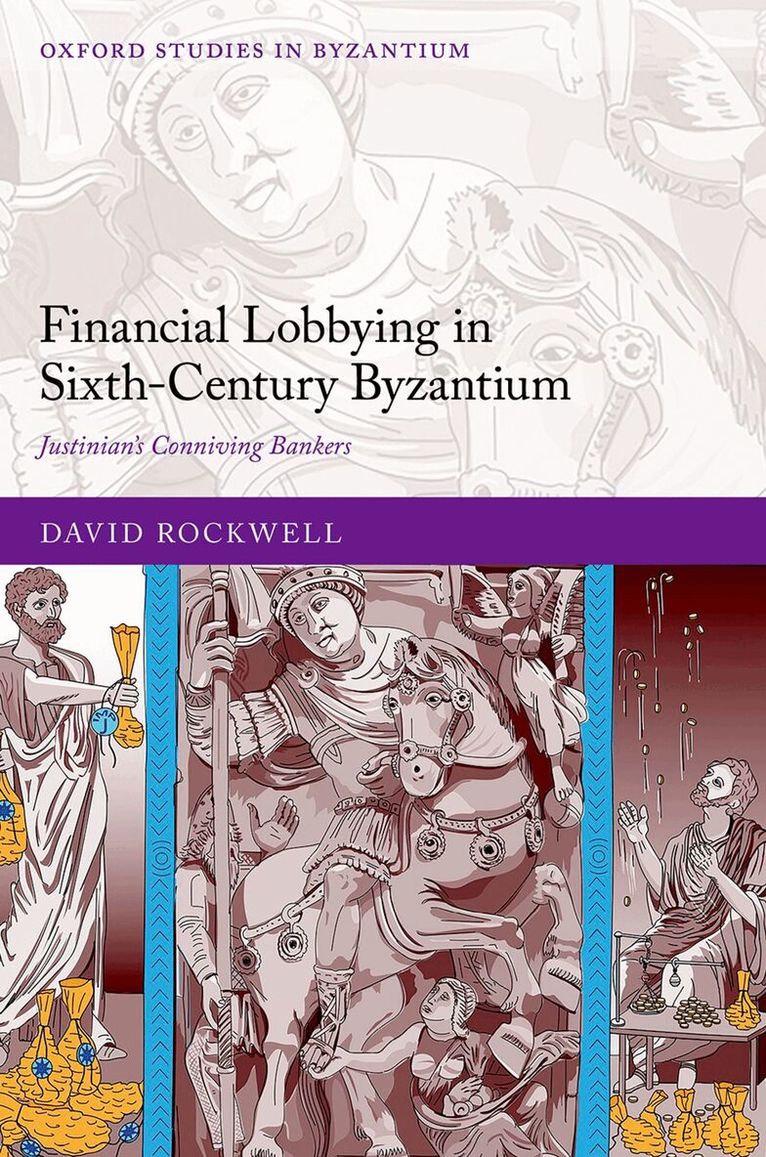
This book is a study of the nexus between money and power in early Byzantium. Or rather, of one aspect of that nexus, namely the ways in which Constantinople's financiers (money) sought and obtained legal change from the emperor Justinian (power) in the 530s and 540s of our era. Happily, the money-men's lobbying efforts are well-attested: each of Justinian's Novel 136, Edict 9, and Edict 7 describe the petitions by the bankers' guild of Constantinople that prompted them, and his Novel 106 recounts in detail the consultations that led to Justinian's re-regulation of maritime lending. These laws offer rare insights into how the “special interests” of finance petitioned for and won favour from the imperial authority even if we know next to nothing about the individual petitioners themselves.Gaining those insights, however, requires engagement with many complex legal issues. What did financiers ask for? Why? What strategies did they pursue? How did Justinian respond? Why did he respond as he did? Such questions are prosaic but essential for reconstructing relations between petitioning financiers and responsive emperor. Accordingly, after a brief introduction situating what follows within scholarship, the book contextualises the financiers' requests and the legislation responding to them within the wider social, economic, cultural, and political context of late antique petitioning. It then applies that contextualization to each financial Novel to reconstruct the dynamic decision-making on display by both petitioners and emperor alike. Among other things, the book contributes to long-standing scholarly disputes on dating of the sources, to our understanding of the role of bankers in the monetary economy in the period, and to a proper understanding of the relationship of Edict 7 to the Plague of Justinian. It also offers a new interpretation of the reasons for Justinian's adoption and almost immediate repeal of a new legal regime for maritime lending. This study contributes to rethinking sixth-century legislative processes, offers suggestions for the application of new methodologies to early Byzantine legal history, and suggests ways in which Justinian's financial Novels can be used to pursue other, broader lines of historical inquiry.
250 kr
Skickas inom 5-8 vardagar
Author and naturalist David Rockwell explains the evolution of the park's geology from the erosion of Australian mountains more than a billion years ago to the glaciers that gave Glacier National Park its distinctive landscape. He explores the natural history of the plants and animals of the park's six distinct regions. You'll learn about the park's greatest predators, grizzly bears, mountain lions, and wolves, and about their complex relationship with their prey. The result is a fascinating and intimate portrait of one of the world's last truly wild places.
Giving Voice to Bear
North American Indian Myths, Rituals, and Images of the Bear
Häftad, Engelska, 2003
247 kr
Skickas inom 5-8 vardagar
525 kr
Skickas inom 7-10 vardagar
A celebration of the work of contemporary architect David Rockwell, who works at the intersection of architecture and performanceThis unique insight into the projects and philosophy of renowned architect and Tony Award-winning set designer David Rockwell explores the remarkable range of his work, from restaurants and hotels to museums and Broadway stages. It is the first book to shine a spotlight on the relationship between architecture and performance and features contributions from leading voices and talents in fields as diverse as architecture, lighting design, and the culinary arts.David Rockwell's fascination with theater has long informed his built work. Drama explores the core principles that Rockwell uses to enhance the impact of his architecture, with contributions from experts across the creative world - from record producer Quincy Jones to chef José Andrés. It's both an exciting new insight into the work of an important contemporary architect and a compelling case for the virtues of interdisciplinary collaboration.