David S. Richeson – författare
Visar alla böcker från författaren David S. Richeson. Handla med fri frakt och snabb leverans.
6 produkter
Euler's Gem
The Polyhedron Formula and the Birth of Topology
Häftad, 2019
194 kr
Lägg i varukorg
How a simple equation reshaped mathematicsLeonhard Euler’s polyhedron formula describes the structure of many objects—from soccer balls and gemstones to Buckminster Fuller’s buildings and giant all-carbon molecules. Yet Euler’s theorem is so simple it can be explained to a child. From ancient Greek …
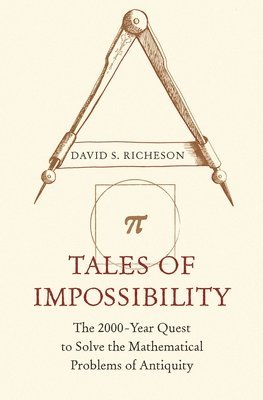
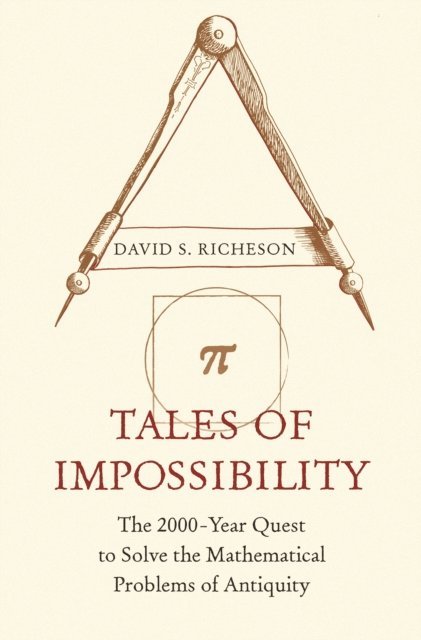
Tales of Impossibility
The 2000-Year Quest to Solve the Mathematical Problems of Antiquity
Inbunden, 2019
263 kr
Lägg i varukorg
A comprehensive look at four of the most famous problems in mathematicsTales of Impossibility recounts the intriguing story of the renowned problems of antiquity, four of the most famous and studied questions in the history of mathematics. First posed by the ancient Greeks, these compass and …
Euler's Gem
The Polyhedron Formula and the Birth of Topology
Häftad, 2012
203 kr
Lägg i varukorg
Leonhard Euler's polyhedron formula describes the structure of many objects--from soccer balls and gemstones to Buckminster Fuller's buildings and giant all-carbon molecules. Yet Euler's formula is so simple it can be explained to a child. Euler's Gem tells the illuminating story of this …
Euler's Gem
The Polyhedron Formula and the Birth of Topology
E-bok, 2019
257 kr
Lägg i varukorg
How a simple equation reshaped mathematics Leonhard Euler’s polyhedron formula describes the structure of many objects—from soccer balls and gemstones to Buckminster Fuller’s buildings and giant all-carbon molecules. Yet Euler’s theorem is so simple it can be explained to a child. From ancient …
Tales of Impossibility
The 2000-Year Quest to Solve the Mathematical Problems of Antiquity
E-bok, 2019
271 kr
Lägg i varukorg
A comprehensive look at four of the most famous problems in mathematics Tales of Impossibility recounts the intriguing story of the renowned problems of antiquity, four of the most famous and studied questions in the history of mathematics. First posed by the ancient Greeks, these compass and …
Tales of Impossibility
The 2000-Year Quest to Solve the Mathematical Problems of Antiquity
Häftad, 2021
203 kr
Lägg i varukorg
A comprehensive look at four of the most famous problems in mathematicsTales of Impossibility recounts the intriguing story of the renowned problems of antiquity, four of the most famous and studied questions in the history of mathematics. First posed by the ancient Greeks, these compass and …