David S. Salsburg - Böcker
Visar alla böcker från författaren David S. Salsburg. Handla med fri frakt och snabb leverans.
6 produkter
6 produkter
956 kr
Skickas inom 10-15 vardagar
This book explains how the computer programs work and why and when they can be applied to problems in toxicology. It discusses the statistical models used and their applications in a general fashion. The book overviews the problems that can arise from the blind use of the statistical models.
552 kr
Skickas inom 10-15 vardagar
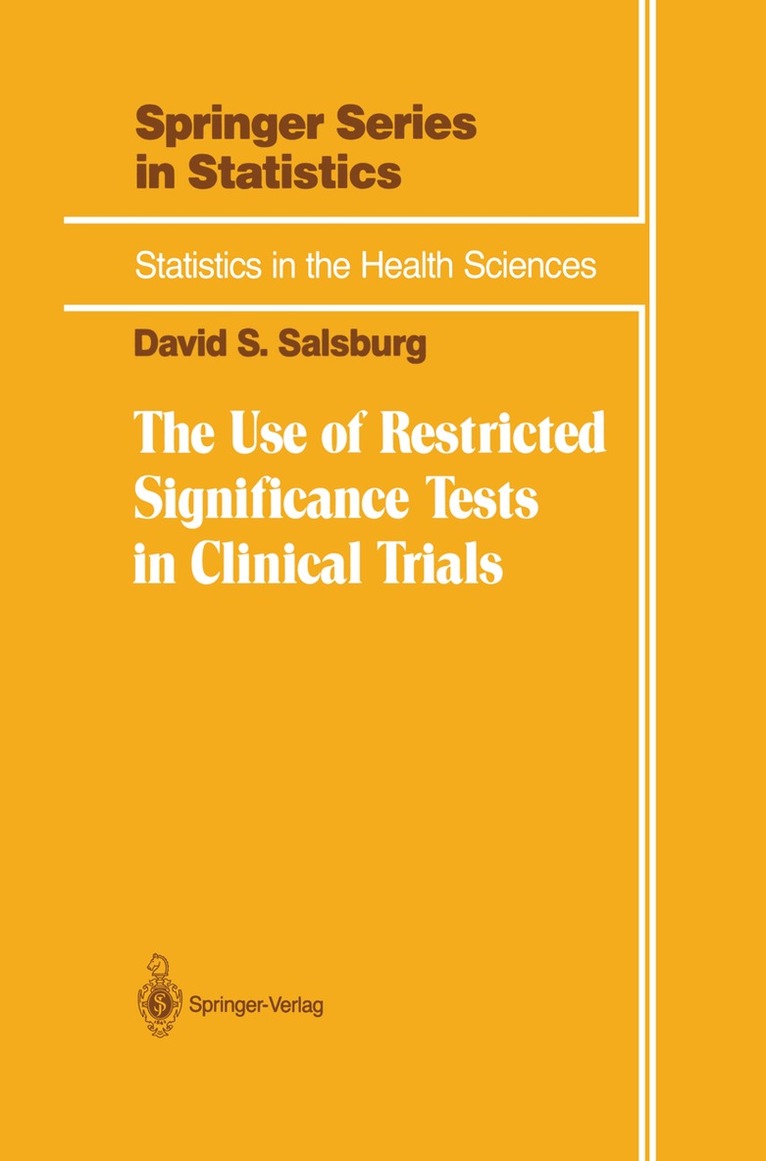
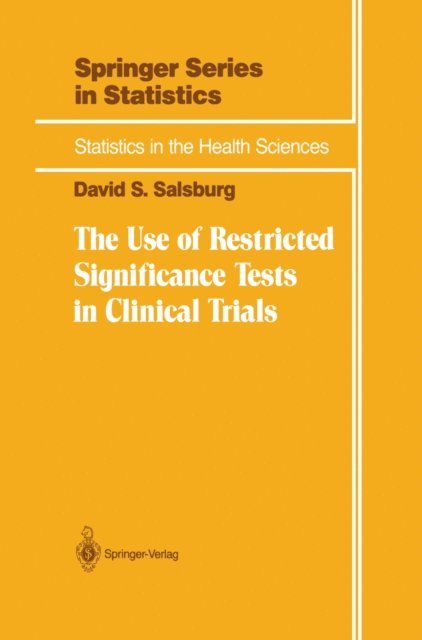
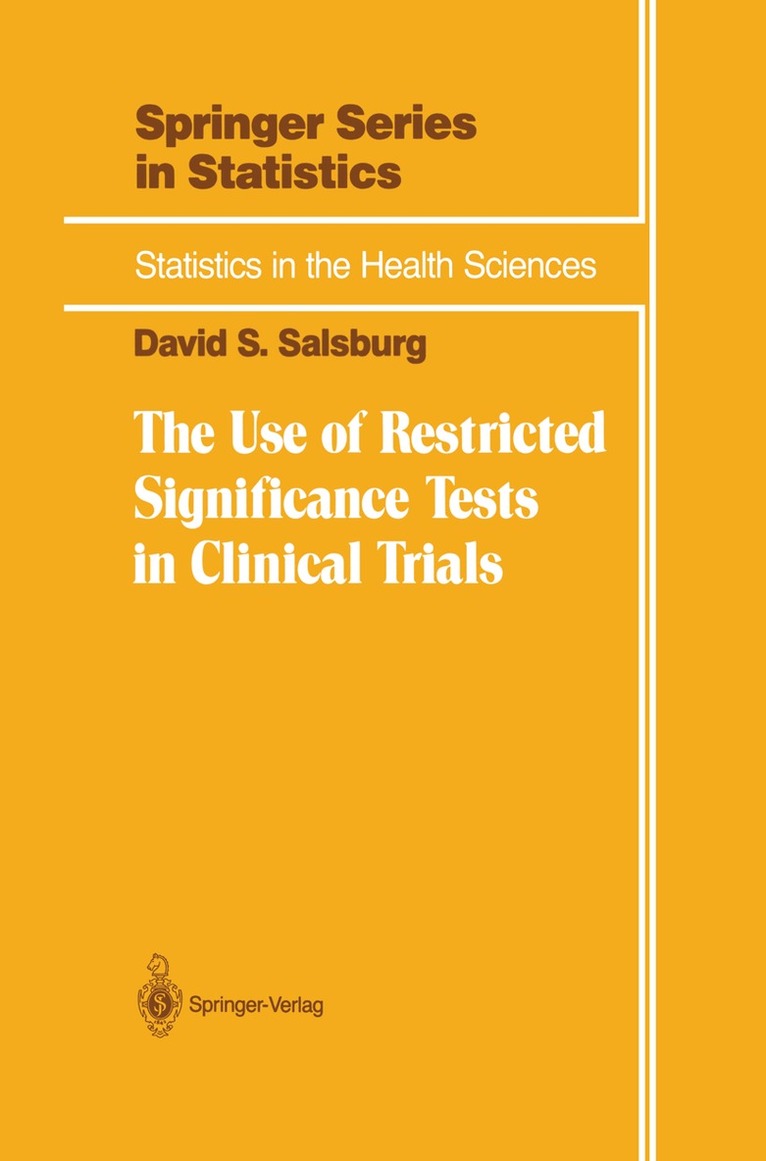
This thought-provoking book discusses the use of statistics in randomized clinical trials. Its aim is two-fold: firstly, it presents a clear account of the design and analysis of experiments in this setting which stresses the foundational issues involved. Secondly, the book seeks to develop the specific tools of analysis which can be derived from Neyman's model of restricted tests. The book is based on the author's many years of experience of clinical trials. Throughout, examples are used from a variety of types of study. As a result, all statisticians and research scientists who work on clinical trials will find this presentation clear and accessible, and very relevant to their own research interests.
3 256 kr
Skickas inom 10-15 vardagar
This book explains how the computer programs work and why and when they can be applied to problems in toxicology. It discusses the statistical models used and their applications in a general fashion. The book overviews the problems that can arise from the blind use of the statistical models.
1 362 kr
Skickas inom 10-15 vardagar
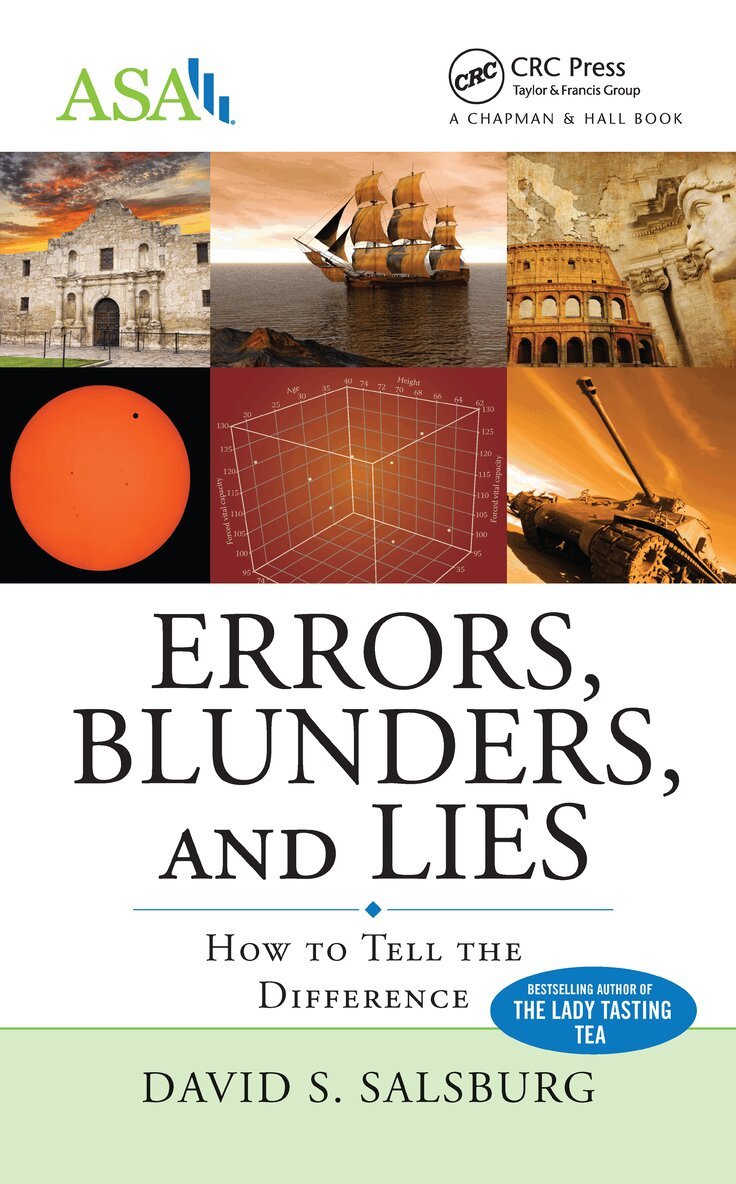
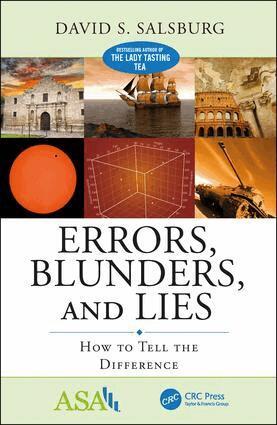
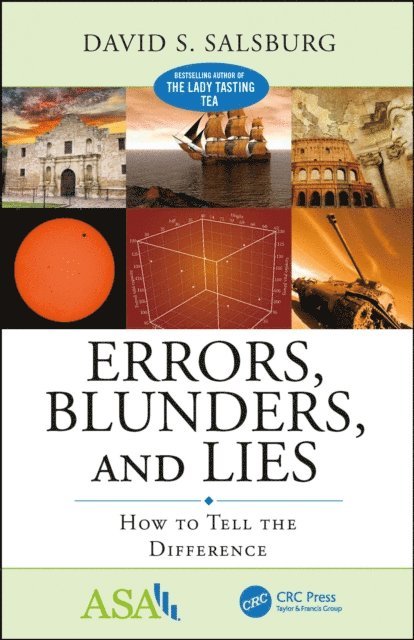
We live in a world that is not quite "right." The central tenet of statistical inquiry is that Observation = Truth + Error because even the most careful of scientific investigations have always been bedeviled by uncertainty. Our attempts to measure things are plagued with small errors. Our attempts to understand our world are blocked by blunders. And, unfortunately, in some cases, people have been known to lie.In this long-awaited follow-up to his well-regarded bestseller, The Lady Tasting Tea, David Salsburg opens a door to the amazing widespread use of statistical methods by looking at historical examples of errors, blunders and lies from areas as diverse as archeology, law, economics, medicine, psychology, sociology, Biblical studies, history, and war-time espionage. In doing so, he shows how, upon closer statistical investigation, errors and blunders often lead to useful information. And how statistical methods have been used to uncover falsified data. Beginning with Edmund Halley’s examination of the Transit of Venus and ending with a discussion of how many tanks Rommel had during the Second World War, the author invites the reader to come along on this easily accessible and fascinating journey of how to identify the nature of errors, minimize the effects of blunders, and figure out who the liars are.
536 kr
Skickas inom 10-15 vardagar
The reader will soon find that this is more than a "how-to-do-it" book. It describes a philosophical approach to the use of statistics in the analysis of clinical trials. I have come gradually to the position described here, but I have not come that way alone. This approach is heavily influenced by my reading the papers of R.A. Fisher, F.S. Anscombe, F. Mosteller, and J. Neyman. But the most important influences have been those of my medical colleagues, who had important real-life medical questions that needed to be answered. Statistical methods depend on abstract mathematical theorems and often complicated algorithms on the computer. But these are only a means to an end, because in the end the statistical techniques we apply to clinical studies have to provide useful answers. When I was studying martingales and symbolic logic in graduate school, my wife, Fran, had to be left out of the intellectual excitement. But, as she looked on, she kept asking me how is this knowledge useful. That question, what can you do with this? haunted my studies. When I began working in bio statistics, she continued asking me where it was all going, and I had to explain what I was doing in terms of the practical problems that were being ad dressed.
414 kr
Skickas inom 10-15 vardagar
We live in a world that is not quite "right." The central tenet of statistical inquiry is that Observation = Truth + Error because even the most careful of scientific investigations have always been bedeviled by uncertainty. Our attempts to measure things are plagued with small errors. Our attempts to understand our world are blocked by blunders. And, unfortunately, in some cases, people have been known to lie.In this long-awaited follow-up to his well-regarded bestseller, The Lady Tasting Tea, David Salsburg opens a door to the amazing widespread use of statistical methods by looking at historical examples of errors, blunders and lies from areas as diverse as archeology, law, economics, medicine, psychology, sociology, Biblical studies, history, and war-time espionage. In doing so, he shows how, upon closer statistical investigation, errors and blunders often lead to useful information. And how statistical methods have been used to uncover falsified data. Beginning with Edmund Halley’s examination of the Transit of Venus and ending with a discussion of how many tanks Rommel had during the Second World War, the author invites the reader to come along on this easily accessible and fascinating journey of how to identify the nature of errors, minimize the effects of blunders, and figure out who the liars are.