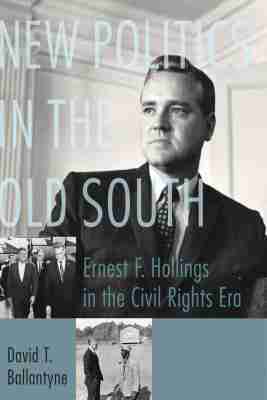
The first scholarly account of the South Carolina Democrat''s career and the transformation of Southern U.S. politics and society during the civil rights era
New Politics in the Old South is the first scholarly biography of Ernest F. "Fritz" Hollings, a key figure in South Carolina and national political developments in the second half of the twentieth century. Throughout his career Hollings was renowned for his willingness to voice unpleasant truths, as when he called for the peaceful acceptance of racial desegregation at Clemson University in 1963 and acknowledged the existence of widespread poverty and malnutrition in South Carolina in 1969. David T. Ballantyne uses Hollings''s career as a lens for examining the upheaval in southern politics and society after World War II.
Hollings''s political career began in 1948, when he was elected to the South Carolina House of Representatives. He served as governor from 1959 to 1963 and then as a U.S. senator from 1966 until he retired in 2005. Ballantyne illuminates Hollings''s role in forging a "southern strategy" that helped move southern Democrats away from openly endorsing white supremacy and toward acknowledging the interests of racial minorities, though this approach was halting and reluctant at times. Unlike many southern politicians who emerged as reactionary figures during the civil rights era, Hollings adapted to the changing racial politics of the 1960s while pursuing a clear course—Vietnam War hawk, fiscal conservative, regional economic booster, and free-trade opponent.
While Hollings was at times an atypical southern senator, his behavior in the 1960s and 1970s served as a model for survival as a southern Democrat. His approach to voting rights, military spending, and social and cultural issues was mirrored by many southern Democrats between the 1970s and 1990s. Hollings''s career demonstrated an alternative to hard-edged political conservatism, one that was conspicuously successful throughout his Senate tenure.