David T. Haberly – författare
Visar alla böcker från författaren David T. Haberly. Handla med fri frakt och snabb leverans.
5 produkter
5 produkter
Inbunden, Engelska, 1999
1 252 kr
Skickas inom 7-10 vardagar
Machado de Assis is considered the pre-eminent writer of Brazil. Quincas Borba is one of his four most important novels and features some of the same characters as Memorias Postumas de Bras Cubas. The main character of this novel is a well-meaning country fellow who moves to the city with his dog, Quincas Borba, named after the mad philosopher who was his previous owner. As the dog's new owner explores the social, political, and commercial world of the city, he also tries to come to grips with the motives that lie behind every human action and begins to ponder what madness really is. Despite the "heavy" messages behind this book, the narration is light-hearted, allowing readers to laugh both at the foibles of society and at themselves.
Häftad, Engelska, 1999
263 kr
Skickas inom 5-8 vardagar
Machado de Assis is considered the pre-eminent writer of Brazil. Quincas Borba is one of his four most important novels and features some of the same characters as Memorias Postumas de Bras Cubas. The main character of this novel is a well-meaning country fellow who moves to the city with his dog, Quincas Borba, named after the mad philosopher who was his previous owner. As the dog's new owner explores the social, political, and commercial world of the city, he also tries to come to grips with the motives that lie behind every human action and begins to ponder what madness really is. Despite the "heavy" messages behind this book, the narration is light-hearted, allowing readers to laugh both at the foibles of society and at themselves.
E-bok
PDF, Engelska, 1999316 kr
Läs direkt efter köp
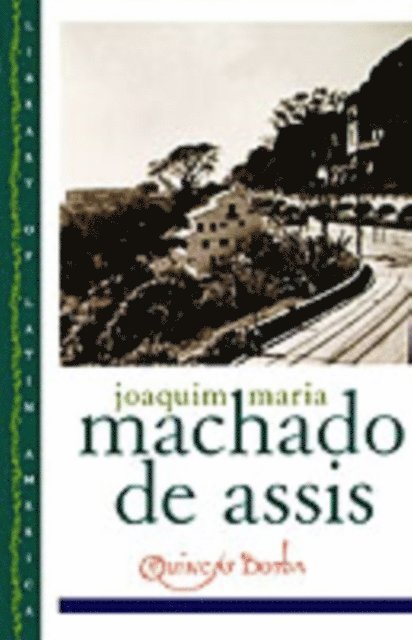
Along with The Posthumous Memoirs of Br''s Cubas and Dom Casmurro, Quincas Borba is one of Machado de Assis'' major works and indeed one of the major works of nineteenth-century fiction. With his uncannily postmodern sensibility, his delicious wit, and his keen insight into the political and social complexities of the Brazilian Empire, Machado opens a fascinating world to English-speaking readers. When the mad philosopher Quincas Borba dies, he leaves to his friend Rubiao the entirety of his wealth and property, with a single stipulation: Rubiao must take care of Quincas Borba''s dog, who is also named Quincas Borba, and who may indeed have assumed the soul of the dead philosopher. Flush with his newfound wealth, Rubiao heads for Rio de Janeiro and plunges headlong into a world where fantasy and reality become increasingly difficult to keep separate. We encounter roses that speak to each other, discussing the character and actions of their owner, Sofia; even the stars above occasionally comment, sarcastically, on the humans below. When Rubiao falls in love with the wife of his best friend, we see adultery as yet another betrayal of reality. Rubiao''s own hold on reality becomes ever more tenuous as he makes elaborate plans for his marriage, even though he has no bride, and fantasizes that he has become Napoleon III. The very nature of reality, the novel seems to be saying, is an agreed-upon fiction told by an unreliable narrator. Brilliantly translated by Gregory Rabassa, Quincas Borba is a masterful satire not only on life in Imperial Brazil but the human condition itself.
E-bok
Engelska, 1999284 kr
Läs direkt efter köp
Along with The Posthumous Memoirs of Br''s Cubas and Dom Casmurro, Quincas Borba is one of Machado de Assis'' major works and indeed one of the major works of nineteenth-century fiction. With his uncannily postmodern sensibility, his delicious wit, and his keen insight into the political and social complexities of the Brazilian Empire, Machado opens a fascinating world to English-speaking readers. When the mad philosopher Quincas Borba dies, he leaves to his friend Rubiao the entirety of his wealth and property, with a single stipulation: Rubiao must take care of Quincas Borba''s dog, who is also named Quincas Borba, and who may indeed have assumed the soul of the dead philosopher. Flush with his newfound wealth, Rubiao heads for Rio de Janeiro and plunges headlong into a world where fantasy and reality become increasingly difficult to keep separate. We encounter roses that speak to each other, discussing the character and actions of their owner, Sofia; even the stars above occasionally comment, sarcastically, on the humans below. When Rubiao falls in love with the wife of his best friend, we see adultery as yet another betrayal of reality. Rubiao''s own hold on reality becomes ever more tenuous as he makes elaborate plans for his marriage, even though he has no bride, and fantasizes that he has become Napoleon III. The very nature of reality, the novel seems to be saying, is an agreed-upon fiction told by an unreliable narrator. Brilliantly translated by Gregory Rabassa, Quincas Borba is a masterful satire not only on life in Imperial Brazil but the human condition itself.
Häftad, Engelska, 2012
605 kr
Skickas inom 7-10 vardagar
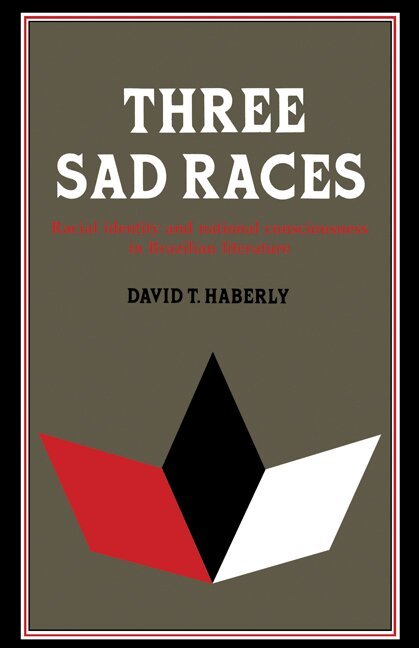
Brazilians have traditionally and very accurately viewed their nation as the product of the coming together and subsequent interaction of its disparate racial ancestry: native American Indians, Portuguese settlers and African slaves. Examining the social and cultural implications of this racial diversity is essential to the search for a viable and cohesive national identity, which has long been a major concern of Brazil's writers. Originally published in 1983, Three Sad Races is a study of how Brazilian literature - the only national literature in the Americas comparable in both quantity and quality to that of the United States - reflects these themes and gives vent to the general disquietude concerning the nation's predicament. Haberly presents an innovative interpretation of the development of Brazilian literature from the sixteenth to the twentieth centuries, as well as detailed critical analyses of the works of six of the nation's greatest writers.