David W. Glasspool – författare
Visar alla böcker från författaren David W. Glasspool. Handla med fri frakt och snabb leverans.
6 produkter
Modelling High-level Cognitive Processes
Av Richard P. Cooper With Contributi, Peter G. Yule m. fl.
Häftad, 2013
881 kr
Lägg i varukorg
This book is a practical guide to building computational models of high-level cognitive processes and systems. High-level processes are those central cognitive processes involved in thinking, reasoning, planning, and so on. These processes appear to share representational and processing …
Modelling High-level Cognitive Processes
Av Richard P. Cooper With Contributi, Peter G. Yule m. fl.
Inbunden, 2002
2433 kr
Lägg i varukorg
This book is a practical guide to building computational models of high-level cognitive processes and systems. High-level processes are those central cognitive processes involved in thinking, reasoning, planning, and so on. These processes appear to share representational and processing …
Modelling High-level Cognitive Processes
Av Richard P. Cooper, David W. Glasspool m. fl.
E-bok, 2013
1043 kr
Lägg i varukorg
This book is a practical guide to building computational models of high-level cognitive processes and systems. High-level processes are those central cognitive processes involved in thinking, reasoning, planning, and so on. These processes appear to share representational and processing …
Modelling High-level Cognitive Processes
Av Richard P. Cooper, David W. Glasspool m. fl.
E-bok, 2013
1043 kr
Lägg i varukorg
This book is a practical guide to building computational models of high-level cognitive processes and systems. High-level processes are those central cognitive processes involved in thinking, reasoning, planning, and so on. These processes appear to share representational and processing …
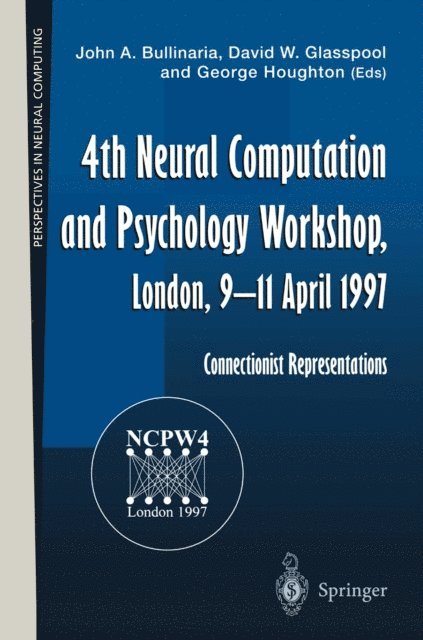
4th Neural Computation and Psychology Workshop, London, 9-11 April 1997
Connectionist Representations
Av George Houghton, David W. Glasspool m. fl.
E-bok, 2012
755 kr
Lägg i varukorg
This volume collects together refereed versions of twenty-five papers presented at the 4th Neural Computation and Psychology Workshop, held at University College London in April 1997. The "NCPW" workshop series is now well established as a lively forum which brings together researchers from such …
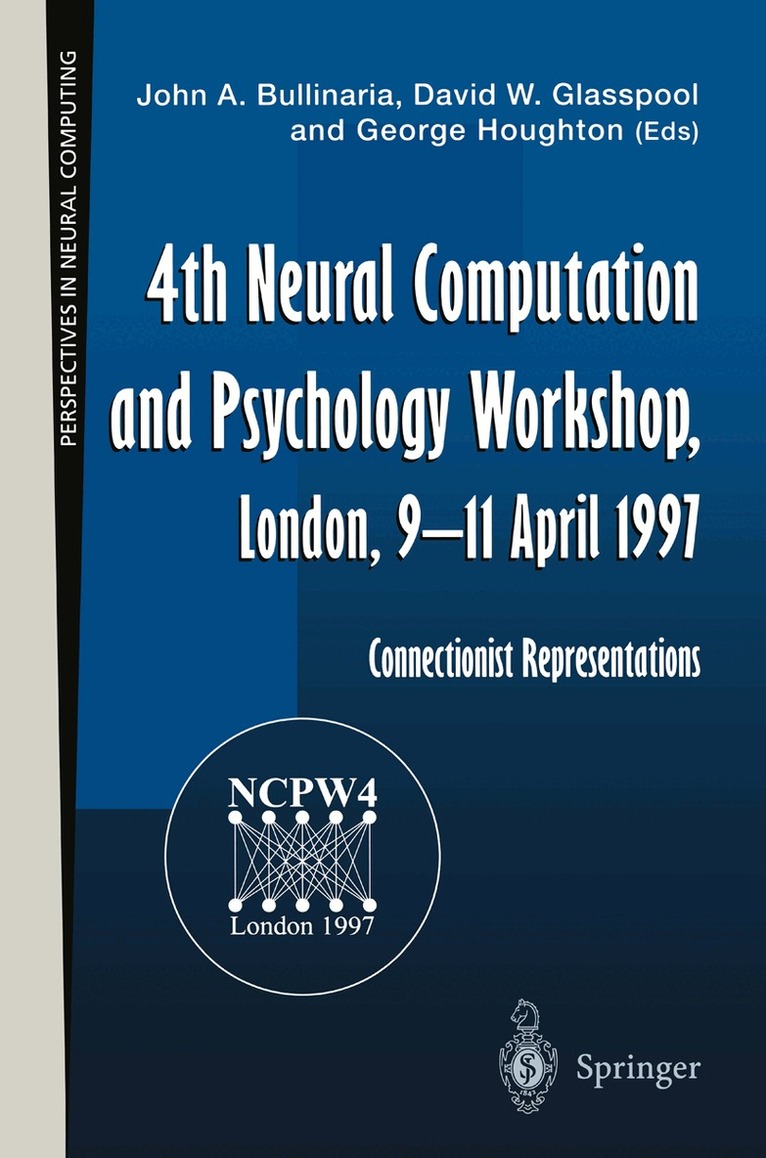
4th Neural Computation and Psychology Workshop, London, 9–11 April 1997
Connectionist Representations
Av John A: Bullinaria, David W. Glasspool m. fl.
Häftad, 1997
536 kr
Lägg i varukorg
This volume collects together refereed versions of twenty-five papers presented at the 4th Neural Computation and Psychology Workshop, held at University College London in April 1997. The "NCPW" workshop series is now well established as a lively forum which brings together researchers from such …