David Wasieleski – författare
Visar alla böcker från författaren David Wasieleski. Handla med fri frakt och snabb leverans.
6 produkter
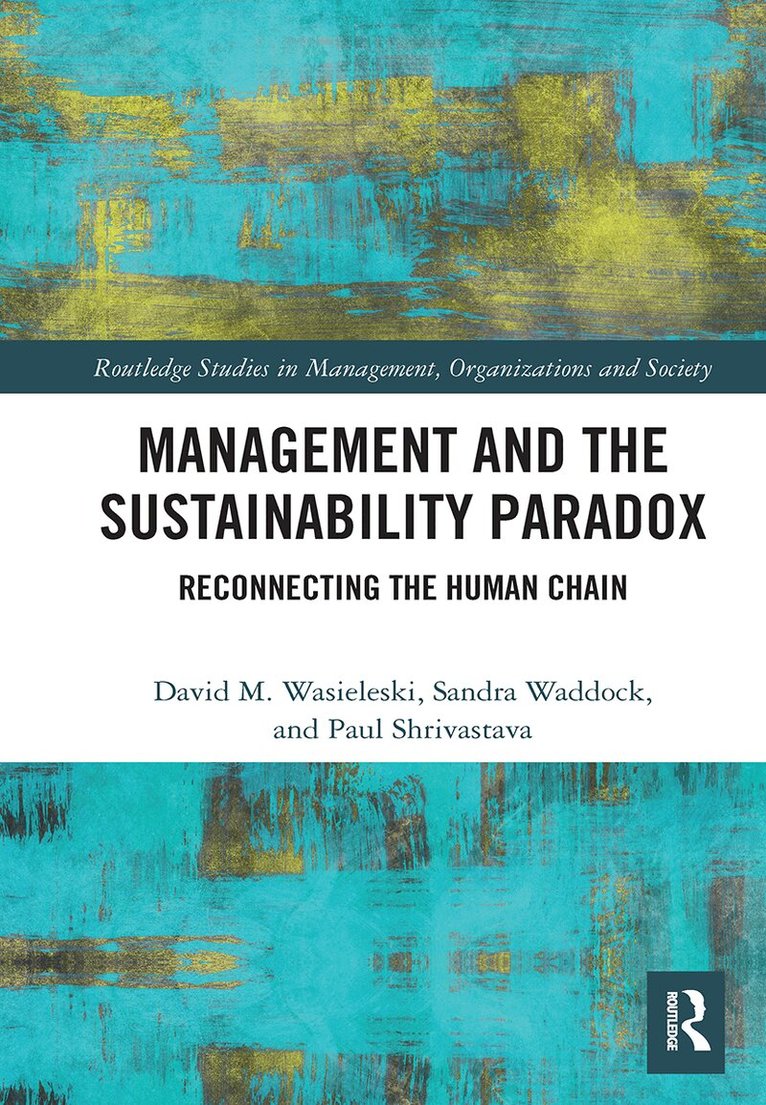
Management and the Sustainability Paradox
Reconnecting the Human Chain
Av David Wasieleski, Sandra Waddock m. fl.
Häftad, 2022
712 kr
Lägg i varukorg
Management and the Sustainability Paradox is about how humans became disconnected from their ecological environment throughout evolutionary history. Begining with the premise that people have competing innate, natural drives linked to survival. Survival can be thought of in the context of long-term …
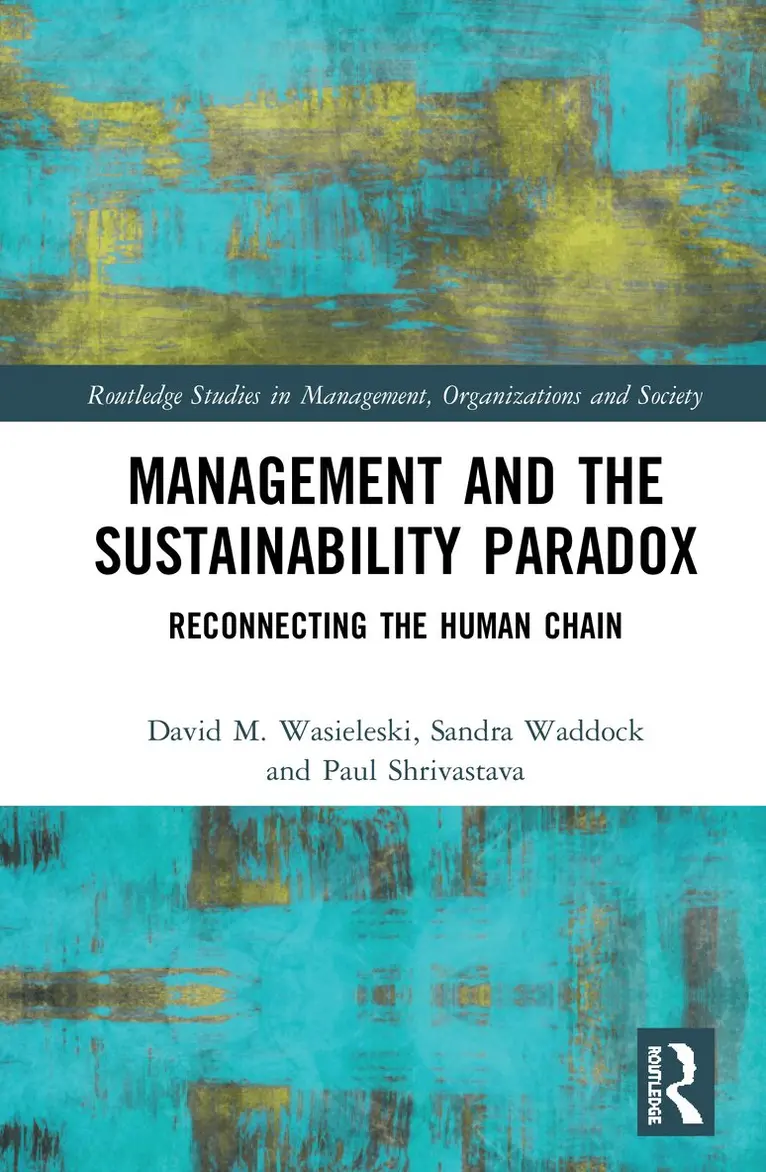
Management and the Sustainability Paradox
Reconnecting the Human Chain
Av David Wasieleski, Sandra Waddock m. fl.
Inbunden, 2020
2826 kr
Lägg i varukorg
Management and the Sustainability Paradox is about how humans became disconnected from their ecological environment throughout evolutionary history. Begining with the premise that people have competing innate, natural drives linked to survival. Survival can be thought of in the context of long-term …
Management and the Sustainability Paradox
Reconnecting the Human Chain
Av Paul Shrivastava, Sandra Waddock m. fl.
E-bok, 2020
838 kr
Lägg i varukorg
Management and the Sustainability Paradox is about how humans became disconnected from their ecological environment throughout evolutionary history. Begining with the premise that people have competing innate, natural drives linked to survival. Survival can be thought of in the context of long-term …
Management and the Sustainability Paradox
Reconnecting the Human Chain
Av Paul Shrivastava, Sandra Waddock m. fl.
E-bok, 2020
838 kr
Lägg i varukorg
Management and the Sustainability Paradox is about how humans became disconnected from their ecological environment throughout evolutionary history. Begining with the premise that people have competing innate, natural drives linked to survival. Survival can be thought of in the context of long-term …
Applied Humanism
How to Create More Effective and Ethical Businesses
Av Jennifer Hancock, David Wasieleski
Häftad, 2019
325 kr
Lägg i varukorg
You can’t understand humanistic business management unless you understand what humanism is. This book provides a short introduction to the philosophy of humanism and discusses how and why it is being applied to business and why it is so effective when you do so. Humanism helps us prioritize human …
Applied Humanism
How to Create More Effective and Ethical Businesses
Av Jennifer Hancock, David Wasieleski
E-bok, 2019
221 kr
Lägg i varukorg
This book provides a short introduction to the philosophy of humanism and discusses how and why it is being applied to business and why it is so effective when you do so. You can’t understand humanistic business management unless you understand what humanism is. This book provides a short …