Davor Pavuna – författare
Visar alla böcker från författaren Davor Pavuna. Handla med fri frakt och snabb leverans.
6 produkter
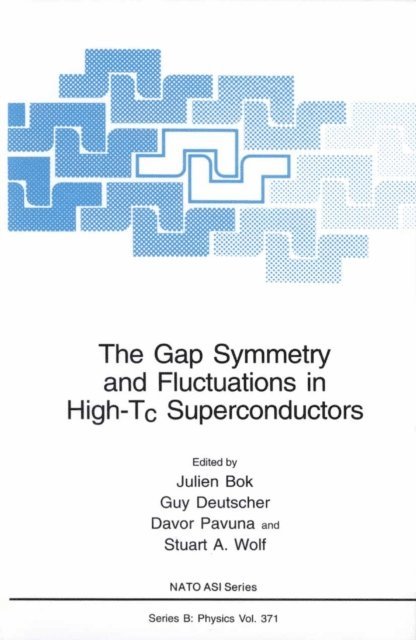
Gap Symmetry and Fluctuations in High-Tc Superconductors
Av Stuart A. Wolf, Davor Pavuna m. fl.
E-bok, 2006
734 kr
Lägg i varukorg
Since the discovery in 1986 of high temperature superconductors by J. G. Bednorz and K. A. Müller, a considerable progress has been made and several important scientific problems have emerged. Within this NATO Advanced Study Institute our intention was to focus mainly on the controversial topic of …
New Challenges in Superconductivity: Experimental Advances and Emerging Theories
Proceedings of the NATO Advanced Research Workshop, held in Miami, Florida, 11-14 January 2004
Av J. Ashkenazi, Mikhail V. Eremin m. fl.
Häftad, 2005
551 kr
Lägg i varukorg
This volume contains the proceedings of the 2004 University of Miami Workshop on Unconventional Superconductivity. The workshop was the fourth in a series of successful meetings on High-T Superconductivity and C related topics, which took place at the James L. Knight Physics Building on the …
New Challenges in Superconductivity: Experimental Advances and Emerging Theories
Proceedings of the NATO Advanced Research Workshop, held in Miami, Florida, 11-14 January 2004
Av Fuliln Zuo, Davor Pavuna m. fl.
E-bok, 2006
734 kr
Lägg i varukorg
This volume contains the proceedings of the 2004 University of Miami Workshop on Unconventional Superconductivity. The workshop was the fourth in a series of successful meetings on High-T Superconductivity and C related topics, which took place at the James L. Knight Physics Building on the …
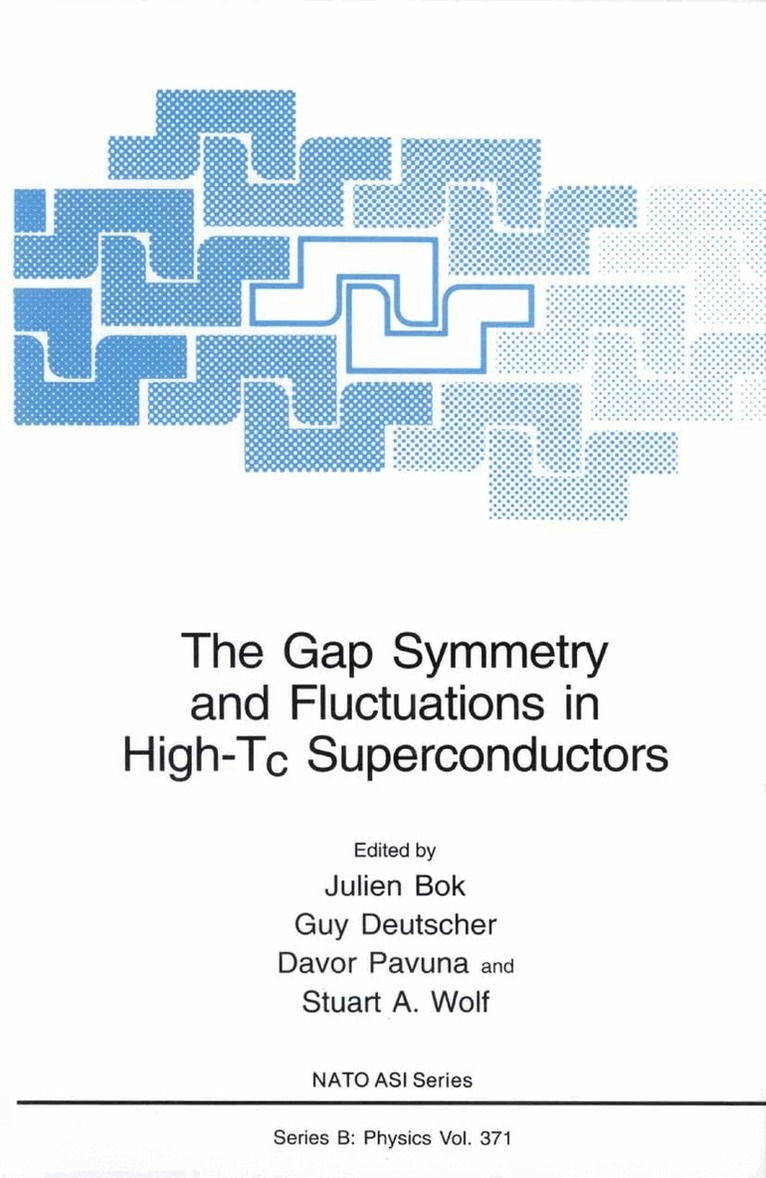
Gap Symmetry and Fluctuations in High-Tc Superconductors
Av Julien Bok, Guy Deutscher m. fl.
Häftad, 2013
551 kr
Lägg i varukorg
Since the discovery in 1986 of high temperature superconductors by J. G. Bednorz and K. A. Müller, a considerable progress has been made and several important scientific problems have emerged. Within this NATO Advanced Study Institute our intention was to focus mainly on the controversial topic of …
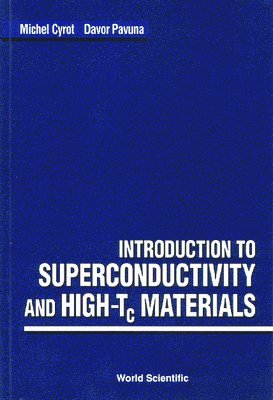
INTRODUCTION TO SUPERCONDUCTIVITY AND HIGH-TC MATERIALS
Av Michel Cyrot, Davor Pavuna m. fl.
Inbunden, 1992
1266 kr
Tillfälligt slut
What sets this book apart from others on the introduction to super-conductivity and high-Tc materials is its simple and pragmatic approach. The authors describe all relevant superconducting phenomena and rely on the macroscopic Ginzburg-Landau theory to derive the most important results. Examples …
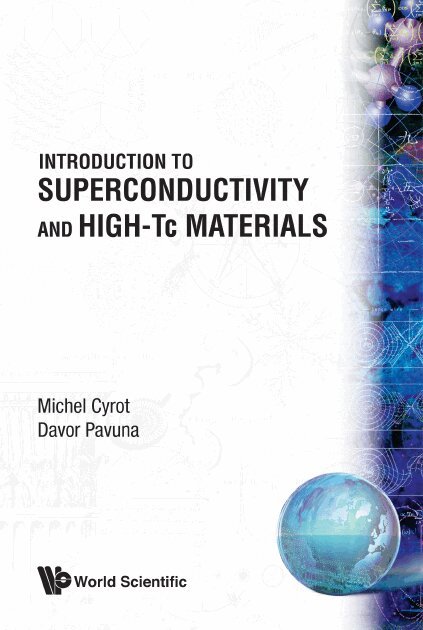
INTRODUCTION TO SUPERCONDUCTIVITY AND HIGH-TC MATERIALS
Av Michel Cyrot, Davor Pavuna m. fl.
Häftad, 1992
667 kr
Tillfälligt slut
What sets this book apart from others on the introduction to super-conductivity and high-Tc materials is its simple and pragmatic approach. The authors describe all relevant superconducting phenomena and rely on the macroscopic Ginzburg-Landau theory to derive the most important results. Examples …