Dawn Langan Teele - Böcker
Visar alla böcker från författaren Dawn Langan Teele. Handla med fri frakt och snabb leverans.
5 produkter
5 produkter
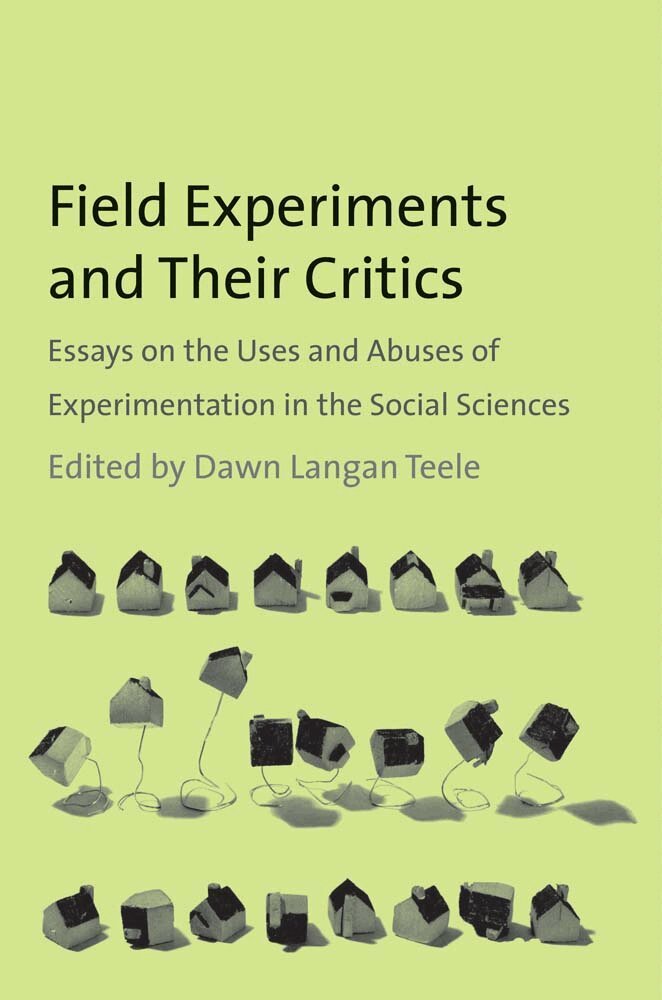
Field Experiments and Their Critics
Essays on the Uses and Abuses of Experimentation in the Social Sciences
Häftad, Engelska, 2014
213 kr
Skickas inom 7-10 vardagar
In recent years, social scientists have engaged in a deep debate over the methods appropriate to their research. Their long reliance on passive observational collection of information has been challenged by proponents of experimental methods designed to precisely infer causal effects through active intervention in the social world. Some scholars claim that field experiments represent a new gold standard and the best way forward, while others insist that these methods carry inherent inconsistencies, limitations, or ethical dilemmas that observational approaches do not. This unique collection of essays by the most influential figures on every side of this debate reveals its most important stakes and will provide useful guidance to students and scholars in many disciplines.
321 kr
Skickas inom 7-10 vardagar
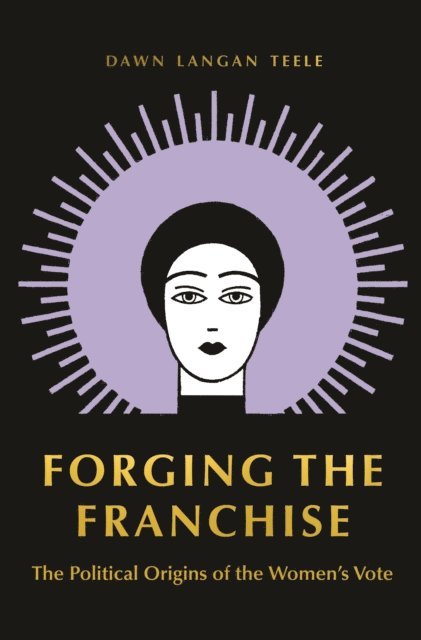
The important political motivations behind why women finally won the right to voteIn the 1880s, women were barred from voting in all national-level elections, but by 1920 they were going to the polls in nearly thirty countries. What caused this massive change? Why did male politicians agree to extend voting rights to women? Contrary to conventional wisdom, it was not because of progressive ideas about women or suffragists’ pluck. In most countries, elected politicians fiercely resisted enfranchising women, preferring to extend such rights only when it seemed electorally prudent and in fact necessary to do so. Through a careful examination of the tumultuous path to women’s political inclusion in the United States, France, and the United Kingdom, Forging the Franchise demonstrates that the formation of a broad movement across social divides, and strategic alliances with political parties in competitive electoral conditions, provided the leverage that ultimately transformed women into voters.As Dawn Teele shows, in competitive environments, politicians had incentives to seek out new sources of electoral influence. A broad-based suffrage movement could reinforce those incentives by providing information about women’s preferences, and an infrastructure with which to mobilize future female voters. At the same time that politicians wanted to enfranchise women who were likely to support their party, suffragists also wanted to enfranchise women whose political preferences were similar to theirs. In contexts where political rifts were too deep, suffragists who were in favor of the vote in principle mobilized against their own political emancipation.Exploring tensions between elected leaders and suffragists and the uncertainty surrounding women as an electoral group, Forging the Franchise sheds new light on the strategic reasons behind women’s enfranchisement.
219 kr
Skickas inom 7-10 vardagar
The important political motivations behind why women finally won the right to voteIn the 1880s, women were barred from voting in all national-level elections, but by 1920 they were going to the polls in nearly thirty countries. What caused this massive change? Why did male politicians agree to extend voting rights to women? Contrary to conventional wisdom, it was not because of progressive ideas about women or suffragists’ pluck. In most countries, elected politicians fiercely resisted enfranchising women, preferring to extend such rights only when it seemed electorally prudent and in fact necessary to do so. Through a careful examination of the tumultuous path to women’s political inclusion in the United States, France, and the United Kingdom, Forging the Franchise demonstrates that the formation of a broad movement across social divides, and strategic alliances with political parties in competitive electoral conditions, provided the leverage that ultimately transformed women into voters.As Dawn Teele shows, in competitive environments, politicians had incentives to seek out new sources of electoral influence. A broad-based suffrage movement could reinforce those incentives by providing information about women’s preferences, and an infrastructure with which to mobilize future female voters. At the same time that politicians wanted to enfranchise women who were likely to support their party, suffragists also wanted to enfranchise women whose political preferences were similar to theirs. In contexts where political rifts were too deep, suffragists who were in favor of the vote in principle mobilized against their own political emancipation.Exploring tensions between elected leaders and suffragists and the uncertainty surrounding women as an electoral group, Forging the Franchise sheds new light on the strategic reasons behind women’s enfranchisement.
1 160 kr
Skickas inom 7-10 vardagar
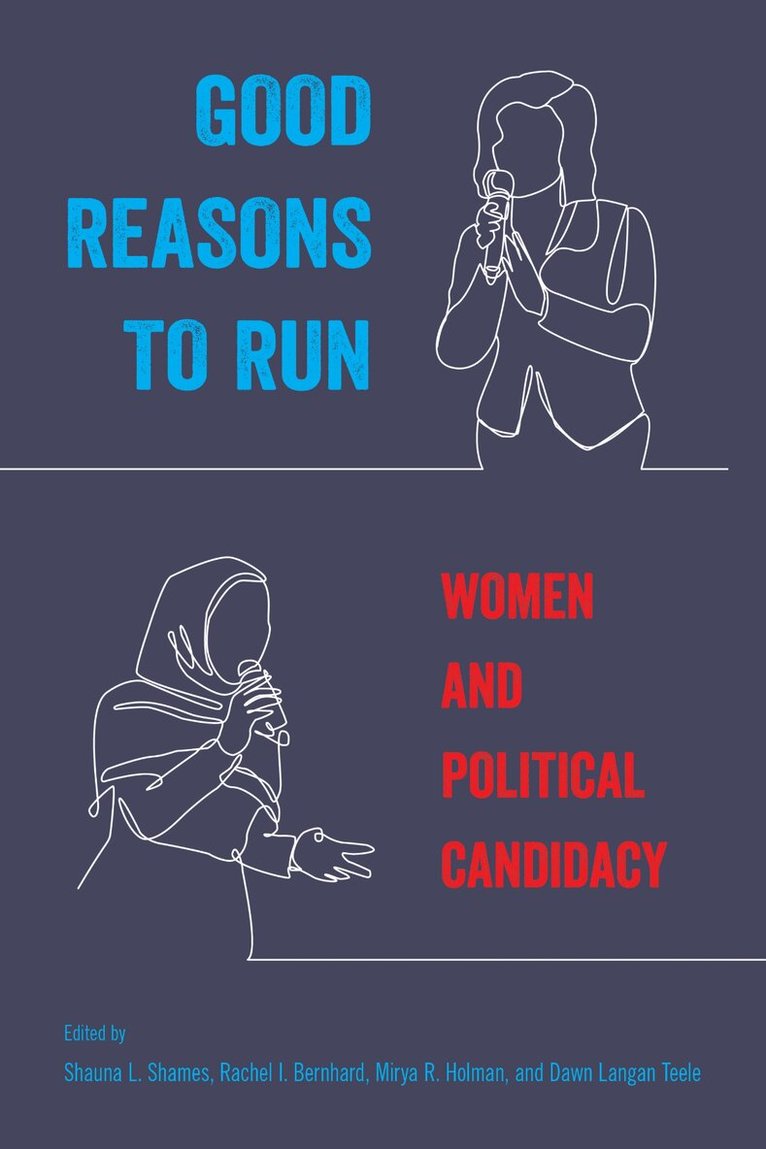
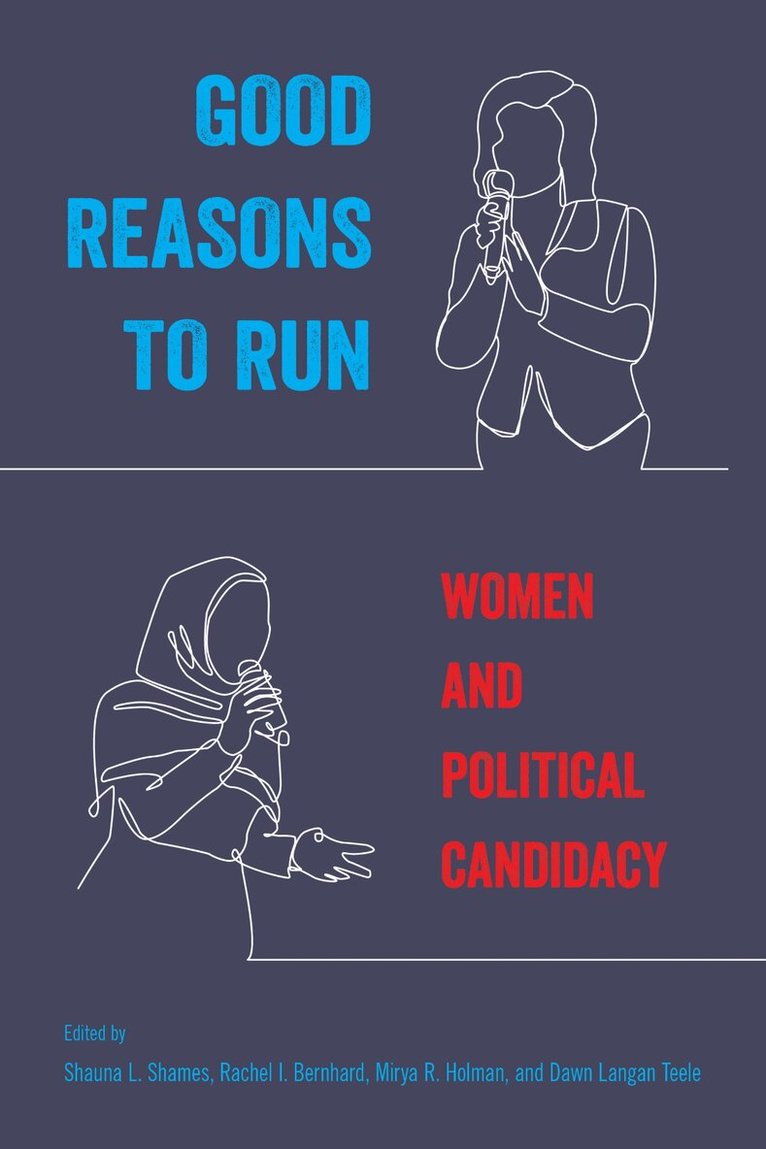
After the 2016 U.S. Presidential election, a large cohort of women emerged to run for office. Their efforts changed the landscape of candidates and representation. However, women are still far less likely than men to seek elective office, and face biases and obstacles in campaigns. (Women running for Congress make twice as many phone calls as men to raise the same contributions.) The editors and contributors to Good Reasons to Run, a mix of scholars and practitioners, examine the reasons why women run-and do not run-for political office. They focus on the opportunities, policies, and structures that promote women’s candidacies. How do nonprofits help recruit and finance women as candidates? And what role does money play in women’s campaigns? The essays in Good Reasons to Run ask not just who wants to run, but how to activate and encourage such ambition among a larger population of potential female candidates while also increasing the diversity of women running for office.
387 kr
Skickas inom 7-10 vardagar
After the 2016 U.S. Presidential election, a large cohort of women emerged to run for office. Their efforts changed the landscape of candidates and representation. However, women are still far less likely than men to seek elective office, and face biases and obstacles in campaigns. (Women running for Congress make twice as many phone calls as men to raise the same contributions.) The editors and contributors to Good Reasons to Run, a mix of scholars and practitioners, examine the reasons why women run-and do not run-for political office. They focus on the opportunities, policies, and structures that promote women’s candidacies. How do nonprofits help recruit and finance women as candidates? And what role does money play in women’s campaigns? The essays in Good Reasons to Run ask not just who wants to run, but how to activate and encourage such ambition among a larger population of potential female candidates while also increasing the diversity of women running for office.