Debasis Bhattacharya – författare
Visar alla böcker från författaren Debasis Bhattacharya. Handla med fri frakt och snabb leverans.
6 produkter
6 produkter
Inbunden, Engelska, 2025
2 128 kr
Skickas inom 10-15 vardagar
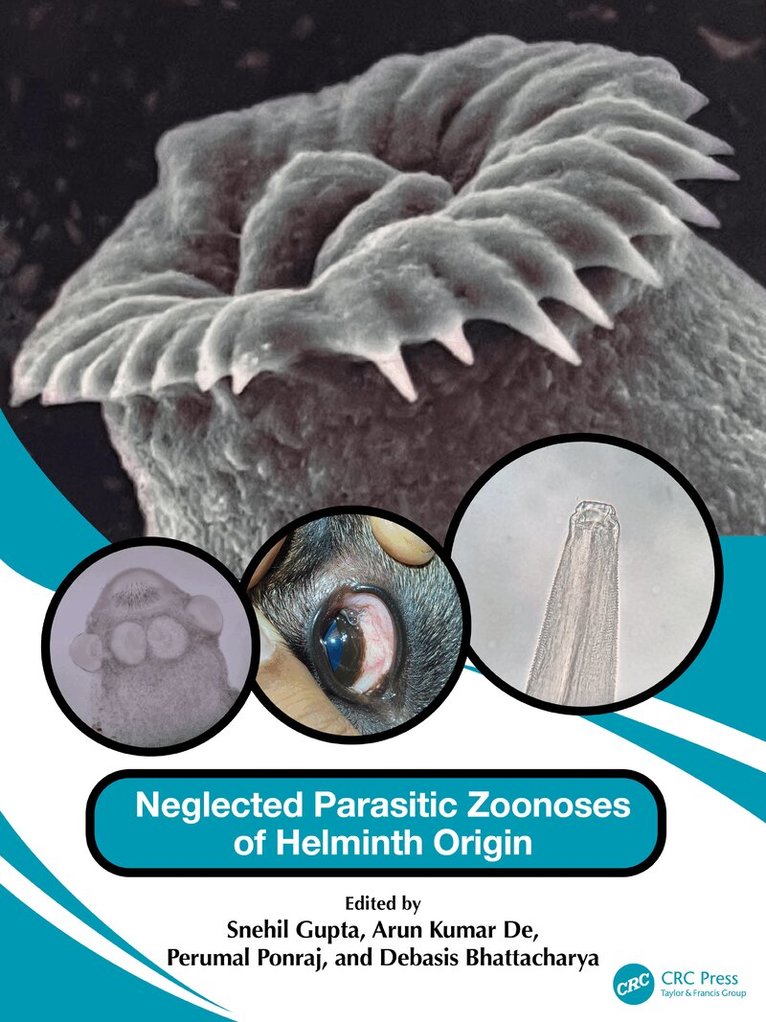
This book provides an in-depth analysis of neglected parasitic zoonoses of helminthic origin, offering a comprehensive understanding of their epidemiology, pathology, and implications for public health. With a focus on the One Health perspective, it delves into the intricate interactions between animals, humans, and the environment, emphasizing the critical role of interdisciplinary collaboration in addressing these diseases. The chapters further explore the relationships between parasites, hosts, and ecosystems to identify potential risk factors and transmission patterns. The subsequent chapters cover the life cycles, transmission dynamics, and potential control measures of neglected zoonoses of nematode, cestode, and trematode origin. The book also presents phenotype of these parasites for improved identification, molecular epidemiology, and diagnostic approaches ranging from conventional to contemporary. Additionally, the chapters examine immune-prophylactic attempts, culminating in effective treatment and control strategies to combat these overlooked diseases. This book is intended for researchers, scientists, epidemiologists, veterinarians, and healthcare professionals.Provides an in-depth analysis of neglected parasitic zoonoses, offering valuable insights into their epidemiology, pathology, and public health implications.Focusing on the One Health approach, it explores intricate interactions between animals, humans, and the environment.Examines relationships between parasites, hosts, and ecosystems, identifying potential risk factors and transmission patternsDiscusses life cycles, transmission dynamics, and potential control measures of nematode, cestode, and trematode zoonosesExplores improved identification and molecular epidemiology techniques, from conventional to contemporary methods
E-bok
PDF, Engelska, 2025970 kr
Läs direkt efter köp
This book provides an in-depth analysis of neglected parasitic zoonoses of helminthic origin, offering a comprehensive understanding of their epidemiology, pathology, and implications for public health. With a focus on the One Health perspective, it delves into the intricate interactions between animals, humans, and the environment, emphasizing the critical role of interdisciplinary collaboration in addressing these diseases. The chapters further explore the relationships between parasites, hosts, and ecosystems to identify potential risk factors and transmission patterns. The subsequent chapters cover the life cycles, transmission dynamics, and potential control measures of neglected zoonoses of nematode, cestode, and trematode origin. The book also presents phenotype of these parasites for improved identification, molecular epidemiology, and diagnostic approaches ranging from conventional to contemporary. Additionally, the chapters examine immune-prophylactic attempts, culminating in effective treatment and control strategies to combat these overlooked diseases. This book is intended for researchers, scientists, epidemiologists, veterinarians, and healthcare professionals. Provides an in-depth analysis of neglected parasitic zoonoses, offering valuable insights into their epidemiology, pathology, and public health implications. Focusing on the One Health approach, it explores intricate interactions between animals, humans, and the environment. Examines relationships between parasites, hosts, and ecosystems, identifying potential risk factors and transmission patterns Discusses life cycles, transmission dynamics, and potential control measures of nematode, cestode, and trematode zoonoses Explores improved identification and molecular epidemiology techniques, from conventional to contemporary methods
E-bok
Engelska, 2025936 kr
Läs direkt efter köp
This book provides an in-depth analysis of neglected parasitic zoonoses of helminthic origin, offering a comprehensive understanding of their epidemiology, pathology, and implications for public health. With a focus on the One Health perspective, it delves into the intricate interactions between animals, humans, and the environment, emphasizing the critical role of interdisciplinary collaboration in addressing these diseases. The chapters further explore the relationships between parasites, hosts, and ecosystems to identify potential risk factors and transmission patterns. The subsequent chapters cover the life cycles, transmission dynamics, and potential control measures of neglected zoonoses of nematode, cestode, and trematode origin. The book also presents phenotype of these parasites for improved identification, molecular epidemiology, and diagnostic approaches ranging from conventional to contemporary. Additionally, the chapters examine immune-prophylactic attempts, culminating in effective treatment and control strategies to combat these overlooked diseases. This book is intended for researchers, scientists, epidemiologists, veterinarians, and healthcare professionals. Provides an in-depth analysis of neglected parasitic zoonoses, offering valuable insights into their epidemiology, pathology, and public health implications. Focusing on the One Health approach, it explores intricate interactions between animals, humans, and the environment. Examines relationships between parasites, hosts, and ecosystems, identifying potential risk factors and transmission patterns Discusses life cycles, transmission dynamics, and potential control measures of nematode, cestode, and trematode zoonoses Explores improved identification and molecular epidemiology techniques, from conventional to contemporary methods
E-bok
Engelska, 20064 450 kr
Läs direkt efter köp
Islam came on the scene, with a message, philosophy and code of conduct, perfect by all means, with its advent, the new faith revolutionised the contemporary world in a very short span of time. It also brought along with its beliefs and practices, a new culture, which gradually build a new civilization, now known as Islamic Civilization. Islam has made a great contribution to the development and growth of human civilization, education and intellect in particular and the whole society, in general. This is a well-known fact now that Muslims were leading the world of knowledge and wisdom when Europe was still a dark continent, far behind in education and science. In the early era of Islam the Muslims were in full command of the science and technology of the times. They not only unearthed adopted and preserved the lost treasure of the Greek wisdom, but also promoted it to new heights. Muslim academics and scientists were among the leading lights of that period of history. They contributed a lot to the growth of all branches of knowledge he that Philosophy, Logic literature, Geography, History Physics, Chemistry, Mathematics or Medicine. Islam is a scientific and progressive religion All its teachings have a scientific and logical approach. Islam directs all its followers to learn, gain knowledge and master the arts and sciences c: the contemporary world. Islam, as a living faith stands for spreading light and eliminating darkness from the world. They contributed a lot to the growth of all branches of knowledge and thus enriched the new civilization. This series, unique in its presentation, is perhaps first of its kind, to take all the great developments and changes over the centuries. All the significant aspects have been covered in these volumes. This multi-volume study is based on original (Holy Quran and Traditions) and other authentic sources: Arabic, Persian and Urdu books and manuscripts. For further comprehension and comparative study, English books by Muslim scholars and as well as Western writers have also been consulted at length. The painstaking research and thorough study of thousands of pages by a team of scholars over a period of time, has resulted in an authentic, comprehensive, exhaustive, exclusive, lengthy and still interesting work, which, is bound to fill a big vacuum in Islamic Studies and as well as the treasure of Knowledge about Culture and Civilization.
E-bok
Engelska, 20104 294 kr
Läs direkt efter köp
Plant diseases need to be controlled to maintain the quality and abundance of food, feed, and fiber produced by growers around the world. Different approaches may be used to prevent, mitigate or control plant diseases. Beyond good agronomic and horticultural practices, growers often rely heavily on chemical fertilizers and pesticides. Such inputs to agriculture have contributed significantly to the spectacular improvements in crop productivity and quality over the past 100 years. However, the environmental pollution caused by excessive use and misuse of agrochemicals, as well as fear-mongering by some opponents of pesticides, has led to considerable changes in people''s attitudes towards the use of pesticides in agriculture This book is a complete source of valuable, current information on important plant virus diseases It will serve as practical resource, guiding its readers toward the development and application of novel technologies for plant virus disease control Contents: Introduction Biological Control of plant Pathogens; Seed Treatment for Agronomic Crops; Non- chemical Control of Plant Diseases in the Home Garden; Host Storage plant and Varietal Resistance to Post Harvest Insect Attack; Biology and Control of other Storage Pests; Overview of Rood and Tuber Crops; Crop Rotation and Plant Disease Management; Plant Diseases Control
Häftad, Engelska, 2018
276 kr
Tillfälligt slut
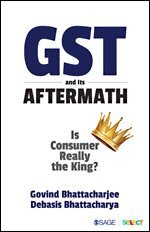
GST and Its Aftermath: Is Consumer Really the King? takes a close look at the ongoing debate on the indirect tax reform initiative in India. It explains in simple, layperson parlance the complex structure of indirect taxation in India—both in the past and in the present—and sheds light on the various dimensions of the tax system and how it affects all our lives. This thought-provoking assessment of GST presents the ideas and concepts that gave birth to this new system of taxation and discusses its immediate implications on the Indian economy. Just as GST is meant to empower consumers, this book is designed to empower citizens!