Debin Ma – författare
Visar alla böcker från författaren Debin Ma. Handla med fri frakt och snabb leverans.
15 produkter
15 produkter
Inbunden, Engelska, 2005
2 865 kr
Skickas inom 10-15 vardagar
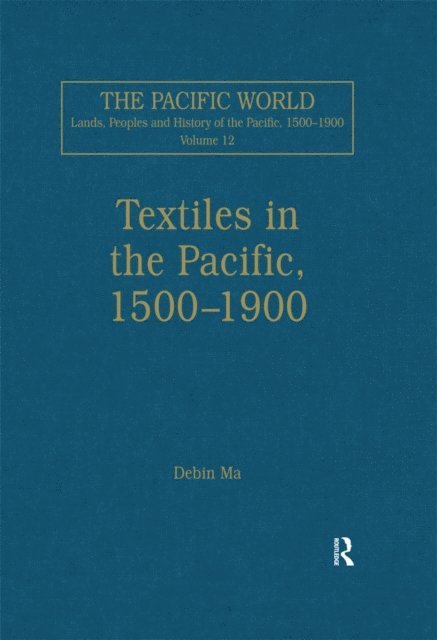
Textiles in the Pacific, 1500-1900 brings together 13 articles which include both classics and lesser-known but important works related to the trade and production of textiles in the Pacific region, extending from the tip of Northeast Asia to the other end of South America and Australia. Collectively these articles bring out two central themes, as highlighted in the introduction. First, there is the leading role of textiles in linking up the economies across the Pacific in the era before the 19th-century rise of steam-engine-powered global integration. Second is the crucial role of textile manufacturing and trade in the early stage of industrialization for most of the developing Pacific economies after the 19th century. The volume also reflects both revolutionary shifts in paradigms and revisions of traditional consensus, and seeks to present a more balanced account of global trade and market integration in the early modern period.
Inbunden, Engelska, 2011
954 kr
Skickas inom 10-15 vardagar
Recently, a growing body of work on "law and finance" and "legal origins" has highlighted the role of formal legal institutions in shaping financial institutions. However, these writings have focused largely on Europe, neglecting important non-Western traditions that prevail in a large part of the world. Law and Long-Term Economic Change brings together a group of leading scholars from economics, economic history, law, and area studies to develop a unique, global and, long-term perspective on the linkage between law and economic change.Covering the regions of Western Europe, East and South Asia, and the Middle East, the chapters explore major themes regarding the nature and evolution of different legal regimes; their relationship with the state or organized religion; the definition and interpretation of ownership and property rights; the functioning of courts, and other mechanisms for dispute resolution and contract enforcement; and the complex dynamics of legal transplantations through processes such as colonization. The text makes clear that the development of legal traditions and institutions—as embodiments of cultural values and norms—exerts a strong effect on long-term economic change. And it demonstrates that a good understanding of legal origins around the world enriches any debate about Great Divergence in the early modern era, as well as development and underdevelopment in 19th-20th century Eurasia.
E-bok
Engelska, 2011955 kr
Läs direkt efter köp
Recently, a growing body of work on "law and finance" and "legal origins" has highlighted the role of formal legal institutions in shaping financial institutions. However, these writings have focused largely on Europe, neglecting important non-Western traditions that prevail in a large part of the world. Law and Long-Term Economic Change brings together a group of leading scholars from economics, economic history, law, and area studies to develop a unique, global and, long-term perspective on the linkage between law and economic change.Covering the regions of Western Europe, East and South Asia, and the Middle East, the chapters explore major themes regarding the nature and evolution of different legal regimes; their relationship with the state or organized religion; the definition and interpretation of ownership and property rights; the functioning of courts, and other mechanisms for dispute resolution and contract enforcement; and the complex dynamics of legal transplantations through processes such as colonization. The text makes clear that the development of legal traditions and institutions—as embodiments of cultural values and norms—exerts a strong effect on long-term economic change. And it demonstrates that a good understanding of legal origins around the world enriches any debate about Great Divergence in the early modern era, as well as development and underdevelopment in 19th-20th century Eurasia.
Inbunden, Engelska, 2022
1 906 kr
Skickas inom 7-10 vardagar
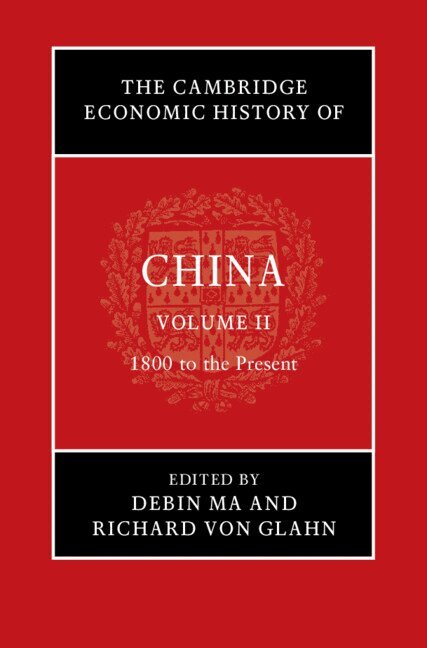
China's rise as the world's second-largest economy surely is the most dramatic development in the global economy since the year 2000. Volume II, which spans China's two turbulent centuries from 1800, charts this wrenching process of an ancient empire being transformed to re-emerge as a major world power. This volume for the first time brings together the fruits of pioneering international scholarship in all dimensions of economic history to provide an authoritative and comprehensive overview of this tumultuous and dramatic transformation. In many cases, it offers a fundamental reinterpretation of major themes in Chinese economic history, such as the role of ideology, the rise of new institutions, human capital and public infrastructure, the impact of Western and Japanese imperialism, the role of external trade and investment, and the evolution of living standards in both the pre-Communist and Communist eras. The volume includes seven important chapters on the Mao and reform eras and provides a critical historical perspective linking the past with the present and future.
Inbunden, Engelska, 2022
1 906 kr
Skickas inom 7-10 vardagar
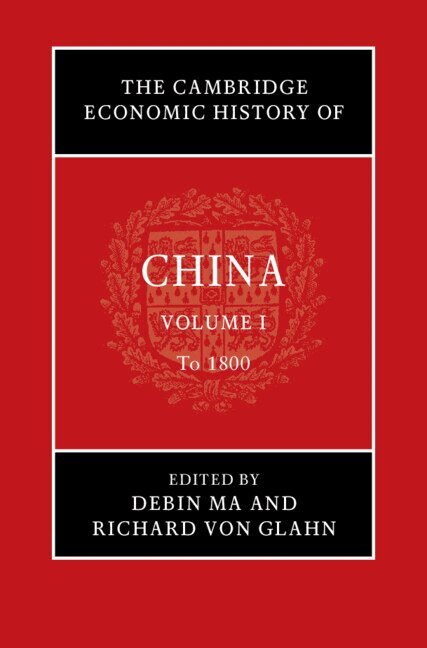
China's rise as the world's second-largest economy surely is the most dramatic development in the global economy since the year 2000. But China's prominence in the global economy is hardly new. Since 500 BCE, a dynamic market economy and the establishment of an enduring imperial state fostered precocious economic growth. Yet Chinese society and government featured distinctive institutions that generated unique patterns of economic development. The six chapters of Part I of this volume trace the forms of livelihood, organization of production and exchange, the role of the state in economic development, the evolution of market institutions, and the emergence of trans-Eurasian trade from antiquity to 1000 CE. Part II, in twelve thematic chapters, spans the late imperial period from 1000 to 1800 and surveys diverse fields of economic history, including environment, demography, rural and urban development, factor markets, law, money, finance, philosophy, political economy, foreign trade, human capital, and living standards.
Häftad, Engelska, 2025
518 kr
Skickas inom 7-10 vardagar
China's rise as the world's second-largest economy surely is the most dramatic development in the global economy since the year 2000. Volume II, which spans China's two turbulent centuries from 1800, charts this wrenching process of an ancient empire being transformed to re-emerge as a major world power. This volume for the first time brings together the fruits of pioneering international scholarship in all dimensions of economic history to provide an authoritative and comprehensive overview of this tumultuous and dramatic transformation. In many cases, it offers a fundamental reinterpretation of major themes in Chinese economic history, such as the role of ideology, the rise of new institutions, human capital and public infrastructure, the impact of Western and Japanese imperialism, the role of external trade and investment, and the evolution of living standards in both the pre-Communist and Communist eras. The volume includes seven important chapters on the Mao and reform eras and provides a critical historical perspective linking the past with the present and future.
E-bok
Engelska, 20222 189 kr
Läs direkt efter köp
China''s rise as the world''s second-largest economy surely is the most dramatic development in the global economy since the year 2000. But China''s prominence in the global economy is hardly new. Since 500 BCE, a dynamic market economy and the establishment of an enduring imperial state fostered precocious economic growth. Yet Chinese society and government featured distinctive institutions that generated unique patterns of economic development. The six chapters of Part I of this volume trace the forms of livelihood, organization of production and exchange, the role of the state in economic development, the evolution of market institutions, and the emergence of trans-Eurasian trade from antiquity to 1000 CE. Part II, in twelve thematic chapters, spans the late imperial period from 1000 to 1800 and surveys diverse fields of economic history, including environment, demography, rural and urban development, factor markets, law, money, finance, philosophy, political economy, foreign trade, human capital, and living standards.
E-bok
PDF, Engelska, 2022629 kr
Läs direkt efter köp
China''s rise as the world''s second-largest economy surely is the most dramatic development in the global economy since the year 2000. Volume II, which spans China''s two turbulent centuries from 1800, charts this wrenching process of an ancient empire being transformed to re-emerge as a major world power. This volume for the first time brings together the fruits of pioneering international scholarship in all dimensions of economic history to provide an authoritative and comprehensive overview of this tumultuous and dramatic transformation. In many cases, it offers a fundamental reinterpretation of major themes in Chinese economic history, such as the role of ideology, the rise of new institutions, human capital and public infrastructure, the impact of Western and Japanese imperialism, the role of external trade and investment, and the evolution of living standards in both the pre-Communist and Communist eras. The volume includes seven important chapters on the Mao and reform eras and provides a critical historical perspective linking the past with the present and future.
E-bok
PDF, Engelska, 20222 170 kr
Läs direkt efter köp
China''s rise as the world''s second-largest economy surely is the most dramatic development in the global economy since the year 2000. But China''s prominence in the global economy is hardly new. Since 500 BCE, a dynamic market economy and the establishment of an enduring imperial state fostered precocious economic growth. Yet Chinese society and government featured distinctive institutions that generated unique patterns of economic development. The six chapters of Part I of this volume trace the forms of livelihood, organization of production and exchange, the role of the state in economic development, the evolution of market institutions, and the emergence of trans-Eurasian trade from antiquity to 1000 CE. Part II, in twelve thematic chapters, spans the late imperial period from 1000 to 1800 and surveys diverse fields of economic history, including environment, demography, rural and urban development, factor markets, law, money, finance, philosophy, political economy, foreign trade, human capital, and living standards.
Häftad, Engelska, 2019
750 kr
Skickas inom 10-15 vardagar
Textiles in the Pacific, 1500-1900 brings together 13 articles which include both classics and lesser-known but important works related to the trade and production of textiles in the Pacific region, extending from the tip of Northeast Asia to the other end of South America and Australia. Collectively these articles bring out two central themes, as highlighted in the introduction. First, there is the leading role of textiles in linking up the economies across the Pacific in the era before the 19th-century rise of steam-engine-powered global integration. Second is the crucial role of textile manufacturing and trade in the early stage of industrialization for most of the developing Pacific economies after the 19th century. The volume also reflects both revolutionary shifts in paradigms and revisions of traditional consensus, and seeks to present a more balanced account of global trade and market integration in the early modern period.
E-bok
Engelska, 2022629 kr
Läs direkt efter köp
China''s rise as the world''s second-largest economy surely is the most dramatic development in the global economy since the year 2000. Volume II, which spans China''s two turbulent centuries from 1800, charts this wrenching process of an ancient empire being transformed to re-emerge as a major world power. This volume for the first time brings together the fruits of pioneering international scholarship in all dimensions of economic history to provide an authoritative and comprehensive overview of this tumultuous and dramatic transformation. In many cases, it offers a fundamental reinterpretation of major themes in Chinese economic history, such as the role of ideology, the rise of new institutions, human capital and public infrastructure, the impact of Western and Japanese imperialism, the role of external trade and investment, and the evolution of living standards in both the pre-Communist and Communist eras. The volume includes seven important chapters on the Mao and reform eras and provides a critical historical perspective linking the past with the present and future.
E-bok
Engelska, 2017869 kr
Läs direkt efter köp
Textiles in the Pacific, 1500-1900 brings together 13 articles which include both classics and lesser-known but important works related to the trade and production of textiles in the Pacific region, extending from the tip of Northeast Asia to the other end of South America and Australia. Collectively these articles bring out two central themes, as highlighted in the introduction. First, there is the leading role of textiles in linking up the economies across the Pacific in the era before the 19th-century rise of steam-engine-powered global integration. Second is the crucial role of textile manufacturing and trade in the early stage of industrialization for most of the developing Pacific economies after the 19th century. The volume also reflects both revolutionary shifts in paradigms and revisions of traditional consensus, and seeks to present a more balanced account of global trade and market integration in the early modern period.
E-bok
PDF, Engelska, 2017869 kr
Läs direkt efter köp
Textiles in the Pacific, 1500-1900 brings together 13 articles which include both classics and lesser-known but important works related to the trade and production of textiles in the Pacific region, extending from the tip of Northeast Asia to the other end of South America and Australia. Collectively these articles bring out two central themes, as highlighted in the introduction. First, there is the leading role of textiles in linking up the economies across the Pacific in the era before the 19th-century rise of steam-engine-powered global integration. Second is the crucial role of textile manufacturing and trade in the early stage of industrialization for most of the developing Pacific economies after the 19th century. The volume also reflects both revolutionary shifts in paradigms and revisions of traditional consensus, and seeks to present a more balanced account of global trade and market integration in the early modern period.
Inbunden, Engelska, 2025
553 kr
Skickas inom 5-8 vardagar
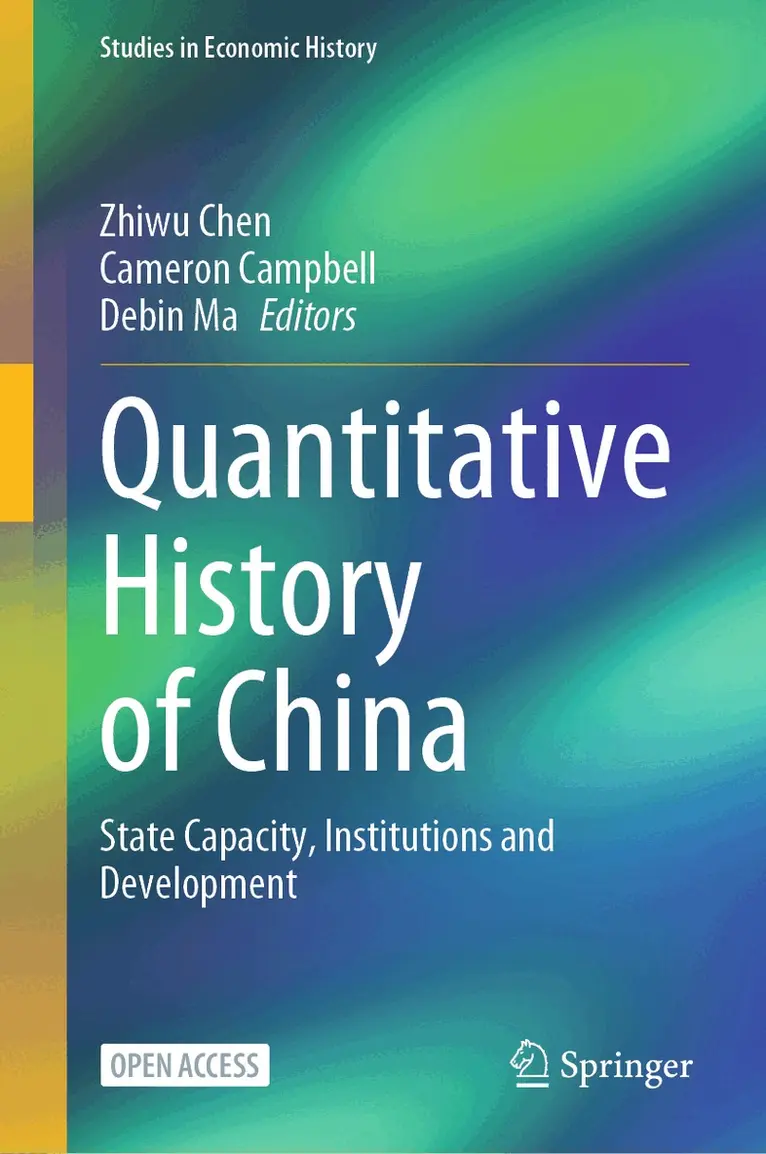
This Open Access book marks the beginning of a new era in the study of Chinese history. Since the beginning of the computer age, quantitative techniques have been increasingly used to study specific topics like family, population, and living standards in China's past. However, sample sizes have usually been small due to either historical archives' availability constraints or limited human processing capacity. With much increased computing power and machine-assisted reading/processing capacity, many big historical databases have become available, offering quantitative historians and social scientists great opportunities to study China's past development experience. This volume showcases a collection of new findings concerning China's political, social, and economic history and typically based on newly constructed large historical datasets. Most of the work has involved an interdisciplinary team of economists, sociologists, political scientists, historians and econometricians, demonstrating how new big data and quantitative methods may be brought to bear on some of the biggest questions related to China's development over the past three millennia and on the implications of distant past events on contemporary China. Topics covered range from the roles of war, state formation, religion, culture, finance and institutions in long-run development and technological innovations, to regicide history, to the organization and capacity of the bureaucracy. Contributors include leading figures in the quantitative study of China's long-run socioeconomic and political history. This volume will be of value to anyone with an interest in Chinese economic, political, social and/or institutional history as well as anyone interested in quantitative history more generally.
4 741 kr
Tillfälligt slut
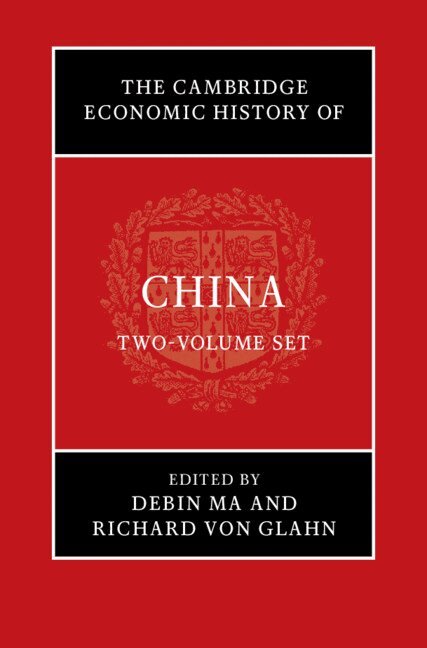
Building on a wide array of recent scholarship, the two volumes of The Cambridge Economic History of China bring together the fruits of pioneering international studies in all dimensions of economic history, past and present. Exploring themes including political economy, agriculture, industry and trade, technology, ecological change, demography, law, urban development, standards of living, consumption, financial institutions, and national income, the two volumes together provide broad temporal coverage across all of Chinese history, including recent developments in contemporary China.